Sticky toffee pudding

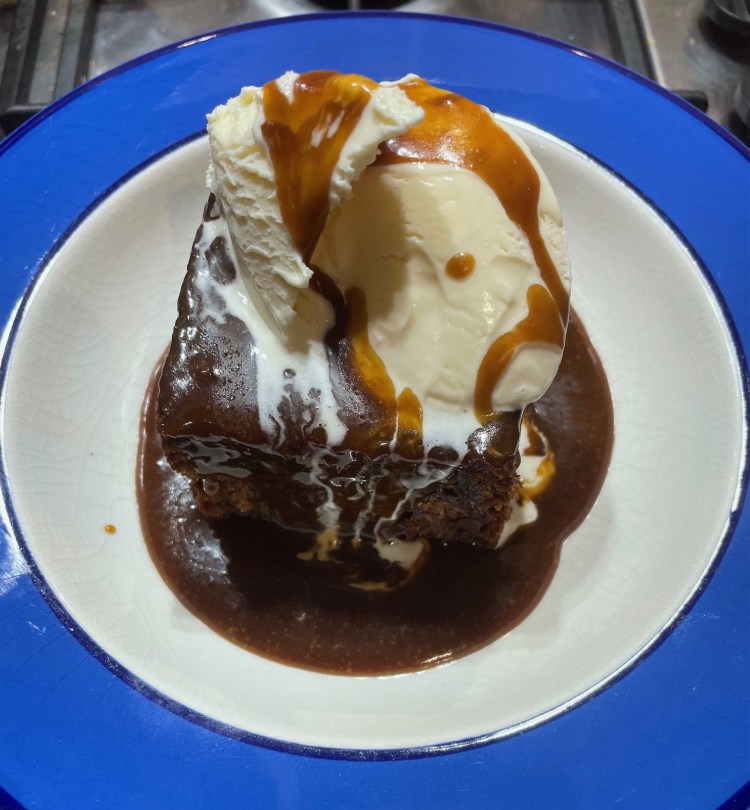
A quintessential British pudding, this is real winter comfort food, but we’ve also been known to wolf it down at the end of a Sunday lunch in May. The recipe here, to which I’ve made very small tweaks, jumped out to me on Instagram (@gastronomybyjonathan) back in January and has rapidly qualified for family-favourite status. A good vanilla ice cream is the perfect accompaniment.
Serves 8–10

Ingredients

Pudding

110g butter, softened
175g light soft brown sugar
4 eggs, lightly beaten
225g self-raising flour, sifted
1 tsp bicarbonate of soda
3 tsp instant coffee
225g dates, stoned and chopped
Pinch of salt
275ml boiling water

Butterscotch sauce

125g butter
175g dark soft brown (muscovado) sugar
Pinch of salt
80-100ml double cream

You will also need a 20cm loose bottomed cake tin.

Method

Preheat the oven to 170 fan. Line the bottom of your cake tin with greaseproof paper and lightly grease the sides with butter. Encase the outside of the tin with foil, just to cover the lower part, where the join is, to catch any leaking batter.

Put the dates in a small bowl, sprinkle over the bicarbonate of soda and the coffee and pour over the boiling water. Mix and set aside to cool while you make the cake mix.

Using a wooden spoon or a stand mixer with the paddle attachment, cream together the butter and sugar. Slowly add the beaten eggs until combined and then, with a spatula or large spoon, fold in the sieved flour and the salt.

Add the soaked dates and their liquid to the creamed pudding mixture and bring together to create a runny batter. Pour into the prepared cake tin and bake for 1 hour 15 minutes.

To make the butterscotch sauce: combine the butter, sugar and a pinch of salt in a small pan and place on a low heat. Stir to dissolve and combine, then mix in the cream. Keep warm.

Serve the pudding with the hot butterscotch sauce and vanilla ice cream.
Portobello steaks & butter bean mash

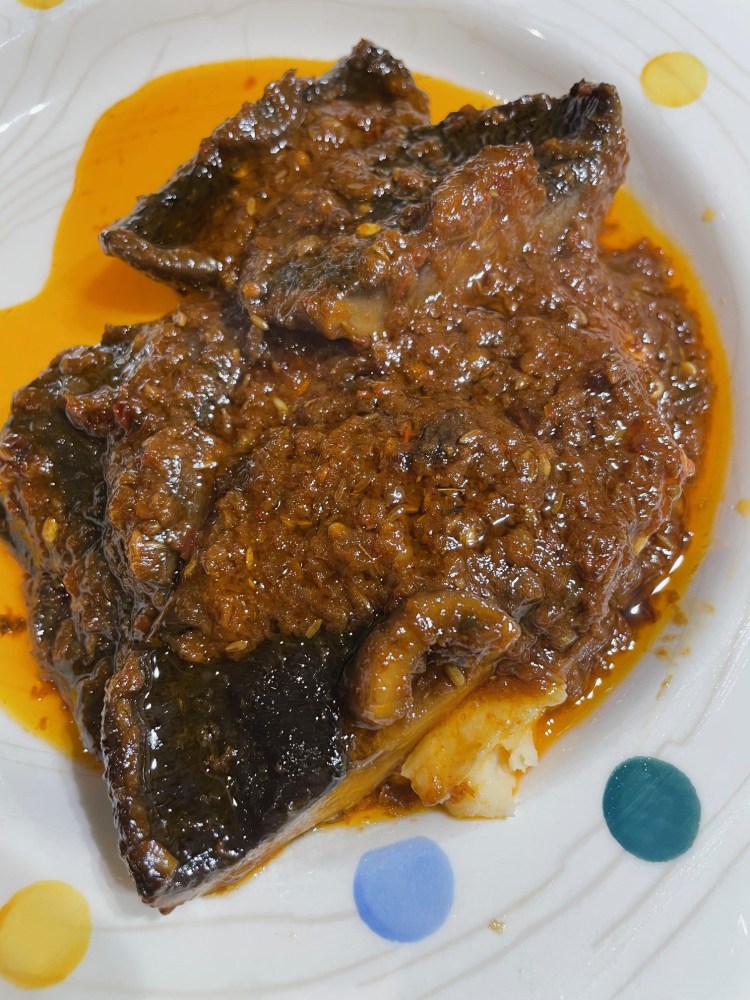
Occasionally, a new addition to the repertoire is rapidly elevated to family-favourite status. Such is this superb recipe, for which I’m indebted to Yotam Ottolenghi and Ixta Belfrage: it was published in their wonderful book Flavour at the end of 2020. This is a perfect meal to serve to vegetarians (vegans, in fact) and meat-eaters alike: rich, filling, packed with flavour and, by Ottolenghi standards, surprisingly straightforward to make. There will be plenty of the spicy oil left over, which will keep for ages in the fridge. (It inspired an invention that I dubbed ‘Balkan eggs’ after spooning it over a poached egg sitting on top of Ajvar and toast.)

Serves 4

Ingredients

For the ‘steaks’
4 medium to large portobello mushrooms, stems removed
10 garlic cloves, peeled
1 onion, peeled and cut into 6 wedges
1½ tbsp chipotle chilli flakes
1 red chilli
4 tsp cumin seeds, roughly crushed in a pestle and mortar
1 tbsp coriander seeds, roughly crushed in a pestle and mortar
2 tbsp tomato puree
400ml olive oil
Flaked sea salt

For the butter bean mash
1 x 700g jar or 2 tins of cooked large butter beans, drained
1½ tbsp lemon juice
1 tbsp olive oil
Flaked sea salt

Method

Preheat the oven to 150 fan.

Put all the ingredients for the steaks and 1tbsp flaked salt into a large ovenproof pan for which you have a lid. (Swish the tomato puree a little with a fork to disperse it.) Arrange the mushrooms on top, domed side up, then top with a piece of baking parchment, pushing it down to cover everything. Put the lid on, then cook in the oven for an hour.

Turn the mushrooms over, replacing paper and lid and return to the oven for 20 more minutes. Using a pair of tongs, transfer the mushrooms to a chopping board, cut them in half and set aside.

Fish the onion, garlic and chilli (discarding the stem) out of the oil – don’t worry if some of the spices come too. Put them into a small food processor – or use a stick blender – and whizz until smooth. Return the blitzed mixture to the saucepan and whisk it quickly through the oil. Add the mushroom halves and place on a medium-high heat. Cook for about 5 minutes. I do this with the lid on to catch splashes.

While the mushrooms are cooking, make the mash: put the beans in a food processor along with the lemon juice, olive oil, ½ teaspoon flaked salt and 2 tablespoons of water. Blitz until completely smooth. Transfer to a medium saucepan and cook on a medium-high heat for about 3 minutes, stirring, until warmed through. Do keep an eye on it to prevent burning.

To serve, divide the butterbean mash between four plates. Top with four mushroom halves per plate and spoon over a generous amount of oil and its aromatic spices. (Don’t use it all – you’ll want to keep a decent amount.) Green vegetables or salad make a balanced accompaniment.

Chicken in pancetta

Zita has pointed out an omission in the blog’s chicken section, and I agree that no family recipe collection would be complete without ‘Chicken in pancetta’. It is a comforting, home-made invention that often served as a special meal when we marked rites of passage: birthdays, heading off on travels, returning home from university. Feel free to use bacon instead of pancetta, and any cream you need to use up in the fridge.

Serves 4

Ingredients

4 chicken breasts
8 fat sprigs tarragon
1 pack pancetta or thin streaky bacon – you need 3 slices per chicken breast
50g butter
150ml white wine
Crème fraîche and / or cream (single or double)
Salt & pepper

Method

Preheat the oven to 200 / 180 fan.

Cut a slit down the underside of each chicken breast. Lay the pancetta slices out, slightly overlapping, in groups of three and place a chicken breast on top of each set of slices, slit side up. Stuff a big sprig of tarragon into each breast and season with pepper; you shouldn’t need salt because pancetta is already quite salty. Fold the pancetta slices over, encasing each breast. Melt the butter in a heavy-bottomed pan or shallow casserole dish – use something that can go both on the hob and in the oven. Fry the chicken parcels, seam-side up for a couple of minutes, then turn them over so that the seam is underneath and fry for another couple of minutes. Cover with foil and put in the oven for 25-30 minutes, depending on the size of your chicken breasts. While they’re cooking, strip the leaves from your four remaining tarragon sprigs and chop finely.

Remove the chicken parcels to a board and return the pan / casserole dish to the hob on a medium-high heat. Deglaze the pan with white wine and allow to cook down a little, then add crème fraîche and / or cream (I recommend 2 tbsp of the former and 100 ml of the latter), bubble through and allow to cook down a little on a lower heat for 5 minutes. Stir in your chopped tarragon at the end and check the seasoning.

While the sauce is bubbling, slice the chicken parcels into ¾ cm strips and arrange on a serving dish. Pour over the sauce and serve with vegetables of your choice.

Chocolate Crunch

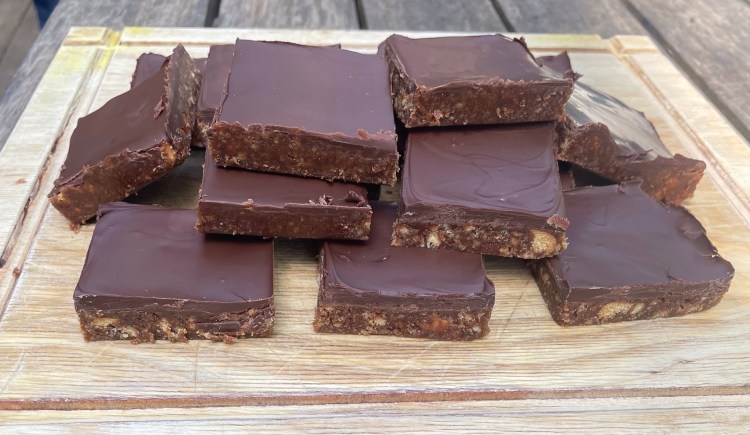
On the Tarnóy side of the family, this is known as ‘Auntie Alison’s Chocolate Crunch’, whereas the Wilsons and the Chandlers call it ‘Granny’s chocolate’. Evidently, Great-Granny got the recipe from her sister-in-law (Auntie Alison) and it then became her own. She would invariably produce it as a tea-time treat whenever the grandchildren visited. I made it quite often as a teenager myself but, having long since mislaid the recipe, was reminded of it only recently, after two of my cousins (Hannah and Christopher) made some for the wake after Great-Granny’s funeral. Many thanks to Hannah for refreshing my memory, for converting imperial measurements to metric and for recommending butter instead of post-war margarine.

Makes 16 generous pieces

Ingredients

100g butter
100g sugar
1 heaped tbsp cocoa powder
1 medium egg, beaten
225g digestive biscuits, crushed
200g Bournville chocolate

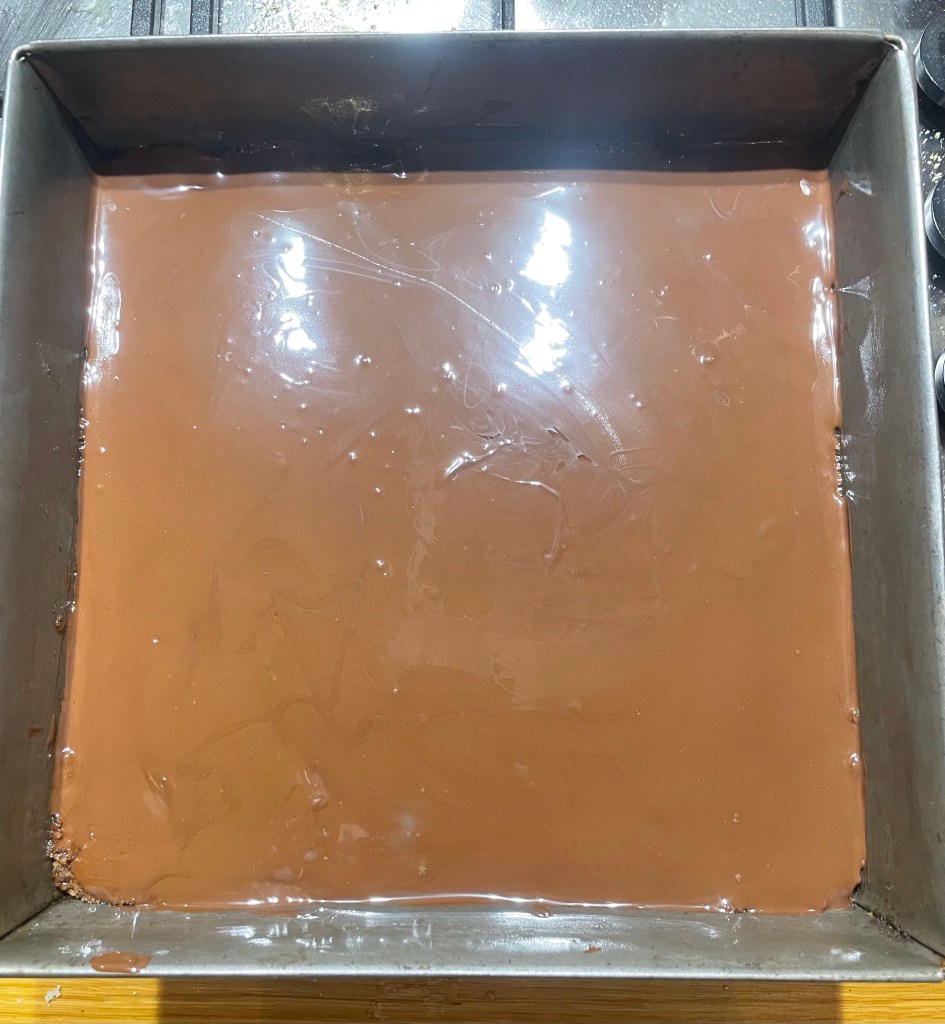
You will also need a greased tin: the square one pictured below measures 23 x 23 cm, but a rectangular sandwich tin will also do.

Method

Melt the butter, add the sugar and bubble through. Remove from the heat to cool a little. Add the cocoa and egg, then stir in the crushed biscuits.

Press into your greased tin and cool slightly. Melt the chocolate (over a bain-marie or in the microwave) and coat the biscuit mixture with it. Bash the tin to smooth the top. Cool until firm enough to cut into pieces. Great-Granny’s (Hannah’s?) advice is not to do this in the fridge because the chocolate is liable to crack but if you keep a careful eye on it you should be able to get away with it.

Hungarian Christmas Eve dinner

Last year, catapulted into Tier 4 and confined to London for Christmas, we had to fend for ourselves for the first time ever on Christmas Eve. Granny came to the rescue with this guest blog post, now recorded for posterity so that you will be able to carry on a vital family tradition. Baby Jesus, sparklers and Mennyből az Angyal are also obligatory.

From Granny:

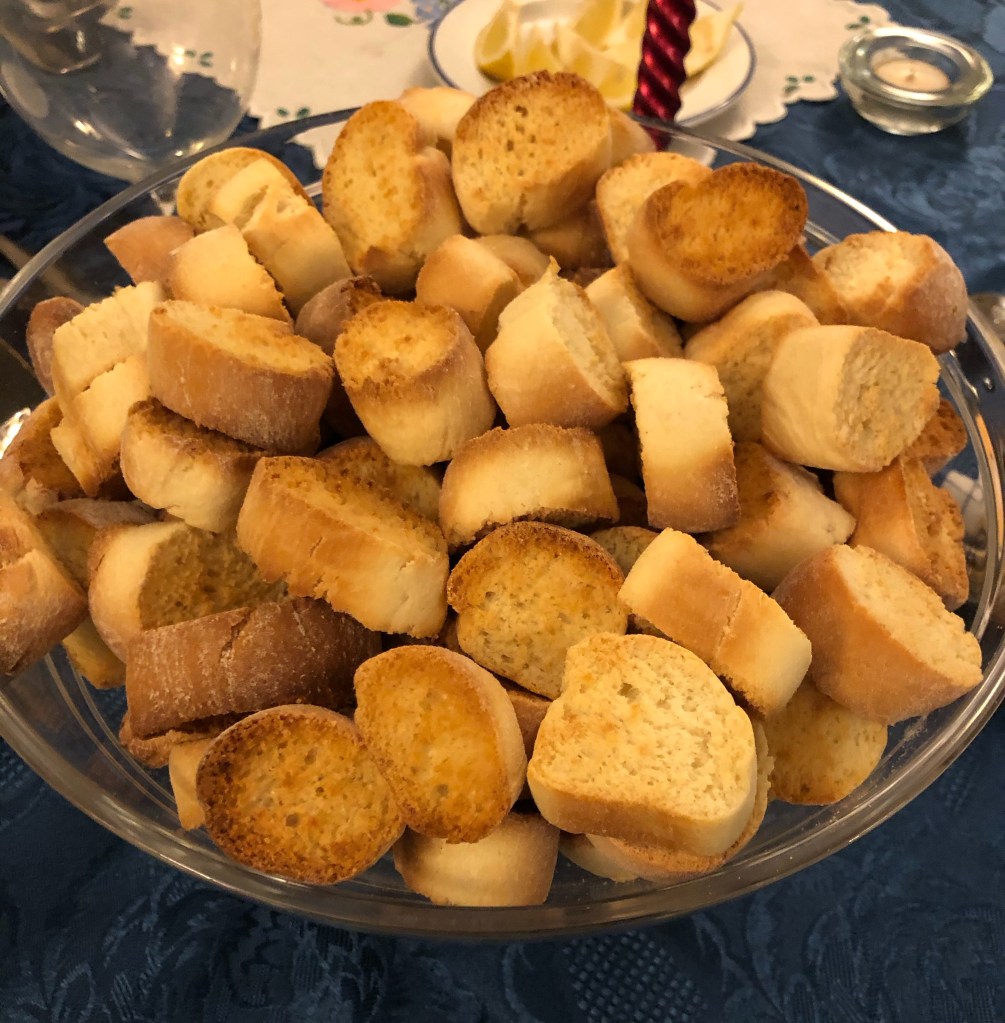
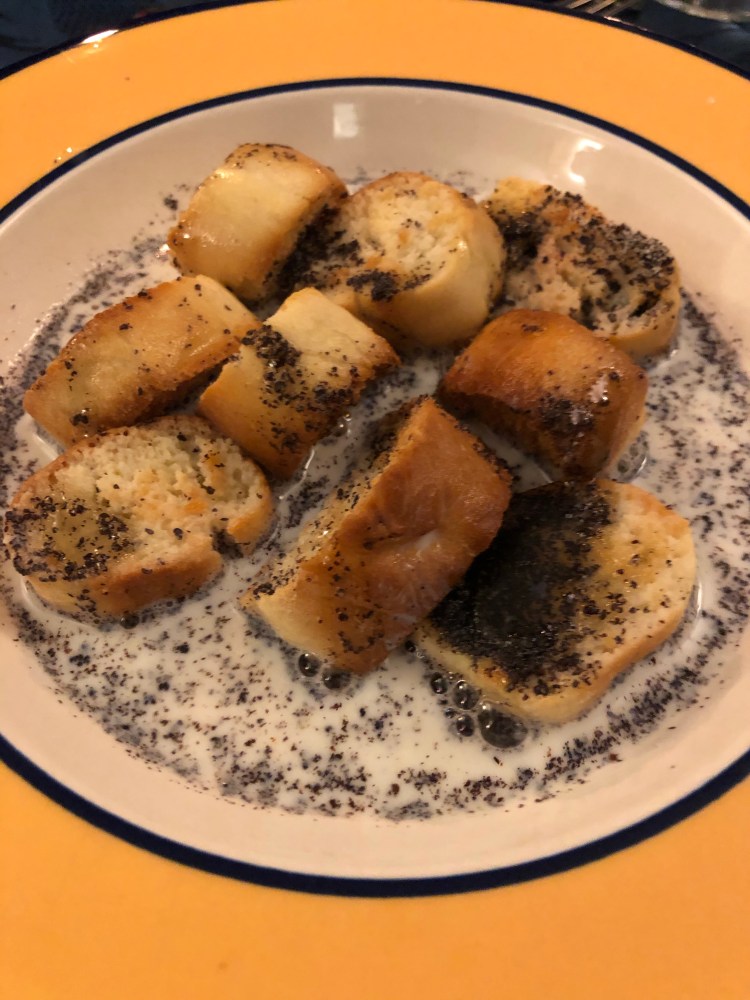
These dishes have long been part of the repertoire, ever since Babú arrived in my unsuspecting Scottish/English family. It is based on the customary Christmas Eve meal eaten in what is now northern Slovakia, where Babú’s stepfather (Nagypapi) grew up. Touchingly, even after the family grew too large and my sister Jane and her family no longer spent Christmas with us, she continued to make this same meal on Christmas Eve. I hope in due course you will too. We always manage to make too much, but the soup freezes well and the cooked bobajka (also known in Hungarian as mákos guba) keep for up to six months in a plastic storage box in a cool larder. For the latter, we use the traditional recipe, based on a raised dough.

Cabbage soup (káposztaleves) 

Serves 6

Ingredients

1 large smoked ham hock
1 kg sauerkraut
Small pack dried ceps
A couple of bay leaves
1 pair Gyulai kolbász (dried paprika sausage, available online from various Hungarian delis, and also now in Tesco, where it’s called ‘properoni’) 
Sunflower oil or lard
1 large onion, finely chopped
2 tbs plain flour
2 tbs sweet paprika or a mixture of sweet and spicy (not smoked)
Salt and pepper
Soured cream

Method

Soak the hock overnight in cold water, changing the water a couple of times if you can. In the morning, soak the ceps in a bowl of warm water.

Put the hock in a large pan, cover with cold water, add the bay leaves, bring to the boil and simmer until the hock is completely tender (at least a couple of hours).

Remove the hock and put aside to cool; taste the cooking water for saltiness and remove the bay leaves. Remove the ceps and keep the soaking water.

Rinse the sauerkraut and add to the hock cooking water (discarding some of it if too salty and making up with fresh water.  Add the ceps, chopped a bit smaller if necessary, their soaking water, the ham hock torn into small pieces and the kolbász sliced into roughly 0.5 cm discs.

Sauter the chopped onion in the oil or lard; once soft, add the flour and the paprika, cook gently for a few minutes, then ladle in some of the soup to loosen. Tip the mixture back into the soup and simmer for another half an hour or so. Season as necessary and serve with soured cream either stirred in or separately.  If you anticipate leftovers, it’s better to keep the soured cream separate.

Bobajka (Mákos guba)

Serves 6

Ingredients
600g strong white flour
2 eggs
400ml milk
20g fresh yeast (or roughly 7g instant yeast)
60g butter (lard is more traditional)
60g caster sugar
A pinch of salt

To Serve
200g ground poppy seeds
200g caster sugar
600ml milk, warmed
Acacia honey

Method

Mix the yeast with 3 sugar cubes, 200ml warm milk and enough flour to make a starter dough. Leave to rise in a warm place.

Put the rest of the flour into the bowl of of a stand mixer, add the melted butter, the sugar, the salt, the yolks of the two eggs and the starter dough. Add enough warm milk to make a dough (not too soft and not too dry) and knead using the dough hook until the dough comes away from the sides of the bowl.  Cover with a cloth and leave to rise in a warm place. Preheat the oven to 180 (fan).

Take pieces of the dough and, on a floured surface, roll them into long, thin sausage shapes.

Bake on an ungreased baking tray until they are beginning to brown.  Note that they will continue to rise during baking, so take care to space them adequately.

Chop into roughly 2cm pieces and bake briefly again.  Traditionally this second baking is done in hot lard, but we dispense with those additional calories.

Serve with hot milk, honey (preferably acacia) and ground poppy seed mixed 50:50 with caster sugar. The debate about the correct order in which to add these rages on.

Pavlova wreath

This is a great pudding at any time of year (we had it once for Sam’s birthday in May), but ideal at Christmas because it’s eye-catching, wreath-shaped, feeds large numbers and can be made well ahead. Most fruits work well with it, so just use whatever’s in season. I first saw Mary Berry making it on television and you can watch an Australian YouTube demo here that includes mango and cherries (but no raspberries). You’ll be left with a lot of egg yolks after making this: a reason to make some proper custard, ice cream, mayonnaise or hollandaise sauce. The latter, of course, is an essential element of our Christmas Day Brunch.

Serves 10-12 

Ingredients

For the pavlova
6 large free-range egg whites
350g caster sugar
1 tsp white wine vinegar
1 tsp cornflour

For the filling

600ml double cream
1 tsp vanilla bean paste
50g icing sugar, sifted
200g strawberries, hulled and quartered
300g raspberries
200g blueberries
50g pomegranate seeds
a few mint leaves, to decorate
icing sugar, for dusting

Method

  1. Preheat the oven to 160C/140C Fan. Line a large baking tray with baking parchment and draw a 30cm circle in the middle of the paper. Draw a 15cm circle in the centre of the larger circle to make a ring.
  2. Put the egg whites in a clean mixing bowl and whisk with an electric whisk until soft peaks form when the whisk is removed. Gradually add the sugar a little at a time, whisking on maximum speed until they are stiff and glossy. Mix the vinegar and cornflour in a cup until smooth, then stir into the egg whites.
  3. Spoon the meringue onto the ring drawn on the baking parchment. Using a large spoon make a shallow trench in the meringue for the cream and fruit to sit in.
  4. Transfer to the oven and immediately reduce the temperature to 140C/120C Fan. Bake for 1 hour 15 minutes, until the outside is hard but still white. Turn the oven off and leave the pavlova inside for an hour or overnight to cool and dry.
  5. To assemble, whip the cream, vanilla paste and icing sugar until stiff peaks form when the whisk is removed. Spoon the cream into the trench in the meringue. Arrange the fruit on top and decorate with a few mint leaves, if using. To serve, dust with icing sugar and cut into wedges.

Christmas stuffing

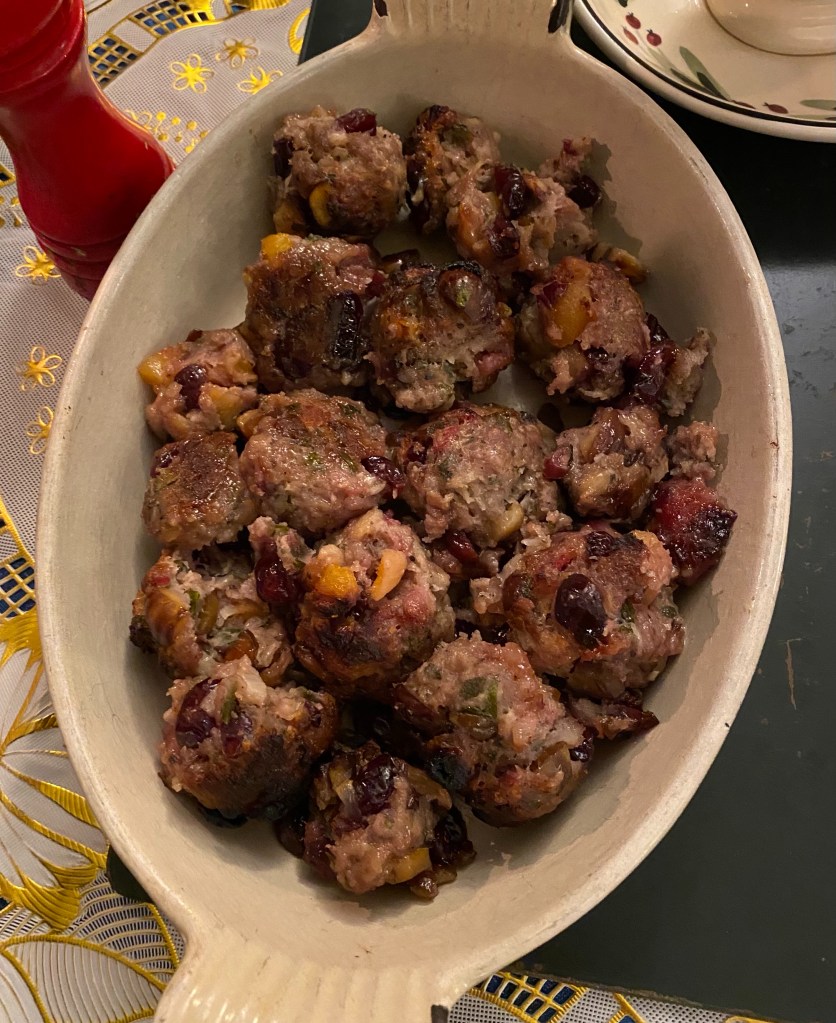
Christmas is the only time we ever deviate from our traditional Scottish oat stuffing. This sausagemeat one is packed with Christmas flavours and goes with turkey, goose, even roast beef (at a push). If you want to control the cooking time of your meat it’s probably best to cook the stuffing separately, shaped into individual balls.

Serves 8

Ingredients

120g dried cranberries or apricots (or a combination of both)
50ml port
1 small onion, chopped
2 rashers unsmoked streaky bacon, cut into strips
40g butter
2 cloves garlic, chopped
350g sausagemeat
60g fresh breadcrumbs
4 tbsp chopped herbs: parsley, thyme and sage
120g chestnuts, roughly chopped
1 egg, slightly beaten
Salt & pepper

Method

Soak the dried fruit in port for an hour. Fry onion and bacon in butter until soft. Add garlic, cool and mix with all the rest of the ingredients, adding enough egg to bind (you won’t need the whole egg if it’s a large one). Shape into balls and arrange on a foil-lined baking dish. Cook at 180 fan for 40 minutes until brown and a bit crispy.

Butternut, orange & sage galette

This one’s stretching the rules a bit again. Galettes have become quite trendy and I’ve only started making them recently. A galette is a single crust, free-form pie, which can be sweet or savoury – this eye-catching vegetarian one comes from Ottolenghi’s Flavour, published in 2020. We’ve eaten it twice and although the list of ingredients is long and it’s quite a faff to make (sorry, Ottolenghi), it gets wolfed down in minutes.

Serves 6

Ingredients

For the pastry
100g plain flour
30g wholemeal flour
20g polenta
1½ tsp caster sugar
¾ tsp flaky salt
1 tbsp sage leaves, finely chopped (about 6 leaves)
¼ tsp freshly ground black pepper
20ml olive oil
80g unsalted butter, fridge-cold and cut into 1½cm cubes
60ml ice-cold water

For the filling
1 small butternut squash, skin on, deseeded and cut into 1 cm-thick, skin-on half-moons (600g)
2 carrots, peeled and cut into 1cm rounds
2 tbsp olive oil, plus extra to finish
2 tbsp finely chopped sage leaves, plus 3 whole, to garnish
2 tsp caraway seeds, toasted and crushed
Flaky salt and black pepper
1 head garlic, top fifth cut off to expose the bulbs
1 banana shallot, skin on, top trimmed to expose the flesh
2-3 oranges, zest finely grated, to get 1½ tsp, then juice to get 160ml
50ml maple syrup
125g mascarpone
1 small egg, beaten

Method

Pre-heat the oven to 240C (220C fan). 

For the pastry, mix the first eight ingredients together in a large bowl. Add the butter and incorporate into the flour, squashing each cube between your fingers – don’t over-work it, though: you want chunks throughout the dough. Add the water, stir to combine, then use your hands to gather the dough together – it will be quite sticky.

Transfer to a very well-floured work surface and roll into a 28cm x 18cm rectangle, flouring the rolling pin, surface and pastry as you go. Fold the longer ends in towards each other, so they meet in the middle, then roll out once. Now fold in the shorter ends to meet in the middle, roll out once more, then fold in half, so you end up with a square. Use your hands to stretch the dough into a 14cm circle, then wrap in clingfilm and refrigerate for 30 minutes.

While the dough is chilling, toss the squash and carrots in the oil, a tablespoon of chopped sage, the caraway, a teaspoon of salt and plenty of pepper. Spread out on two large oven trays lined with baking paper; don’t worry if there is some overlap. Drizzle the garlic and shallot with a little oil, wrap both separately in foil, and add to the trays.

Roast the butternut and carrots for 25 minutes, or until golden brown, then remove from the oven. Leave the garlic and shallot to roast for 15 minutes more, then remove and, once cool enough to handle, squeeze out the flesh and finely chop.

Turn down the oven to 220C (200C fan). Transfer the dough to a well-floured surface and roll out into a 30cm circle, dusting the rolling pin as you go. Gently lift the dough onto a baking tray lined with greaseproof paper and refrigerate for another 30 minutes.

Put the orange juice and maple syrup in a medium saucepan on a medium-high heat and cook for about 10 minutes, or until it reduces to the consistency of a thick, sticky syrup.

In a small bowl, mix the mascarpone with the chopped roast garlic and shallot, the orange zest and remaining chopped sage. Season with a pinch of salt and plenty of pepper, and stir again to combine.

Spread the mascarpone mixture over the dough, leaving a 4cm border around the edge. Cover the mascarpone with the squash and carrot, then drizzle over the orange caramel.

Fold the edges of the pastry up and over the filling, brush the exposed pastry with the egg, then bake for 30 minutes, until golden brown. Leave to cool for 20 minutes, then top with the remaining sage leaves and serve.

Meringue roulade

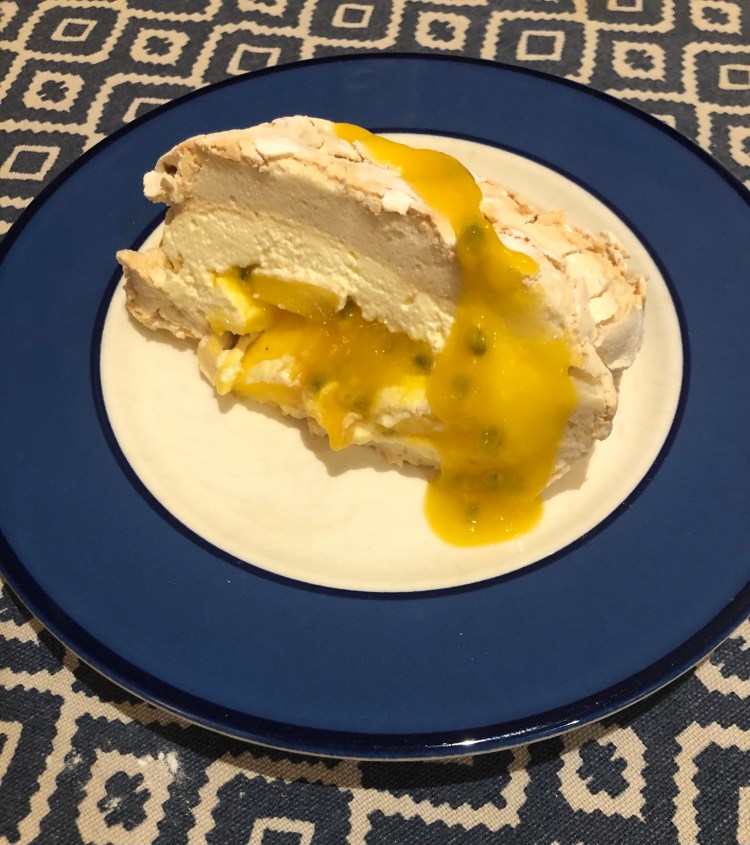
We’re approaching the end of the two-year publishing period earmarked for this blog back in January 2020. Reviewing the collection, I find relatively few pudding recipes, so here’s a trusted favourite to redress the balance. The source is Darina Allen’s excellent Ballymaloe Cookery Course book, a present from Grandma in 2007 which has proved to be both instructive and inspirational. This version is filled with mango and served with a passionfruit sauce, but you can use any seasonal fruits of your choice and serve with a complementary sauce, such as a raspberry coulis

Serves 8-10

Ingredients

Meringue
4 large egg whites
225g caster sugar

Mango and passion fruit sauce
1 large ripe mango
4 passion fruit
1-2 tbsp freshly squeezed lime juice
1-2 tbsp caster sugar

Filling
1 large ripe mango, peeled and thinly sliced
2 passion fruit
425-600 ml whipped cream (use double or whipping cream and be careful not to over-whip)

You will also need a swiss roll tin 32 x 20 cm lined with tin foil and brushed with non-scented vegetable oil.

Method

Preheat the oven to 160 (fan).

Ballymaloe’s ‘Break all the Rules’ method for making meringue is to put everything into a spanking clean bowl together, rather than adding the sugar gradually. Using a stand mixer or a hand whisk, break up the egg whites and then add the sugar in one go. Whisk at full speed until the mixture forms stiff, dry peaks. Spread the meringue gently over the tin with a palette knife: it should be quite thick and bouncy. Bake in the oven for 15-20 minutes. Put a sheet of tin foil on the work top and turn the roulade onto it. Remove the base foil and allow the meringue to cool.

Meanwhile, make the mango and passion fruit sauce: peel the mango, chop the flesh and purée in a food processor. Transfer to a bowl or jug, add the passion fruit seeds and juice, freshly squeezed lime juice and sugar to taste. Cover and chill. Separately, slice the mango for the filling and mix gently with the passion fruit seeds and juice. 

To assemble the roulade, turn the meringue onto a sheet of baking paper dredged with icing sugar. Spread two-thirds of the cream over the roulade, cover with a layer of fruit (reserving some for decoration). Hold your breath and roll it all up like a swiss roll.

Transfer to a serving dish. If you feel inclined to, pipe some rosettes of cream on the top, decorate with some of the reserved fruit, dredge with icing sugar and serve with the sauce.

Raspberry coulis

This is so simple that it hardly warrants a whole post. Whizz one up if you want to add zing and a pop of colour to all sorts of puddings: chocolate roulade, meringues with fruit and cream, even a lemon tart.

Ingredients
400g raspberries
1 tbsp lemon juice
3 tbsp icing sugar

Method

Put all the ingredients in a small food processor or use a stick blender to blitz until very smooth.

Set a sieve over a jug or a bowl. Tip the mixture into the sieve and stir / push through the liquid using a spoon or a spatula. Discard the seedy pulp left in the sieve. Decant to a jug and serve. Any leftovers will keep in the fridge for a couple of days.