Mulled wine

An essential lubricant at this time of year, mulled wine always fills the house with evocative smells. After literally years of experimenting with different versions, I’ve concluded that Jamie Oliver’s recipe is the best. Follow this and you can dispense with those ghastly sachets of spice mix or – even worse – the pre-mixed bottles on the bottom shelf of the booze aisle. The only change I’ve made is a slight reduction in the quantity of nutmeg and star anise. For larger numbers, or thirstier drinkers, a family-sized slow cooker is an excellent vessel. If you’re after extra ‘warmth’, pep it all up with a shot of brandy, though it tastes perfectly authentic without.

Antique Hungarian glass inherited from Nagymami.

Serves 10 (allegedly)

Ingredients

2 clementines
1 lemon
1 lime
200 g caster sugar
6 whole cloves
1 cinnamon stick
3 bay leaves
½ nutmeg, for grating
1 vanilla pod
2 bottles Chianti or other Italian red wine
1 star anise

Method

  1. Peel large sections of peel from the clementines, lemon and lime using a speed-peeler.
  2. Put the sugar in a large saucepan over a medium heat, add the pieces of peel and squeeze in the clementine juice.
  3. Add the cloves, cinnamon stick, bay leaves and about 10 to 12 gratings of nutmeg. Halve the vanilla pod lengthways and add to the pan, then stir in just enough red wine to cover the sugar.
  4. Let this simmer until the sugar has completely dissolved into the red wine, then bring to the boil. Keep on a rolling boil for about 4 to 5 minutes, or until you’ve got a beautiful thick syrup. The point of doing this first is to create a wonderful flavour base by really getting the sugar and spices to infuse and blend well with the wine. It’s important to make a syrup base first because it needs to be quite hot, and if you do this with both bottles of wine in there you’ll burn off the alcohol.
  5. When your syrup is ready, turn the heat down to low and add your star anise and the rest of the wine. Gently heat the wine and after around 5 minutes, when it’s warm and delicious, ladle it into heatproof glasses and serve.

Christmas Day Brunch

A slap-up brunch on Christmas morning evolved as a family ritual after the grandparents moved to Garde. The kitchen is always a hive of activity, with one person (wo)manning the egg-poaching station, others grilling bacon, laying the table, picking at beigli or sneaking off for last-minute present-wrapping. Liverpool tops, Bloody Marys, chocolate coins from stockings and potato preparation often feature too. Allow a good hour and a half to prepare and consume all this before Father Christmas arrives growling hőha.

Ingredients for 6

Hollandaise sauce
6 English muffins
1 pack unsmoked back bacon
200g smoked salmon
240g spinach
6-10 eggs

Also
2 bottles champagne
1 litre orange juice
Coffee
Satsumas
Beigli
Mince pies

Method

Ideally there will be several people mucking in, who between them need to do the following:

1. Make the hollandaise
2.  Grill the bacon
3. Arrange the smoked salmon artistically on a serving plate, dress with lemon juice and black pepper
4.  Lay the table
5.  Make Buck’s Fizz: half fill a large jug with orange juice and top up with one bottle of champagne
6. Make coffee
7.  Wilt and season the spinach: put it in a colander and pour a kettle-full of boiling water over it, then season and add lemon juice at the last minute
8.  Split and toast the muffins
9.  Poach the eggs: you should be able to manage four at a time in a large pan of boiling water with a dash of vinegar; give the eggs three minutes at a gentle simmer, then drain on kitchen paper.

Allow everyone to help themselves, building their own eggs benedict/florentine/royale as a vehicle for lashings of hollandaise sauce. Wash down with Buck’s Fizz, straight champagne or just coffee. Follow with satsumas, beigli and mince pies to keep you full until the main meal of the day.

Hollandaise Sauce

Rosa and Zita are already dab hands at hollandaise sauce but the recipe merits recording because it is a key component of Christmas Day brunch – and indeed gets wheeled out as often as our arteries can stand it when we gather en famille. There are quicker ways to make it than the method detailed here. You can melt the butter and whizz it into the eggs with a food processor but the slow incorporation of solid butter over a bain marie makes for a more contemplative process, with more reliable results too. The quantities are not really set in stone and they’re easy to adjust for smaller / larger numbers.

Serves 6 generously

Ingredients

250g unsalted butter, cut into 2cm cubes
4 egg yolks
2 tbsp water
Juice of 1 lemon
Salt & pepper

Method

Whisk the egg yolks and water in a bowl over simmering water and then gradually beat in the butter, adding one cube at a time to start with, more at a time as you progress.  Keep beating for up to 20 minutes, until the sauce starts to thicken. If you need to abandon it even briefly, make sure you appoint a stand-in because it can curdle in an instant. (If it does, just start again with another egg yolk and slowly beat in the curdled mixture as you did the butter cubes.) Season with salt, pepper and lemon juice, adjusting to your preference. Salt apparently interferes with the chemical composition of eggs, so it’s best not to add it until this stage. Remove from the heat and allow to thicken further.

A variation: Bearnaise sauce

This sauce works on the same principle but the acid kick comes from tarragon vinegar instead of lemon. Finely chop a shallot and add to a small saucepan with 3 fat sprigs of tarragon and about 100ml white wine vinegar. Bring to the boil and reduce until about 2 tbsp of liquid remain. (You can dispense with this stage and use ready-made tarragon vinegar if you’re feeling lazy.) Make your egg-butter sauce as described above, then at the seasoning stage, add the tarragon-infused vinegar, salt, pepper and a good handful of chopped fresh tarragon.

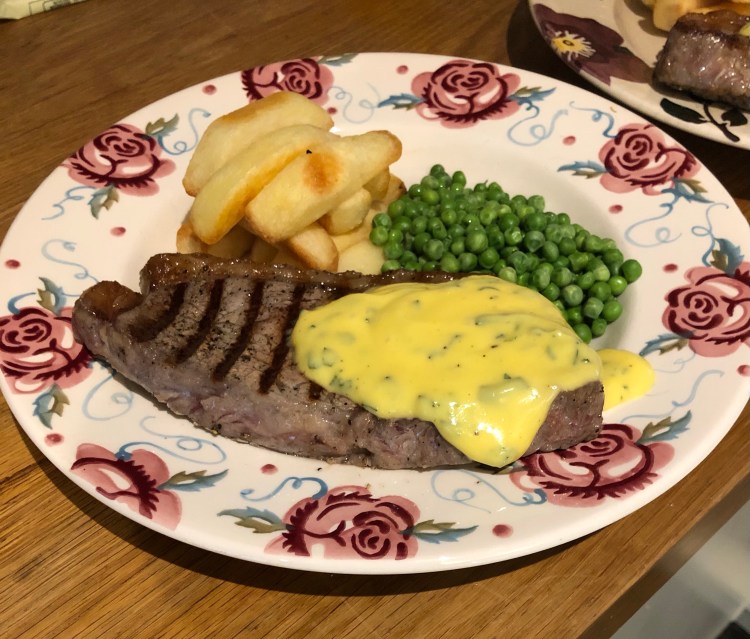
Sirloin steak with bearnaise sauce (marking the end of Veganuary 2021)

Christmas pudding

You might question whether this meets the criteria for inclusion as an established family favourite: although it’s served every year at Christmas, some of you eat it only under sufferance and I’ve made it just twice myself. Nonetheless, it is traditional British fare, an important piece of culinary history, a cultural artefact, and pretty impressive to be able to produce yourself. The recipe passed on to me by Granny comes from Constance Spry, the bible from which Granny taught herself to cook after marrying as a teenager, and has required some modifications for our 21st century kitchen: gills, pounds and ounces are converted to metric units, vegetable suet replaces beef to make it vegetarian-friendly, and these days I tuck in 20p coins instead of the traditional sixpence. You can use gluten-free flour and breadcrumbs if necessary and I suppose that the committed vegan could find a suitable replacement for the eggs. Once covered and steamed, these puddings keep for ages – 12 months or more – so you only need to make these every other year. Leftover dried fruit and spices can be used to make mincemeat, pepped up with rum or brandy, and will also keep for a very long time.

Makes 2 puddings, each serving 8

Ingredients

150g self-raising flour
250g fresh white breadcrumbs
350g currants
350g sultanas
350g raisins
250g vegetable suet
150g chopped candied peel
100g flaked almonds
1 grated apple
Juice and grated rind of an orange
1 tsp mixed spice
½ nutmeg, grated
½ tsp salt
4 eggs, beaten to a froth
100ml brown ale or stout
350g brown sugar
6 x 20p coins, individually wrapped in foil
2 tbsp brandy

Equipment
2 x 1-litre pudding basins (17cm diameter)
Greaseproof paper
Pudding cloths
String

Method

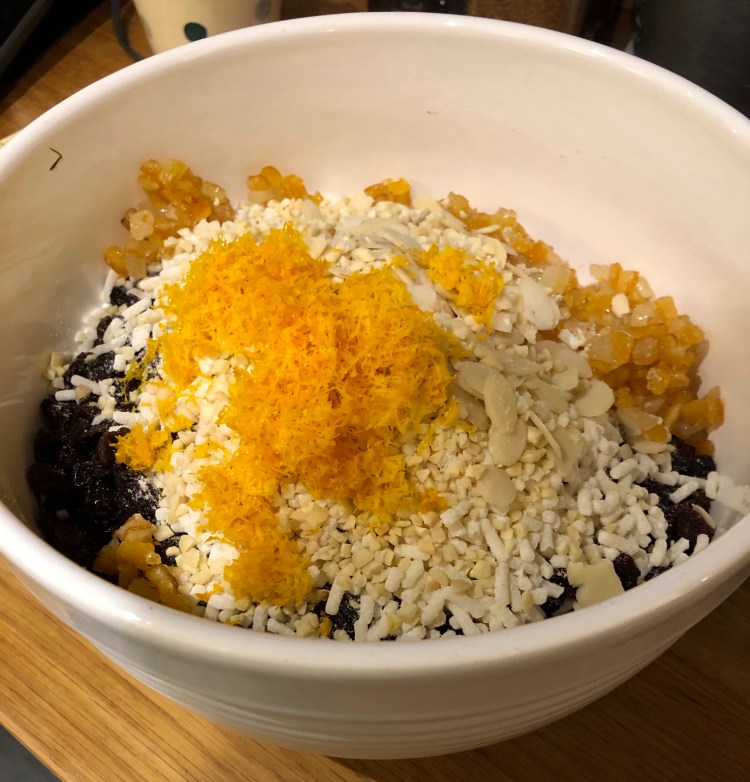
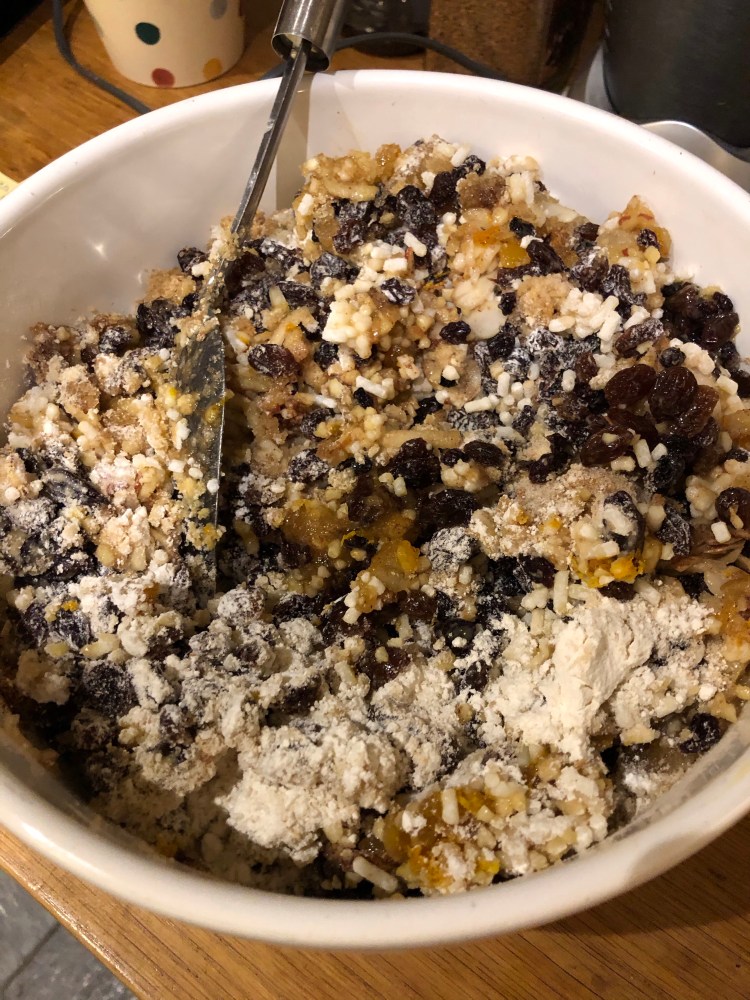
Mix all the ingredients together in a large bowl. Invite family members to stir it and make a wish (remotely over the group chat, if necessary). Pack the mixture into greased pudding basins, hiding three 20p coins in each one. Cover with greased papers and floured pudding cloths, tied tightly with string, creating a handle across the top (see picture) and boil in a steamer for 6-8 hours. Store tightly covered in a cool, dry place for as long as you need.

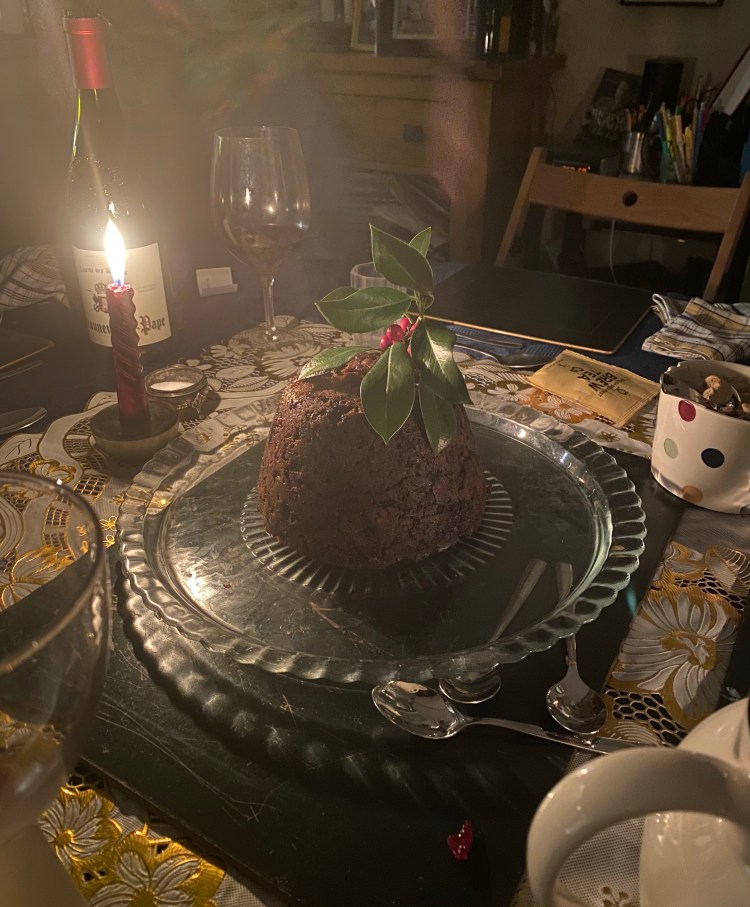
To serve on Christmas Day: steam the pudding for a further 3 hours. Turn out onto a serving dish. Heat 2 tbsp brandy (I use a ladle over a flame), set alight and pour it over the pudding. Top with a sprig of holly, turn out the lights and process to the table, singing loudly. Serve with brandy butter or custard.

Spaghetti & meatballs

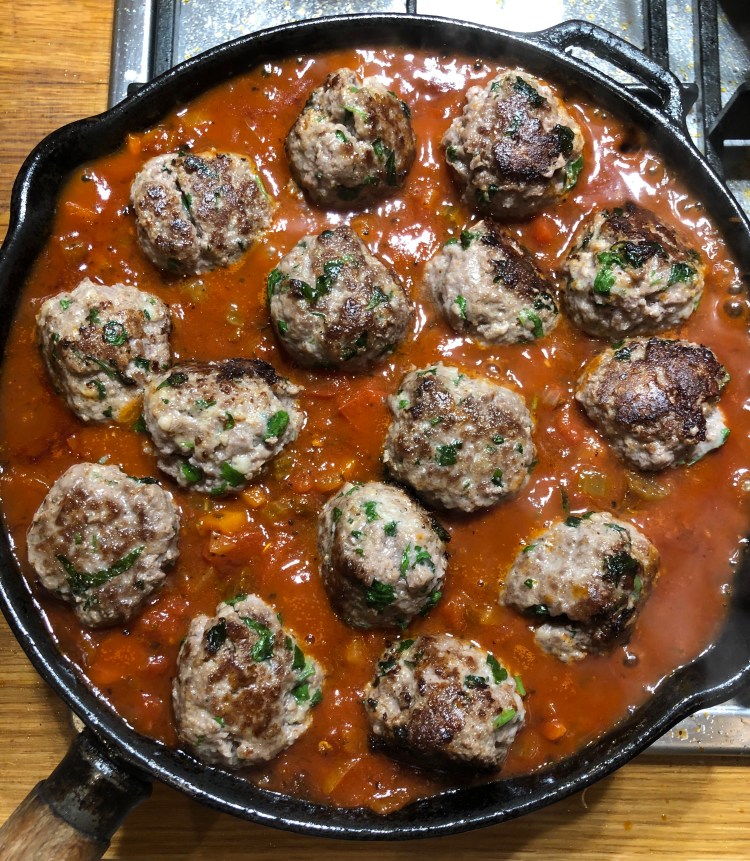
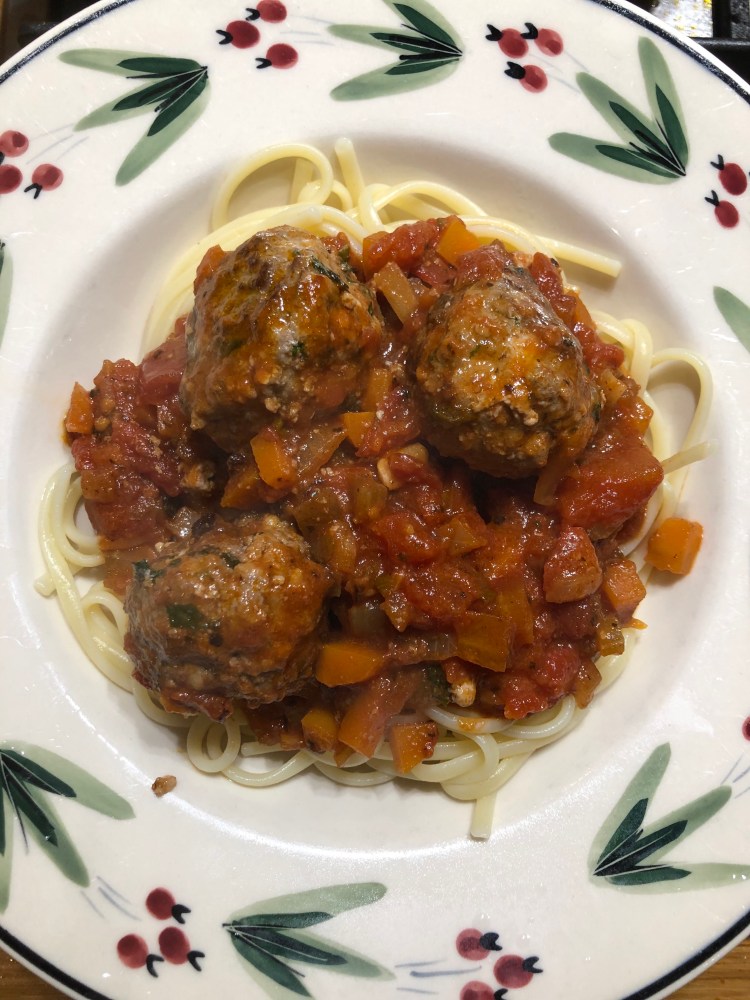
As a cash-and-time-poor working mother I have always been on the hunt for quick, cheap supper dishes to sling together after a busy day at school. This recipe entered the repertoire when we were living in South Croxted Road – I think it was inspired originally by a two-minute TV ad. You can make the meatballs from scratch, as illustrated in the picture below, but it’s quicker and no more expensive to buy them ready-made. (At time of writing, Sainsbury’s is selling 12 for just £2.) You can also use a non-meat substitute to make a completely vegan meal. A crisp green salad on the side is the only accompaniment needed.

Serves 4 generously

Ingredients

1 large onion – brown or red – halved and thinly sliced
2 cloves garlic, sliced
1 hot red chilli, sliced, or use chilli flakes
3 tbsp olive oil
2 packs of 12 meatballs
1 small bottle (187ml) red wine
1 500g carton passata
2 bay leaves
3 fat sprigs thyme (optional)
1 tsp sugar
Salt & pepper
Spaghetti or linguine – allow 90g per person
Grated parmesan to serve

Method

Heat 2 tbsp olive oil in a frying pan over a medium heat. Fry the meatballs – in batches if necessary – just long enough to brown their surfaces. Remove to a plate. Add another tbsp oil to the pan and then the onion; lower the heat and cook slowly for 15 minutes. Add the garlic and fresh chilli and fry for a further two minutes. Raise the heat, pour in the red wine and bubble for a couple of minutes to boil off the alcohol. Now add the passata, thyme, bay leaf, sugar, salt and pepper. Return the meatballs to the pan, cover and simmer on a low heat while you cook the pasta. Serve with grated parmesan and a sprinkling of chilli flakes if you want an extra kick.

This sauce had extra elements: carrots and celery

Colcannon potatoes

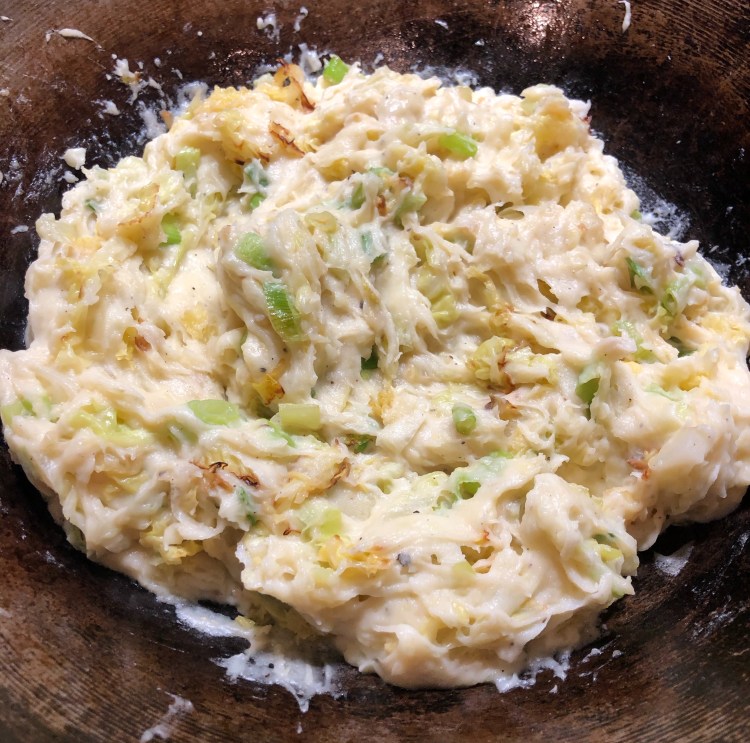
Your father’s recently-confirmed Irish heritage justifies the special place this dish touches in our collective stomachs. We’ve been eating it, typically with sausages and a tomato salad, since 1995, when Delia Smith published her Winter Cookbook, and it has reappeared regularly since we signed up for Oddbox deliveries and found ourselves obliged to experiment with cabbage. Delia records that the original Irish recipe calls for a well of melted butter in the middle of a fluffy pile of potatoes and cabbage, the idea being to dip each forkful into the butter before eating it. Fearing for your arteries, you might understandably baulk at that, but don’t stint on the butter and cream in the adapted version below.

Serves 4 generously

Ingredients

700g floury potatoes, peeled and cut into chunks
Half a large, firm green cabbage, very finely sliced
A bunch of spring onions (6-8), trimmed and finely sliced, including the green parts
75ml single cream or full fat milk
75g butter
Nutmeg, salt and freshly ground black pepper

Method

First prepare and cook the potatoes. Cover the chunks with cold water and add a generous teaspoon of salt. Put a lid on the pan, bring to the boil and simmer until they are absolutely tender (about 20 minutes from the point it boils). 

Meanwhile melt 25g butter in a large frying pan or wok. Soften the spring onions in the butter, then add the cabbage and sauté for about 3 minutes, stirring until tender and slightly golden at the edges.

Drain the potatoes and cover with a tea towel to absorb some of the steam for 2 minutes, then return to the pan and add the cream, 50g butter, nutmeg, salt and pepper. To mash them, Delia recommends using an electric hand whisk, which is certainly quick, and fine if you’ve used floury potatoes and don’t apply too vigorous a speed. Otherwise there’s a risk they’ll turn gluey, so a traditional potato masher (or ricer) is perhaps a safer alternative. Taste and season your fluffy mash. Finally, stir in the contents of the frying pan and serve with or without extra melted butter.

Frangipane

This is a really useful recipe to have up your sleeve. The basic almond filling is simple to make and all kinds of fruits combine well with it. Depending on the fruit you use you can play around with complementary flavours (orange zest would go well with figs, for example) and the alcoholic spirit – or omit that altogether. Hugh Fearnley-Whittingstall’s Cuisine Bon Marché is my starting point for the recipe below: in his version the fruit is arranged in the pre-baked pastry and the almond cream spread on top. An alternative, more eye-catching method is cream first, then fruit, as illustrated in the picture below. 

Serves 8, using a 24cm tart tin

Ingredients

Pastry
170g flour
a pinch of salt
100g cool unsalted butter, diced
2 heaped tbsp icing sugar
2 egg yolks
scant tbsp cold water (if needed)
extra flour for dusting

Almond cream
170g unsalted butter, softened
85g caster sugar
3 large eggs
170g ground almonds
1 tbsp rum
30g flaked almonds (optional)

Fruit options
10-12 fresh apricots (pre-bake if not ripe), halved
6-8 fresh figs, halved or quartered
450g blueberries or cherries
5-6 peaches, quartered
5-6 pears (poach first if very hard)
5-6 plums, quartered

Method

Sift the flour and salt together and rub in the butter, by hand or in a food processor. Stir in the sugar and then the egg yolks and a dash of water (if needed) until the pastry binds together. Form into a pat on a floured surface (try to avoid handling the pastry too much), cover with cling film and leave to rest in the fridge for an hour.

Grease the tart tin, then roll out the pastry on a floured surface and line the tin. (A tip: save your off-cuts for patching up any holes that emerge during blind baking.) Prick the pastry shell all over with a fork. Chill in the fridge again for 30 minutes.

Preheat the oven to 170C (fan). Scrunch up some baking parchment, open it out, lay it over the pastry and fill with baking beans. Bake blind for 15 minutes, then remove the parchment and beans and bake for a further 5 minutes, uncovered. (To ensure a crisp, sealed base, brush the pastry with egg white – saved from the egg yolks – before the second blind bake.) The tart shell can be filled when still warm, and re-baked straight away, or covered when cool and left for a few hours.

To make the filling, cream the butter with the sugar until the mixture is pale and light. Beat in the eggs, one at a time, then the ground almonds, and finally the rum. Don’t worry if the mixture looks a bit curdled – it will right itself when baked. 

Pour/spread the filling into the tart shell and press the fruit into it. If you like, you can sprinkle a few flaked almonds over the top.

Bake in a preheated moderate to hot oven (160 fan) for 35-40 minutes until golden-brown on top. Serve warm or at room temperature, but don’t chill it before serving. Cream or crème fraîche would be the perfect accompaniment.

Mediterranean Cod

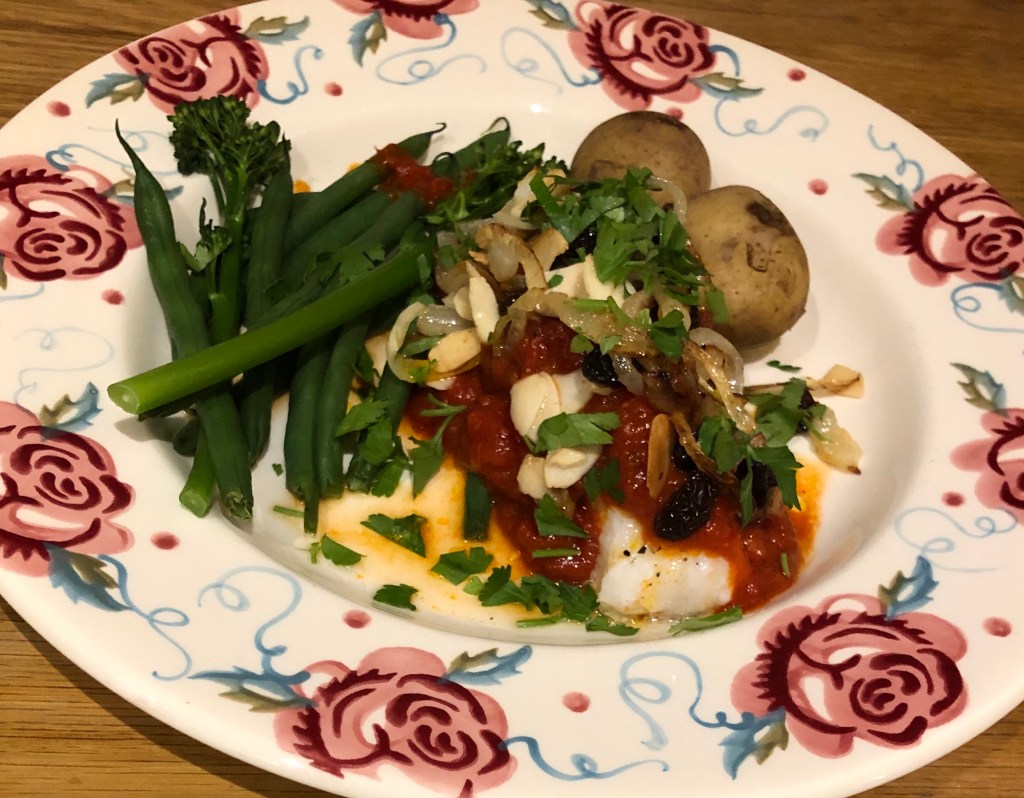
Claudia Roden’s Mediterranean Cookery (1987), a well-thumbed volume in Granny’s cookbook collection, is the source of this recipe. Roden herself attributes it to an Egyptian hotel chef – the north African influence is evident in the raisin-almond garnish. The first time I remember making my own version was in Brantôme (Dordogne) in 1994: baby Sam and I were holidaying, sans Dom, with Toby, Georgia and Farmer and we needed a quick supper dish after a day at Rocamadour. It looks rather lovely and stylish but is actually incredibly simple to make; light and healthy too.

Serves 6 

Ingredients

6 pieces cod loin (allow 150-200g per person)
Olive oil
3 large sprigs parsley
Lemon juice
Salt & pepper

Sauce

2 cans chopped tomatoes
2 crushed cloves of garlic
2 tbsp extra virgin olive oil
1 tbsp tomato puree
1 tsp sugar
1-2 bay leaves
Salt & pepper

Garnish

1 large onion, peeled, halved and thinly sliced
2 tbsp olive oil
2 tbsp flaked almonds
2 tbsp raisins
3 tbsp flat leaf parsley, chopped

Method

Make the sauce and garnish first: throw all the sauce ingredients together in a pan, heat and simmer for 20 minutes. For the garnish, fry the onion in the oil on a low-ish heat for 10 minutes until just starting to brown. Add the almonds and stir to toast lightly for 2 minutes, then add the raisins for just one more minute. These last steps can be done just before serving. Otherwise, turn off the heat and set aside.

Preheat the oven to 180 (fan). 

Find a baking tray large enough to hold all the cod in a single layer. Slosh it with olive oil, sprinkle with salt and pepper and lay the cod on top. Drizzle over some more oil, add a squeeze of lemon, salt and pepper and place the parsley sprigs on top. Cover with foil and bake in the oven for 15-20 minutes until just cooked through.

To serve, place a cod fillet on each plate and top with 3 tbsp tomato sauce, the garnish and a sprinkling of chopped parsley. So easy!

Brantôme 1994

Fajitas

Like so many of our family favourites, this meal was inspired by Granny, who wheeled out a luxury fajita spread for an Aldwych summer party at Garde over a decade ago. It was, however, only after realising that fajitas were a staple of several GWOD households that I bit the bullet and started making them myself. There are many elements to pull together, so this is something of a monster post, but you can lower your standards cut corners by buying the sauces (guacamole & salsa) ready-made. You can also cater for a range of dietary requirements by varying the protein base: beef, for example, or tofu can be used instead of – or in addition to – chicken. Whatever your components, do pack in the classic Mexican flavours: chilli, coriander (sorry, Louis), lime juice etc.

Guacamole and salsa

Serves 6

Ingredients

2 packs of 8 tortilla wraps – allows for 2 per person + extra for the hungry
Guacamole – see below
Tomato salsa – see below
Chicken & pepper stew – see below
Lots of limes
Soured cream
Grated cheese
1 jar of jalapenos
Shredded lettuce (optional)
1 can of refried beans, heated (optional)

Guacamole

Ingredients

2 large ripe avocados
1 green chilli, chopped
2 spring onions, chopped
2 cloves garlic, chopped
A generous handful of coriander, roughly chopped
1 or 2 limes, juiced
Salt & pepper

Method

Rosa prefers to use a mortar & pestle (the authentic way) but a food processor is a lot less labour intensive. Just scoop out the avocado flesh, chuck everything in, blend, taste and adjust the seasoning. Don’t make this too far in advance because avocados are quick to brown after cutting, although the addition of acid (lime juice here) will delay that a bit.


Tomato salsa

Ingredients

6 tomatoes
1 small red onion, very finely chopped
1 red chilli, very finely chopped
½ tsp chipotle paste (or another chilli if you have none)
1 tsp sugar
1 lime, juiced
A few mint leaves, chopped
Salt & pepper to taste

Method

This can be made well in advance. Halve the tomatoes, remove the green/white tip of the core and discard the seeds and juice. Dice the tomato flesh and stir together with the rest of the ingredients.


Chicken & pepper stew

Ingredients

4 large chicken breasts, cut into strips 
1 large onion, halved and sliced
2 cloves of garlic, sliced
3 peppers (yellow and/or red), cored and cut into fat strips
3 heaped tbsp seasoned flour
Half a pack of fajita seasoning
1 tsp paprika (optional)
2 tbsp olive oil
1 tbsp honey
Lime juice
More chopped coriander
Salt & pepper to taste

Method

Heat the oil in a large frying pan for which you have a lid (or you can use foil). Add the onions and garlic and fry for about 5 minutes until they start to soften but don’t brown. 

In a wide, flat bowl, stir together the flour, fajita seasoning and paprika. Turn the chicken pieces in this mixture, shaking off any excess, and add to the frying pan in batches. Cook until most of the chicken surfaces have turned opaque. Add the peppers, honey, salt and pepper, keep frying and stirring and then slosh on a small cupful of boiling water to create a thick sauce. Cover the pan with a lid, turn the heat down and stew for about 20 minutes, until the chicken is cooked through and the peppers are soft. Check the seasoning: I usually add a good squeeze of lime and some chopped coriander before serving.


To assemble your fajitas

Like bobajka, this is a matter of personal preference. I like to spread the tortilla with guacamole and refried beans, then add the chicken, salsa, soured cream, jalapenos and a squeeze of lime before folding up, bottom first to create a pocket that catches the juices. Your father favours the dribbling open-roll method. Grated cheese is a popular addition and shredded lettuce has its place too. Zita, I believe, eschews all but the soured cream and chicken. Each to their own.

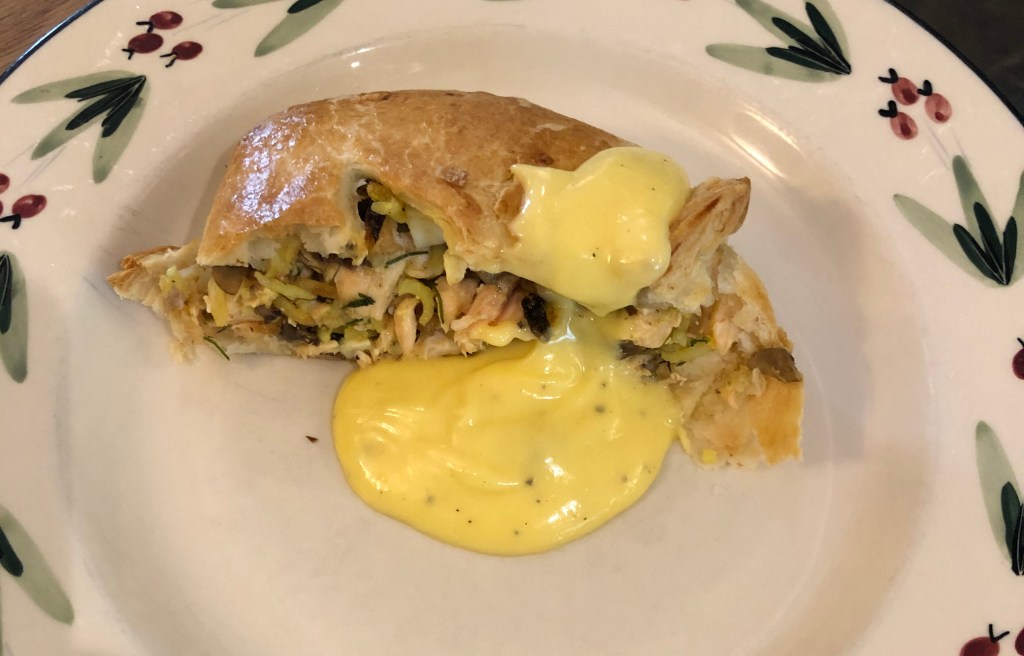
Chicken, leek & saffron pie

Lindsey Bareham’s daily recipe columns (first in the Evening Standard, later in The Times) have inspired many of our family meals over the years. This one stems from her recipe for a ‘pasty pie’ (Evening Standard, March 1998 – we were living in Rouse Gardens at the time) and has evolved into just a pie, with a number of modifications to the filling. LB’s original used chicken thighs, simmered with classic stock ingredients. Our preference is for breast pieces, a home-made stock, and a splash of wine too. ‘Creative’ pastry decorations are optional. Serve with green vegetables and potatoes if you fancy more carbs in addition to the pastry.

Serves 4-6

Ingredients

2 packs diced chicken breast pieces or 3 large breasts, cut into chunks or 6 meaty chicken thighs
3 leeks, trimmed, sliced into ½ cm rounds and washed
a generous pinch of saffron stamens
20g flour
20g butter
100ml white wine
100ml chicken or vegetable stock
salt and pepper
1 pack puff pastry, ideally ready-rolled
1 egg yolk, beaten with a splash of milk

Method

Place the saffron in a small cup and pour on about 2 tbsp of boiling water. Melt the butter in a large frying pan for which you have a lid. Fry the leeks until they are softened a bit (5 mins) and then add the chicken. Continue to cook until the chicken surfaces have all turned opaque. Sprinkle on the flour and stir it in, then add the saffron and its water, along with the wine, stock, salt and pepper. Stir it all in, bring to a gentle simmer and cover with a lid. Cook for about 10 minutes.

Pre-heat the oven to 180 fan / 200C.

Butter the edge of an oven-proof dish and then spoon in the chicken and leek filling. You should aim to use a dish that brings the filling as high as possible up to the surface.

Roll out (or unfurl) the pastry and trim some strips off the edges. Use these strips to cover the rim of your pie dish and brush the surface with egg wash. Cut a cross in the centre of the main pastry sheet, then lay it over the top of the pie. Pinch the top sheet all the way around the rim to seal it to the strip below and cut away the excess that hangs over the edge. Now ‘knock up’ the pastry edges to form a good seal by holding a sharp knife horizontally against the cut edge and gently tapping the pastry edge all round (this is something I learned from Great-Granny). Brush the pastry surface all over with egg wash. You can use any leftover bits of pastry to add your ‘individual’ decorations – brush these with egg wash too.

Bake in the oven for 25-30 minutes until the pie is puffed and golden.