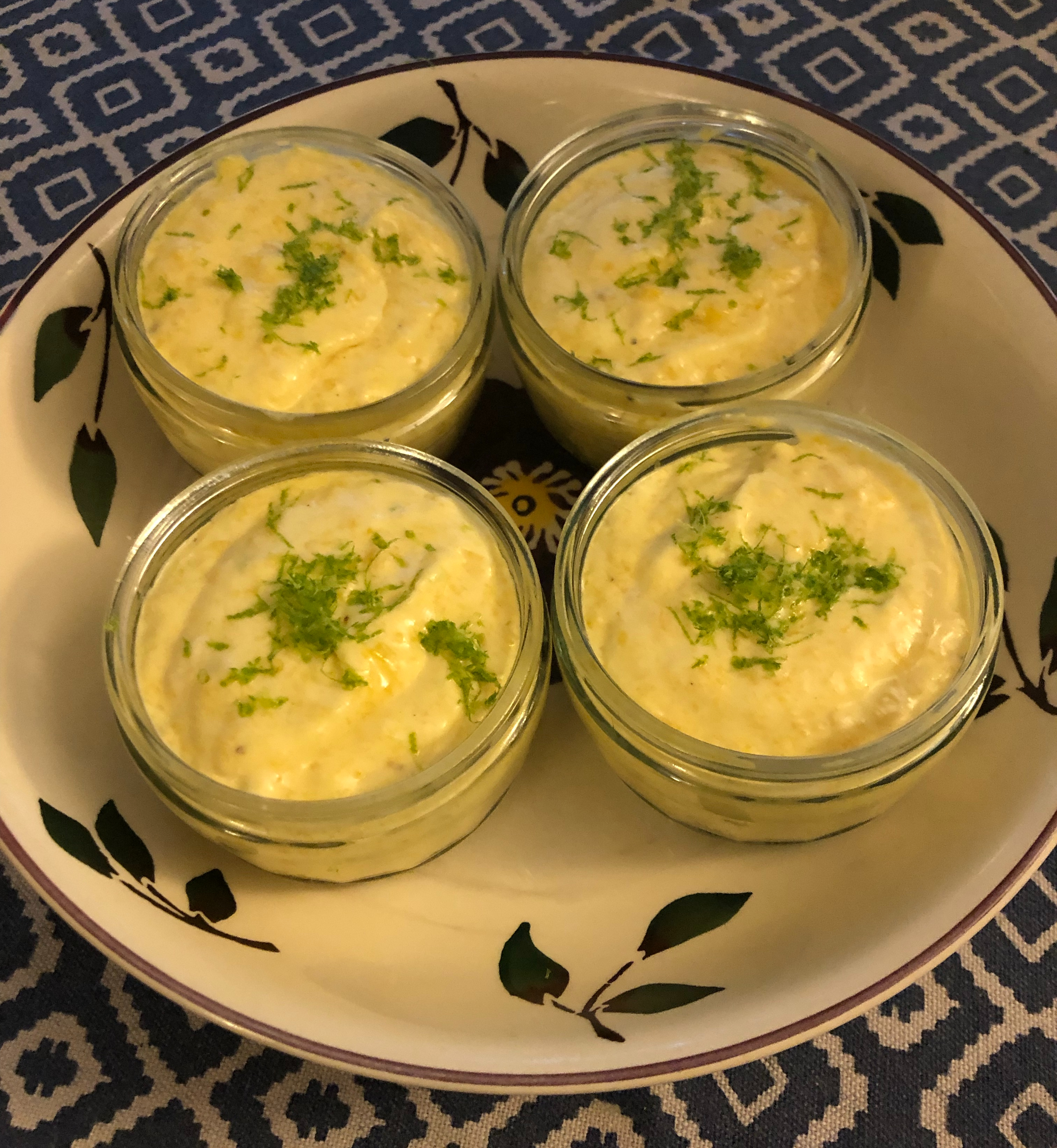
After a slight hiatus on the pudding front, here is a recipe for a straightforward but richly aromatic fruit fool. It comes from Sophie Grigson’s Food for Friends (see Aubergine Parmigiana and Chickpea & tomato soup) and makes a great end to an Indian-themed meal, thanks to the cardamom and the orange-flower water, which transport the flavour profile in an eastward direction. The zested lime is my own addition, to provide a contrasting pop of colour.
Serves 6-8
Ingredients
6 cardamom pods 50g sugar 2 ripe mangoes 1 lime, zested 1 tbsp orange-flower water 300 ml double or whipping cream
Method
Bash each cardamom pod and extract the seeds. Grind these with the sugar until the consistency of icing sugar. Peel the mangoes and remove the flesh from the stones. Cut them up roughly, then place in a food processor with the cardamom sugar, orange-flower water and half the lime zest. Pulse briefly to create a rough or chunky puree. Whip the cream and fold into the mango puree. Pile into individual ramekins or glasses and top with the remaining lime zest. Chill for at least an hour before serving.
It’s useful to have a range of vegetarian starters up your sleeve. This one tastes of early summer but has gone down a treat in December too. The recipe comes from Simple by Ottolenghi who, though not vegetarian himself, has revolutionized vegetarian cooking during the last decade. His newspaper columns and beautiful cookbooks have inspired much repertoire expansion chez Collier, and we are enthusiastic regulars at the local middle eastern supermarkets that stock the ingredients to which Ottolenghi has opened our eyes.
Makes 20-25 fritters
Ingredients
500 frozen peas, defrosted 120g ricotta 3 large eggs, beaten 1 lemon: finely grate the zest to get 1 tsp, then cut into 6 wedges to serve 3 tbsp za’atar 100g plain flour 1½ tsp baking powder 20g mint leaves, finely shredded 200g feta, crumbled into 2cm pieces about 800ml sunflower oil for frying salt and black pepper
For the sauce 300g soured cream 10g chopped mint leaves 2 tsp dried mint ½ tsp finely grated lemon zest ¼ tsp salt
Method
Get the peas out to defrost well in advance, or stick them in the microwave on the defrost setting for about 7 minutes. To make the sauce, simply stir all the ingredients together in a bowl.
Put the peas into a food processor and pulse a few times until roughly crushed. In a large bowl, beat the eggs and stir in the ricotta, lemon zest, ¾ tsp of salt and a good grind of pepper. Add the peas and mix well. Now add the za’atar (it seems like a lot but is essential to the flavour), flour and baking powder. Mix until just combined, then gently fold in the mint and feta: you don’t want the chunks of feta to break up.
Pour the oil into a medium saucepan (I use a wok) and place on a medium high heat. Once hot, use 2 dessertspoons to scoop and shape quenelles of the mixture: don’t worry about making them uniform in shape, but they should be about 4cm wide. Carefully lower them into the oil – I manage 5 at a time in the wok – and fry for 3-4 minutes, turning once, until cooked through and golden brown. If they seem to be browning too quickly and not cooking through, reduce the temperature of the oil a bit. Using a slotted spoon, transfer to a plate lined with kitchen paper while you continue with the remaining fritters. Serve warm, with a wedge of lemon and the soured cream sauce.
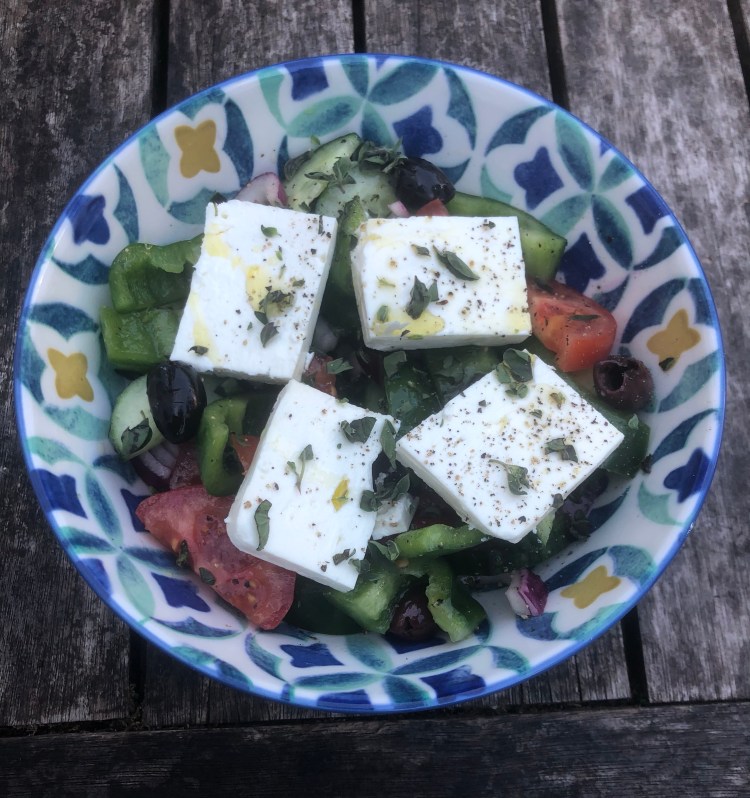
As a Classics student with a convenient bolt-hole at the British embassy in Athens, I spent several of my long university summer holidays in Greece, often travelling alone. My go-to evening meal at any local taverna (in Patmos, say, or Loutro or Porto Rafti) was Horiatiki or ‘garden’ salad (Χωριάτικη σαλάτα) washed down with a cold half-bottle of Retsina. Back home, in the kitchen at Gale, I felt flattered to have Greek-salad-connoisseur-status conferred upon me by Granny, and would pronounce with confidence upon the slicing of the feta or the ‘correct’ colour of peppers to use (green). The secret to this dish lies in the simplicity and quality of the ingredients: juicy tomatoes, crisp cucumber (sorry, Zita), creamy feta cheese, good quality extra virgin olive oil and tangy black olives. It’s the perfect accompaniment to a summer barbecue, with or without Retsina, which is definitely an acquired taste.
Greek salad for two
Serves 6
Ingredients
3 tomatoes, cut into wedges 1/2 medium red onion, sliced 1 cucumber, sliced into thick half-moons 1 green pepper, sliced or cut into chunks 16-20 black olives (ideally Kalamata) 200g good quality feta cheese, cut into blocks and NOT crumbled 1 tbsp red wine vinegar or juice of half a lemon 4 tbsp (60ml) extra virgin olive oil 1 tsp dried oregano or 2 tsp fresh Salt and pepper
Method
Combine the first four ingredients in a bowl large enough to accommodate them all. Slosh over 3 tbsp olive oil, add black pepper, half the oregano and stir. If you’re preparing the salad in advance, don’t add the olives and feta until close to serving: their high salt content will cause the cucumber to disgorge its liquid and you’ll be left with a watery soup at the bottom of your serving bowl.
When you’re ready to serve, add the olives, vinegar or lemon juice and a little salt to taste. Arrange the feta slices on top of the salad, drizzle with a little more olive oil and sprinkle with the remaining dried or fresh oregano.
This is a relatively recent addition to the family repertoire – a recipe sourced from Olive Magazine when we were wondering what to do with a large basket of broad beans from the garden at Garde. Fresh broad beans are ideal – they’re usually in season from late June to mid-September – but frozen work equally well and will save you some podding time. It is admittedly a labour-intensive meal to produce and it requires a certain amount of fore-planning because the meat is best if left to marinate overnight. We have found Alexa’s ‘quick-fire quiz’ a stimulating distraction to offset the monotony of double-podding the beans: in fact, Louis and I achieved our best ever score in summer 2020 during a nail-ripping hour of podding.
Serves 4
Ingredients 600g lamb neck fillets ½ tsp salt flatbreads warmed, to serve (optional)
BROAD BEAN SMASH 2 tbsp olive oil 1 clove garlic, crushed 300g broad beans 300g, double podded (start with 500g of podded, for which you’ll need 1.5kg fresh broad beans in their pod) handful chopped mint, plus a few leaves to serve handful, chopped dill, plus a few leaves to serve
Method 1. To make the marinade, heat a small frying pan and toast the cumin seeds, coriander seeds, fennel seeds and cardamom pods for a few minutes until fragrant. Cool, then grind to a powder in a spice grinder or using a pestle and mortar. Mix in a bowl with the other marinade ingredients and season. Put the lamb neck fillets in a baking dish, pour over the marinade and leave in the fridge for at least 4 hours or preferably overnight.
2. To make the feta cream put the feta, yogurt and dill in a small food processor. Whizz until smooth, then tip into a bowl.
3. Take the lamb out of the fridge about an hour before you want to cook it and season with ½ tsp salt. Heat the oven to 140C (fan), 160C/gas 3. Cover the baking dish with a double layer of foil and cook for 2½–2¾ hours or until the lamb is crusted and golden. Take out and rest while you make the broad bean smash.
4. Cook the podded broad beans (fresh or frozen) in boiling water for 2 minutes, then drain and refresh with cold water to make them cool enough to handle. Grit your teeth and set to work popping the beans out of their thick, leathery skins by squeezing gently.
5. To make the smash, heat the olive oil in a pan. Cook the garlic for 3-4 minutes or until fragrant, then tip in the broad beans. Stir until well coated, then season. Use a masher to roughly crush most, but not all, of the beans. Season and stir in the chopped mint and dill.
6. Divide the smash between plates. Pull the lamb neck into chunks and toss in any cooking juices, then pile on top of the beans. Sprinkle with more dill and mint leaves, then serve warm with the feta cream.
Courgettes (or zucchini) are wonderfully versatile vegetables. Cheap and quick to prepare, they can be served as a side dish or beefed up to make a main meal in themselves, and they go well with an array of herbs and spices from all sorts of cuisines. The recipes and pictures below are a mere selection, recording how we’ve developed our courgette repertoire for family meals over the years. Oddbox deliveries and the annual glut from the garden in Sussex keep us experimenting.
A side dish: braised courgettes with garlic & oregano
Courgettes with garlic & oregano accompanying herb-crusted rack of lamb and rosemary roast potatoes
Serves 4
Ingredients
2 medium courgettes 2 cloves garlic, crushed 1 tbsp butter 1 tbsp olive oil 1 tsp dried oregano Salt
Method
Wash the courgettes and trim the ends. Cut them into batons 3cm x 1cm x 1cm. In a saucepan for which you have a lid, melt the butter and olive oil together, add the garlic and oregano, stir and cook briefly. Add the courgettes and a pinch of salt, stir, cover and cook over a low heat for about ten minutes until the courgettes are just cooked but not mushy. Check seasoning and serve.
A quick supper: courgette pasta
This Collier invention evolved from Hugh Fearnley-Whittingstall’s recipe for courgettes trifolati in Cuisine Bon Marché (1994). It can withstand various adaptations according to what you have in the fridge: a spoonful of Philadelphia here, a wedge of leftover gruyère there as an alternative – or in addition – to cream and parmesan respectively. We all know that Louis would not have survived university without courgette pasta.
Serves 4
Ingredients
2 medium courgettes 2 cloves garlic, crushed 1 tbsp butter 1 tbsp olive oil 50 ml cream 2 tbsp crème fraîche 2 tbsp grated parmesan 350 g spaghetti Salt & pepper
Method
Wash, trim and coarsely grate the courgettes. Don’t be alarmed by the size of the heap: courgettes contain a lot of water, which will cook off, reducing the vegetable to a pulp. Bring a large pan of salted water to the boil for the pasta.
Warm the butter and olive oil in a wide a saucepan for which you have a lid, add the grated courgettes and stir in the crushed garlic with ½ a teaspoon of salt. Cover and cook on a low heat for 10-15 minutes, then remove the lid and cook uncovered until most of the water has evaporated. Put the spaghetti on to cook.
Add the cream, crème fraîche and some ground black pepper to the courgettes and simmer for another 5 minutes. Stir in the grated parmesan (or other cheese) and check the seasoning. Drain the spaghetti, then stir all the sauce into it. Serve with a tomato salad.
Riffing on courgettes
I love Ottolenghi’s recipes in Simple (2018) and Flavour (2020), which do wonderful things with courgettes: two examples are illustrated below. And don’t forget that courgette flowers can be eaten too, stuffed and battered. The first time I made those was in Italy in 2018 (Zita and I were on holiday with Toby and Kira), when our ingredients were a bit limited. The picture below records a more recent attempt with a River Cottage recipe: even in our well-stocked local vicinity I had to resort to a substitute (Boursin) for the required ricotta.
Left to right: Stuffed courgettes with pine nut salsa; super-soft courgettes with harissa & lemon; deep-fried courgette flowers with soft cheese & herbs
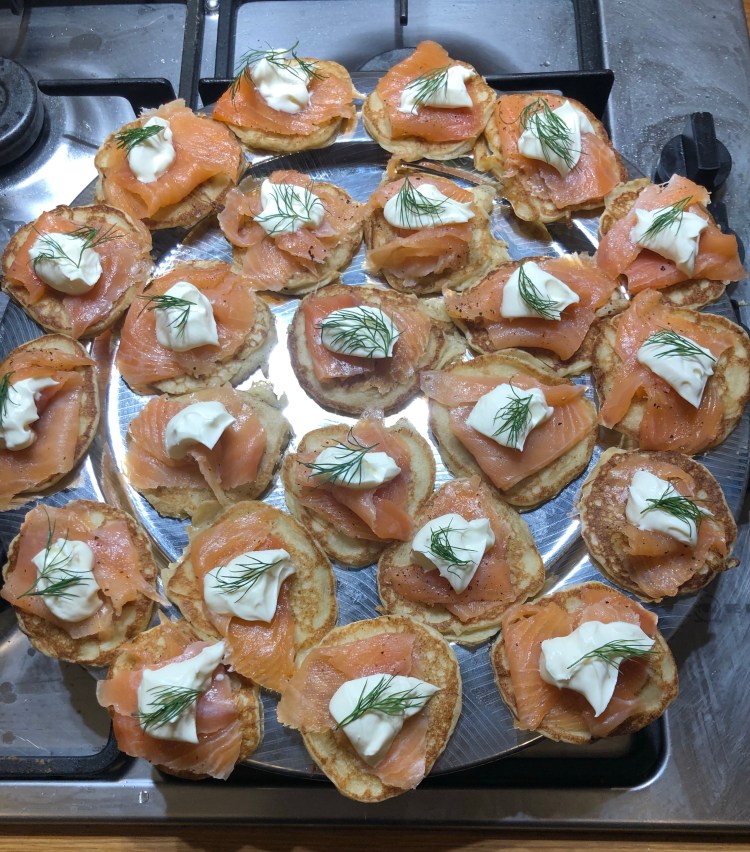
Homemade blinis are a world away from the thick, claggy discs sold in vacuum-packed plastic. Originally from Russia, they’re traditionally made with buckwheat flour, but I prefer Delia Smith’s lighter version which uses a mixture of strong white and buckwheat. You can make these large (approx 10cm diameter) as a starter, or in smaller bite-sized canapé portions, as illustrated at the end of this post. Top with crème fraîche, smoked salmon and dill or caviar if you’re feeling flush. Wash down with a shot of chilled vodka.
Makes about 24 blinis
Ingredients 50g buckwheat flour 175g strong white plain flour 1 x 6g sachet easy-blend dried yeast 1 x 500ml tub crème fraîche (reserve 300ml for the topping) 225ml whole milk 2 large eggs 1 tsp salt 40g butter
For the topping 450g smoked salmon 300ml crème fraîche A few dill sprigs
Method
Sift the salt, buckwheat flour and plain flour together into a large bowl and sprinkle in the yeast. Place 200ml of the crème fraîche into a measuring jug and add enough milk to bring it up to the 425ml level. Warm gently (in a saucepan or microwave) – don’t let it get too hot or it will kill the yeast. Separate the eggs and mix the yolks into the milk (keeping the whites for later). Pour the whole lot into the flour mixture and whisk until you have a thick batter. Cover the bowl with a clean tea towel and leave in a warm place for about an hour.
After an hour the batter will be spongy and bubbly. Now whisk up the egg whites until they form stiff peaks and fold them gently into the batter. Cover with the cloth again and leave as before for another hour.
To make the blinis, melt the butter in a heavy based frying pan, then tip it out into a cup and use the melted butter to brush the pan all over (with a tight wodge of kitchen paper) as you make each blini. Keep the pan on a medium heat and add 1½ tbsp of batter for each blini. Don’t worry if it looks too thick – it’s just light and puffy. After 40 seconds, flip the blini over and give it 30 seconds on the other side. Transfer to a wire cooling rack and repeat, brushing the pan with butter each time. [If you’re making canapés, use teaspoonfuls of the mixture and cook for about 15 seconds on each side.]
Once all the blinis are made and cooled, wrap them in foil parcels, with 6 laid out flat in each one. To serve, preheat the oven to 140 C (lower for fan ovens) and warm the foil parcels for 10 minutes. Serve two or three per person, topped with smoked salmon and a sprig of dill, with a dollop of crème fraîche on the side.
Nadiya Hussain is one of my cooking heroes: she’s a devoted mother, darling of Bake Off, and has done much to destigmatize mental health issues. A couple of years ago she demonstrated a recipe for egg and mushroom rolls on TV – basically a thin omelette fused to a tortilla wrap and filled with whatever takes your fancy. Working originally with what I had to hand in the fridge, I’ve developed Nadiya’s recipe and now regularly wheel these out for a WFH lunch. A whole wrap will feed one hungry person; half will suffice for the more abstemious.
Makes 2 wraps
Ingredients
2 large wholemeal tortilla wraps 4 eggs 4 tbsp chilli pesto 200g mushrooms, sliced 1 fat clove garlic, minced 1 tsp fresh thyme leaves Salt & pepper 100g gruyère cheese, coarsely grated (or use emmental or cheddar) 50g butter 2 tbsp sunflower, vegetable or groundnut oil
You will also need a large frying pan (26cm) big enough to accommodate a tortilla wrap lying flat.
Method
Melt half the butter in the pan, add the mushrooms, garlic and thyme and cook until the mushrooms are soft and have released their water. Season with salt and pepper, transfer to a plate and wipe the pan clean.
Spread 2 tbsp chilli pesto on each wrap and have your grated cheese ready. Beat two eggs in a small bowl, add pepper and a little salt. Heat half the remaining butter and 1 tbsp oil in the pan until foaming hot and the butter is just starting to turn a little brown. Pour the eggs into the pan, count to five, then turn the heat down and swirl the eggs to the edges, drawing the cooked bits inwards to make a flat, almost-cooked omelette.
Now for the slightly tricky bit: place the tortilla wrap, pesto side down on top of the egg, then with a large spatula flip the whole lot over. Cover the cooked egg surface with half the mushrooms and cheese, then roll into a log. Transfer to a board while you cook the second wrap in the same way. Slice in half and serve with plenty of kitchen paper.
A homemade potato salad is infinitely preferable to anything you can buy in a shop, although you should feel no guilt about using ready-made mayonnaise, as you might for this dish’s close relative, tartare sauce. The main difference between the latter and this recipe is that I use spring onions here to bump up the green colour. Granny adds grated carrot to her potato salads – feel free to sling those in too. This makes an ideal accompaniment to Wiener schnitzel or to a summer barbecue. I am publishing it today in the (vain?) hope of nudging the British weather gods into action.
Serves 6 as a side
Ingredients
1kg small new potatoes 100g mayonnaise 2 spring onions, trimmed and chopped 2 gherkins or 4-6 cornichons 1 tbsp capers (whole if small, roughly chopped if large) 1 tbsp dill, finely chopped 1 tbsp flat-leaf parsley and/or chives, finely chopped Salt and pepper
Method
Put the potatoes in a large saucepan, cover with cold water, add a teaspoon salt, cover and bring to the boil. Once boiling, cook for 15-20 minutes. Drain and set aside to cool completely. Once cool, cut each potato in half, leaving any particularly tiny ones whole.
Mix together all the rest of the ingredients in a serving bowl large enough to accommodate the potatoes, and with elbow room to stir. Taste and adjust seasoning. Finally, stir in the potatoes so that they are thoroughly coated in the not-quite-tartare-sauce, clean the edge of the bowl with a quick wipe and serve.
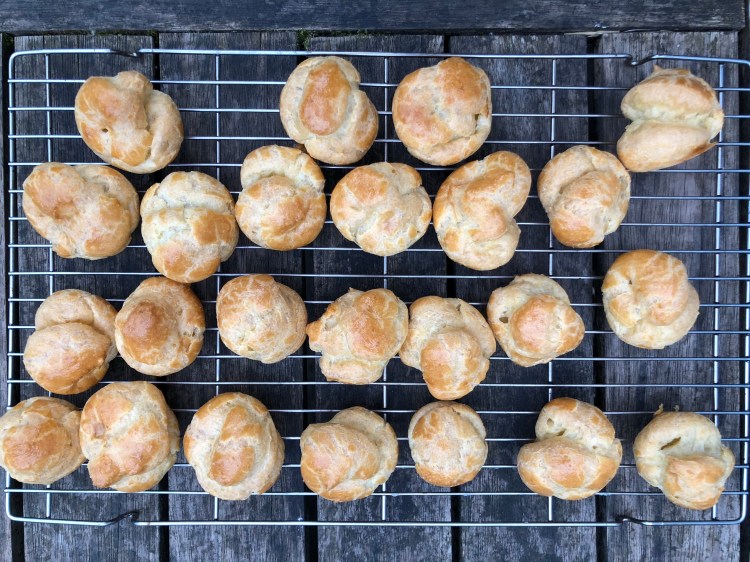
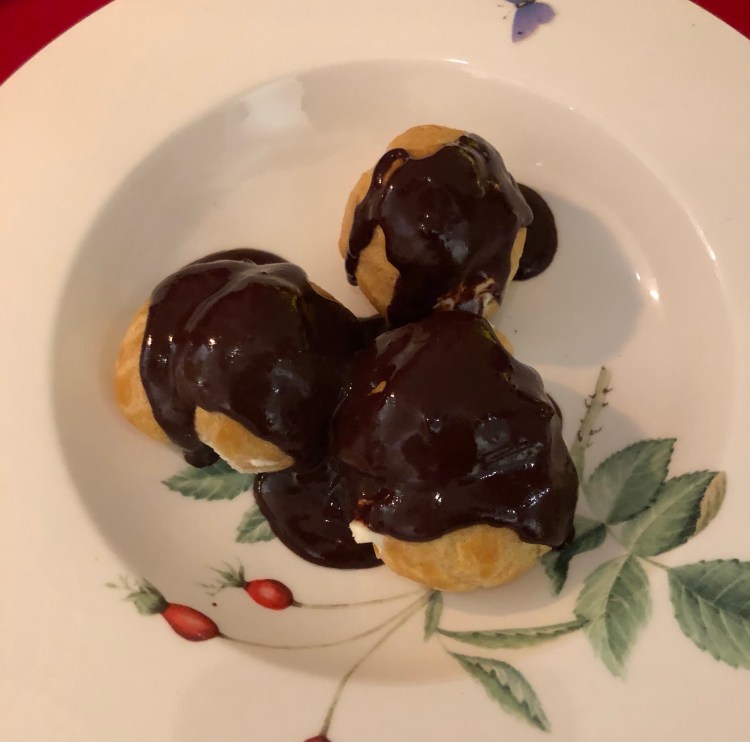
Choux pastry is nervously avoided by many a domestic cook: its preparation is a bit alarming and most people think it’s beyond their cooking skills. Although I don’t produce it often, it has held few fears for me because I learned to make it at school as a ten year-old. (The less said about the French teacher who taught us, the better, but he was at least an excellent cook.) The traditional filling for profiteroles – or their long, slim relative, éclairs – is a crème pâtissiere but whipped cream is less complicated and makes for a lighter result. Do experiment with different fillings and flavours once you feel confident about making the basic recipe. It’s the starting point for a show-stopping croquembouche, the traditional centrepiece at French celebrations. The recipe below is borrowed, with slight adaptations, from Lindsay Bareham’s masterclass in The Times back in October 2009.
Serves 6
Ingredients
125 plain flour Pinch salt 75 butter plus an extra knob 3 medium eggs 1 whisked egg, to glaze
For the chocolate sauce 200g dark chocolate (min 70% cocoa solids) 300ml water 100g caster sugar
For the filling 300ml double cream 2 tbsp icing sugar ½ tsp vanilla extract (optional)
You will also need greaseproof paper and a piping bag.
Method
Sift the flour and salt together into a bowl. Put 75g butter and 150ml water in a medium-sized saucepan over a low heat. Once the water has boiled and the butter melted, turn off the heat. Add all the flour and immediately take a wooden spoon and beat vigorously until the mixture forms a stiff dough and comes away from the sides of the pan. This happens very quickly (within a minute). Leave the dough to cool for a few minutes to avoid cooking the eggs when you add them. Crack one egg into a bowl or cup and add to the pan. Beat briskly to incorporate the egg; unlikely though it seems at first, all will be well. Repeat with the second and third egg.
Heat the oven to 180 fan. Spoon the choux dough into a piping bag fitted with a plain nozzle. To prevent the balls from sliding and the greaseproof paper from slipping, butter a baking sheet and line with lightly buttered greaseproof paper. Pipe balls about the size of a walnut about 2cm apart, fretting not if you can’t form a perfect ball. Paint the tops with beaten egg, using the brush to smooth the top. Cook in the oven for 15 minutes, reduce the heat to 170 fan and cook for a further 10 minutes. Remove from the oven and pierce the side of each ball with a sharp knife. Return to the oven for a further 5 minutes until crisp and golden. Transfer to a wire rack to cool.
To make the chocolate sauce, break the chocolate into a pan with the water and melt over a low heat, stirring until smooth. Add the sugar and continue stirring until dissolved. Bring the sauce to the boil, then reduce the heat and simmer for 10-15 minutes until thick and syrupy.
Lightly whisk the cream, with the vanilla extract and icing sugar, until holding soft peaks. Half an hour before serving, slit one side of each profiterole and fill with a spoonful of whipped cream (a piping bag is useful again here). Arrange three or four profiteroles on each plate and serve with the hot chocolate sauce (reheated just before) in a jug.
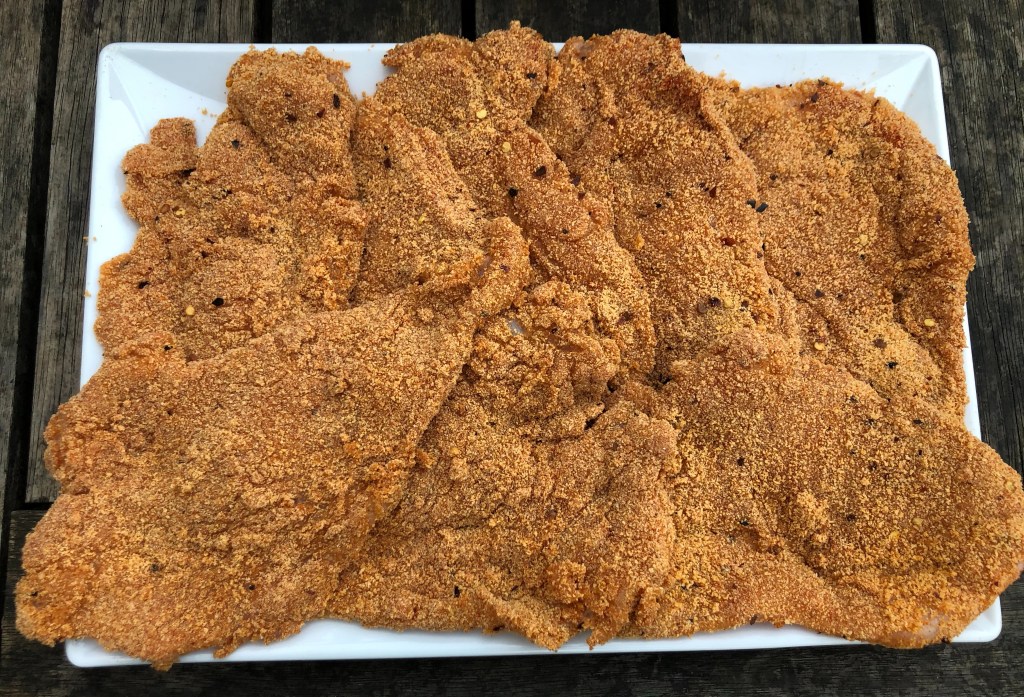
Since you can all make it on autopilot, you don’t really need a recipe for Wiener schnitzel, so my introduction today is going off-piste into linguistic territory. A schnitzel is a thin, breaded, fried cutlet traditionally made from veal; the ‘Wiener’ part means ‘from Vienna’. In Hungary they call the dish Bécsi szelet, Bécs being the Hungarian name for Vienna. And in Hungary the technique of coating meat in breadcrumbs is called ‘panírozás’, from the verb ‘panírozni’. If you want to make a joke that only a Hungarian will get, you can refer to the act of putting on make-up as panírozás.
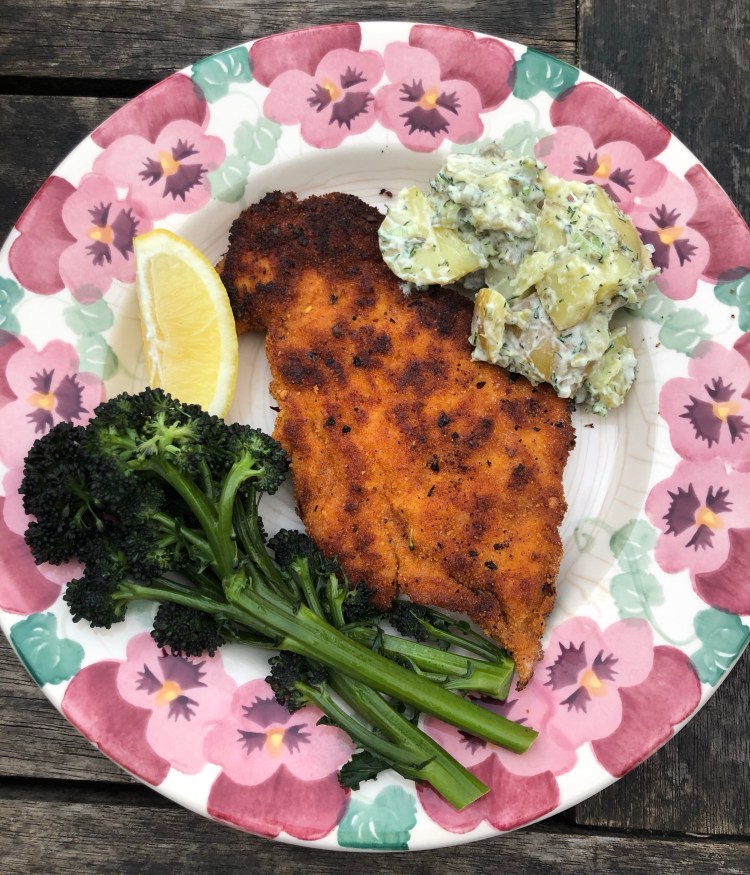
Our version of Wiener schnitzel uses turkey rather than veal and the basic recipe below lends itself to some experimentation. (Zita has become quite expert at incorporating spices and lemon zest into the flour and breadcrumbs. For an even more exotic take, try Ottolenghi’s recipe that uses tahini in both coating and sauce.) It is a cornerstone of your repertoire because I would invariably put it on the weekly menu for Monday nights, when I would be out at Choir – and of course it was one of the four dishes Babú ‘invited’ the girls to make during that unforgettable, volcano-blighted trip to Budapest in April 2010 (see Banoffee pie). Its traditional accompaniment is a potato salad, but we eat it more commonly with boiled new potatoes or chips, and steamed green beans.
With spicy embellishments
Serves 4
Ingredients
1 pack quick-cook turkey steaks 60g seasoned flour (salt, pepper & nutmeg + any embellishments you like) 2 eggs 1 pack dried breadcrumbs – you will need more than you think Oil for frying Lemon quarters for serving
Method
Set up your assembly line: flour, then eggs, then breadcrumbs in three wide bowls. Dry the turkey steaks, then dip each in turn in the flour, egg and breadcrumbs. Keep in a single layer on a large plate.
Heat the oil in a large flat frying pan, switch on the extractor fan and fry the schnitzels on a medium heat until golden brown on both sides. You don’t want the heat too high because the breadcrumbs are liable to catch and burn. Drain on kitchen paper and serve at once with lemon wedges, mayonnaise and ketchup.






 Years of Practice