Salade Niçoise

Like ratatouille, and as you can tell from its name, Salade Niçoise comes from Nice. The version we eat has several inauthentic elements (potatoes? lettuce? cucumber?), or so Antonia was told by the French teacher who assessed her at 11+. It is a firm family favourite, and the reason you all learned to make a vinaigrette at a young age. A quirkier reason for this salad’s special place in family history is that it provided a vehicle for learning about world religions: there was a heady period when Dom and Zita, inspired by a poster taped to the fridge, would make a Salade Niçoise weekly for Saturday lunch, arranging it each time into a distinctive religious symbol. The Om was a triumph.

Serves 6 

Ingredients

1 romaine lettuce, cut or torn into chunks
½ cucumber, halved lengthwise and sliced into chunks
3 tomatoes, halved lengthwise and sliced into chunks
12 new potatoes
100g fine green beans, trimmed
40g pitted black olives
3 large eggs
2 tins tuna steak (in water or brine)
1 tin anchovies (optional)
1 tbsp capers (optional)
Handful of basil leaves, torn into pieces if large (optional)

Dressing (vinaigrette)

100ml extra virgin olive oil
2tbsp white wine vinegar
1tbsp balsamic vinegar
2 cloves garlic, crushed
1 heaped tsp Dijon mustard
1 tsp honey
Salt & pepper

Method

A good hour before you plan to eat, put the potatoes and eggs in the base of a steamer pan. Cover with cold water and bring to the boil. Once the water is boiling, put the green beans (salted) on to steam above and set your timer for four minutes. Remove the beans after this time, refresh under cold water – this keeps them green – and set aside to cool. Set your timer for another four minutes. When the buzzer goes next, your eggs will be cooked: fish them out, crack slightly to halt their cooking and plunge into a bowl of cold water. Leave the potatoes to cook for a further 7-8 minutes, then drain and leave to cool before slicing them in half.

For the vinaigrette, put all the dressing ingredients in a jar, shake to combine, taste and adjust seasoning.

To assemble the salad, start with lettuce, then layer on the cucumber, tomato, halved potatoes, olives and capers (if using). Drain the tuna and place in the centre of the salad; peel and quarter the eggs, and arrange artistically around the bowl. Top with the green beans, anchovies (if using) and a scattering of basil leaves. Pour over about ⅔ of the dressing but don’t bother tossing it in: that happens when people dig in with the salad servers. Eat with plenty of crusty bread.
Coulibiac

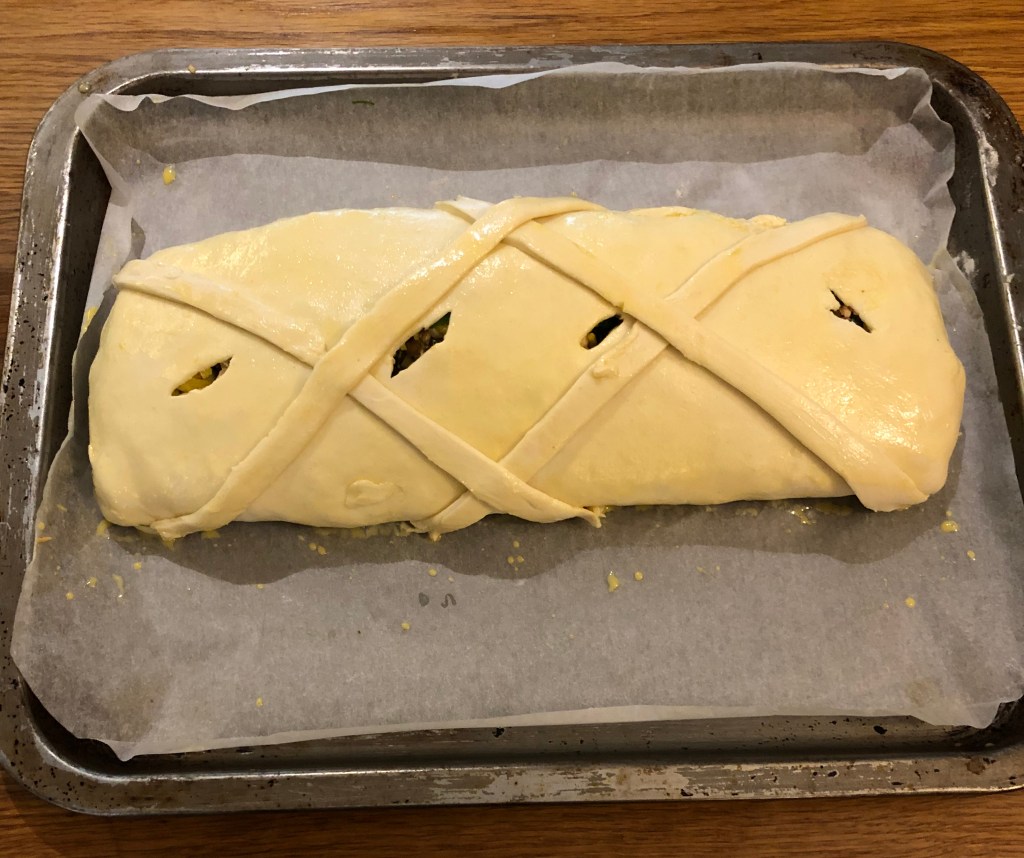
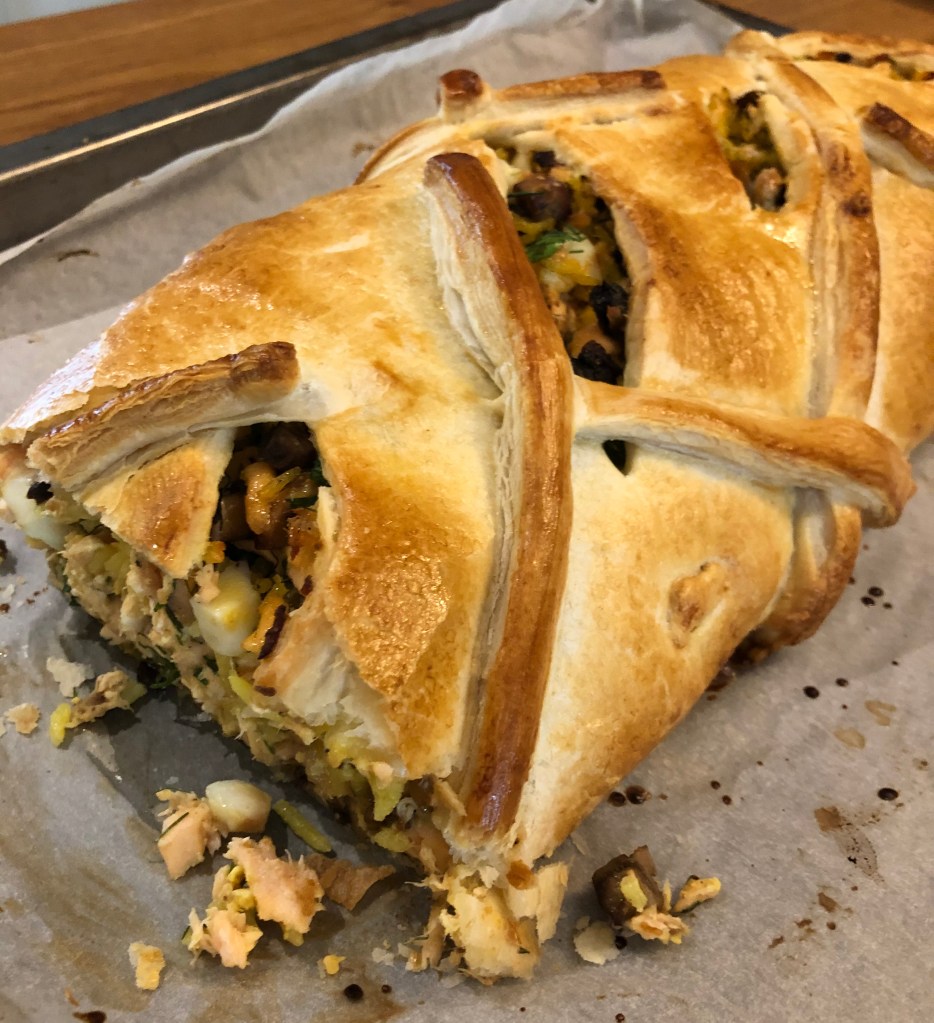
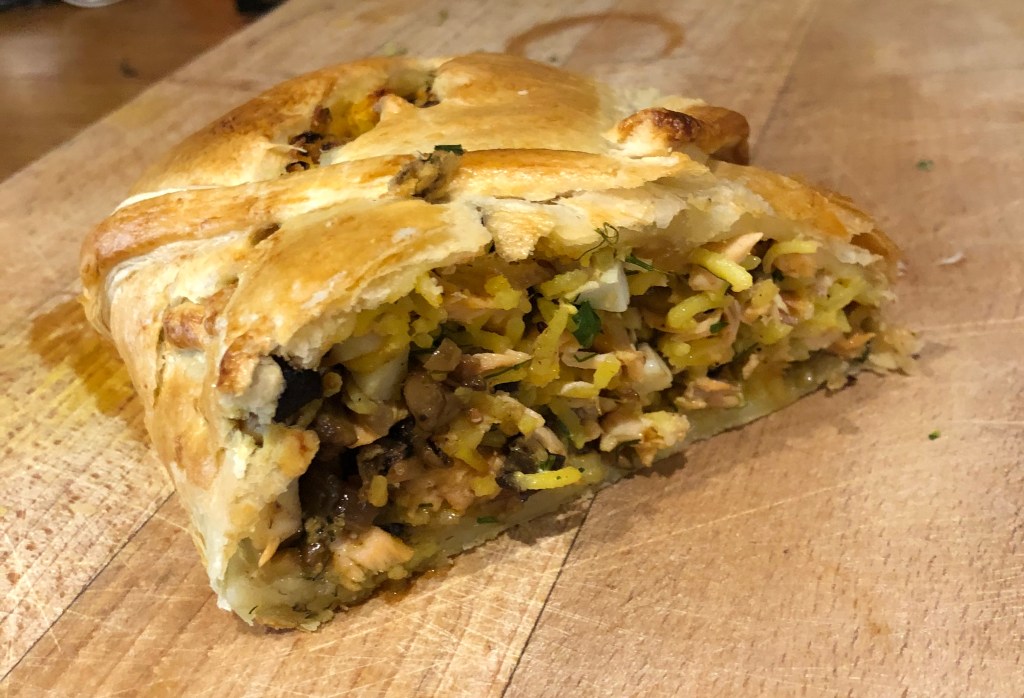
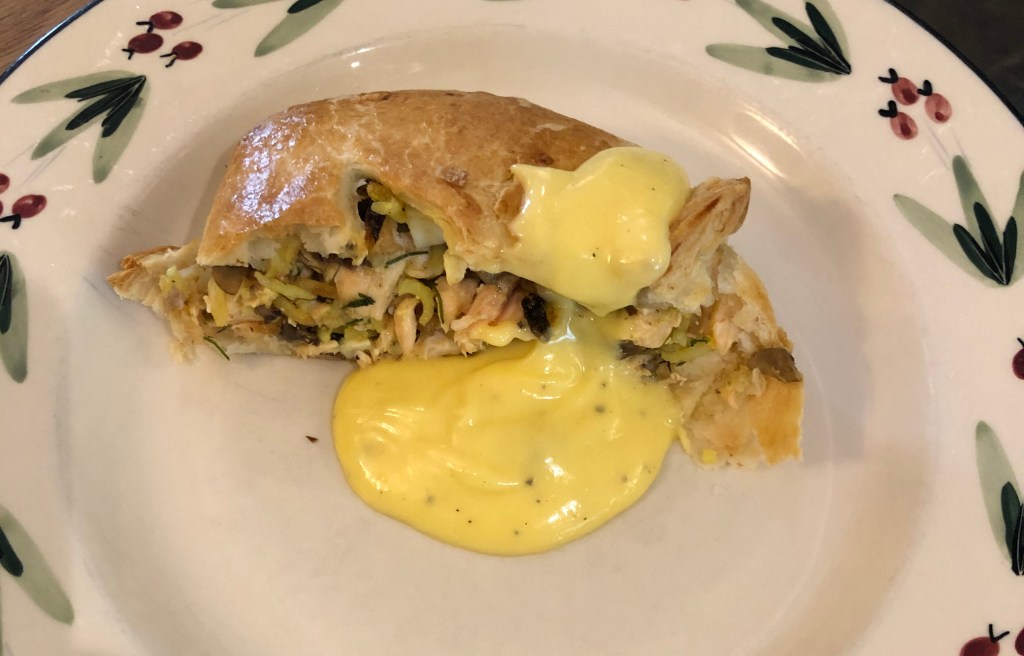
In her introduction to this recipe, Sophie Grigson describes koulibiac (alternative spelling) as ‘about as sophisticated as a fish pie can get’. It’s certainly a show-stopping party piece, and really not very hard to make. It can be served hot or cold, accompanied by hollandaise sauce or mayonnaise – it does need some kind of sauce in spite of the addition of melted butter at the end. To cook the salmon, wrap in foil, moistened with a splash of white wine or lemon juice and a couple of knobs of butter; season, pile in some sprigs of parsley and dill, then bake at 180 (fan) for 20-25 minutes. To hard-boil the eggs, place in cold water, bring up to a boil and cook for 8 minutes from the point when the water begins to roll.

Serves 6-8 

Ingredients

500 puff pastry
1 egg yolk, mixed with a dash of milk
30g butter, melted

For the filling
15g porcini mushrooms
60g basmati rice
¼ tsp ground turmeric
1 onion, chopped
60g butter
175g button or chestnut mushrooms, chopped
600g cooked salmon, flaked
2 tbsp chopped parsley
2 tbsp chopped dill
2 hard-boiled eggs, shelled and chopped
salt and pepper

Method

Start with the filling. Soak the porcini in hot water for 30 minutes. Pick out the pieces and chop finely. Strain the soaking liquid through a very fine sieve to remove the grit and save it for future use. (Stick it in the freezer, in a jar, to use in a sauce / stew / risotto.)
Cook the rice with the turmeric in lightly salted water until al dente (approx 11 minutes), then drain thoroughly. Soften the onion in the butter without browning, add the mushrooms and the porcini and continue cooking until all the water released by the mushrooms has evaporated. Mix with the rice, salmon, herbs and hard-boiled eggs. Season generously with salt and pepper.

Roll out the pastry on a lightly floured surface to form a rectangle slightly bigger than 30 x 40cm. Trim the edges to even them up and give you some strips for decoration. Transfer the pastry to a lightly greased baking sheet (line with baking parchment too if you have some). Mound the filling down the centre of the pastry, shaping and squeezing it to form a fat sausage. Brush round the edge with egg wash. Lift the sides of the pastry up round the filling and press together to join. Seal the ends too, using more egg wash and folding the joints towards the long, central seam. Gingerly roll the coulibiac over, so that the joins are tucked away underneath. Decorate with pretty pastry shapes (try to control your baser urges, boys, at this juncture). Rest for half an hour before baking. Preheat the oven to 200C / 180 fan.

Brush the pastry with egg wash and make four slashes across the top, so that steam can escape. Bake for 35-40 minutes, until golden brown. Remove from the oven and pour the melted butter into the coulibiac, through the slits in the top.

Greek walnut cake

Back in the 80s, Sainsbury’s published a series of paperback recipe books. Granny would invariably bring one back from a trip to the supermarket and over time she built up a large collection, which somehow included two copies of Rena Salaman’s ‘The Cooking of Greece and Turkey’. One of those copies became ours and the source of several family favourites: Greek bean stew, tzatziki, lamb koftas, and this wonderful walnut cake (καρυδόπιτα). Moist and nutty, it is best made the day before. (Try to avoid polishing off the cooking brandy with a cough mixture chaser the day after.) As a pudding at the end of a Greek meal I like to serve this with thick yoghurt, honey and fresh figs.

Serves 10-12

Ingredients

150g unsalted butter, softened, plus extra for greasing
125g caster sugar
4 eggs, separated
3-4 tbsp brandy
½ tsp ground cinnamon
300g walnuts, chopped coarsely
150g self-raising flour, sifted
a pinch of salt

For the syrup
250g caster sugar
300ml water
2 tbsp brandy
2 cinnamon sticks

You will also need a baking tin at least 5cm deep and approximately 22 x 22 cm square.

Method

Preheat the oven to 190C / 170 fan. 

Cream the butter, add the sugar and cream them together; add the egg yolks, one by one, beating between additions. Add the brandy, ground cinnamon and chopped walnuts and mix well.

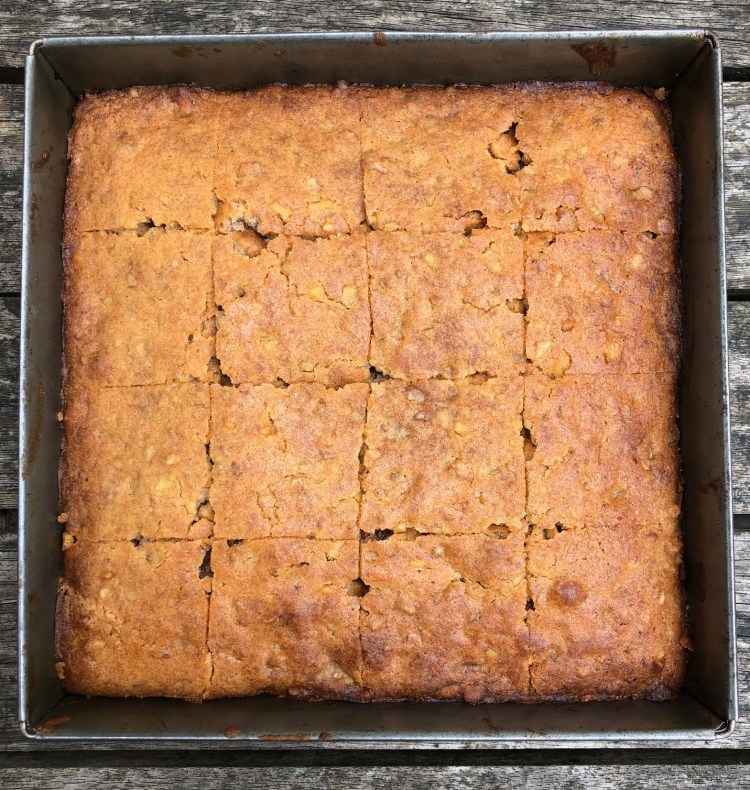
Whisk the egg whites with a pinch of salt until stiff and fold them in, with a metal spoon, alternating them with the sifted flour, until they have both been incorporated into the mixture. Spread it evenly in the greased baking tin. The mixture should be about 4cm thick, once spread. Bake for 35 minutes, until nicely risen and golden-topped. Remove from the oven but leave in the dish while you cut it in squares (approx 5 cm – my tin divides up neatly into 16 pieces). 

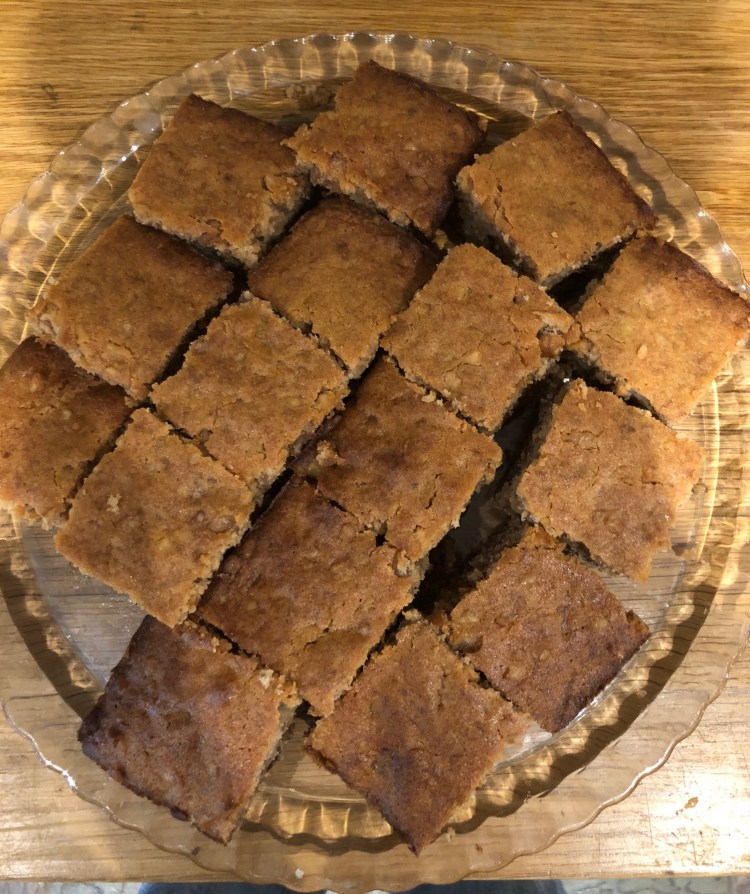
While the cake is cooking, make the syrup: dissolve the sugar in the water, add the rest of the ingredients and simmer for 8-10 minutes, until lightly thickened. Discard the cinnamon, and pour the hot syrup slowly over the hot cake. Let it stand for 10 minutes in order to absorb the syrup before serving it – or leave in the tin overnight until you’re ready to serve it: lift the pieces out and arrange on a platter. The cake will stay moist for 2-3 days if kept covered.

Final Cake Tuesday with (most of) Year 11 Greek, summer 2014

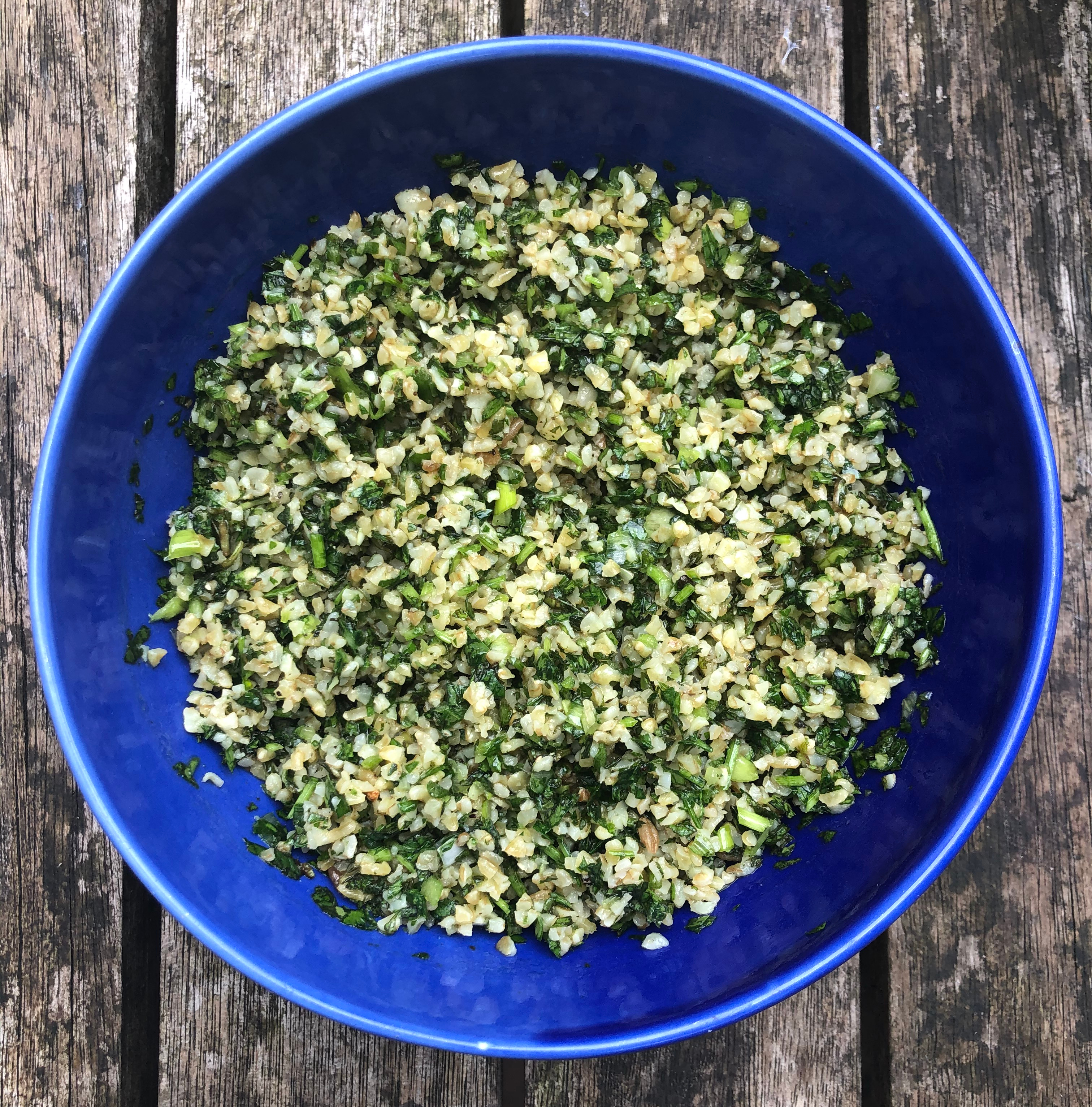
Tabouleh

Another Levantine dish with disputed spelling (see hummus) and fluid composition, tabouleh is a quick, cheap vegetarian salad or mezze that makes a great accompaniment to a summer barbecue. It often includes tomatoes, although our version doesn’t. Don’t be alarmed by the large quantity of herbs – they’re what give the salad its distinctive colour. It can be made several hours in advance, but hold off on adding the lemon juice until shortly before serving: the acid can dull the vibrant green of the herbs.

Serves 6 generously as a side

Ingredients

200g bulgur wheat (also called cracked wheat)
200g fresh parsley and mint – or any combination of herbs you like
4 fat spring onions, roughly chopped
60ml extra virgin olive oil
Juice of 1-2 lemons
Salt and pepper

Method

Put the bulgur wheat in a bowl and pour in enough boiling water to cover it by about 1cm. Leave to soak for 30 minutes. Drain and squeeze out any excess water.

Finely chop the herbs and the spring onions (I use a food processor for this), then stir into the bulgur wheat, along with the olive oil, salt and pepper. Add the lemon juice just before serving. Check seasoning and add more salt and / or lemon juice to taste.

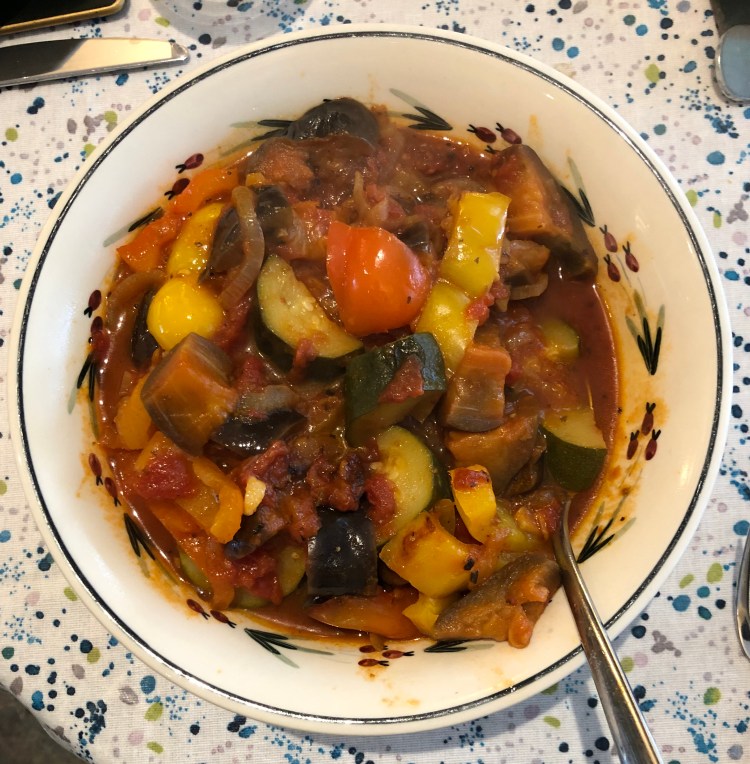
Ratatouille

This popular mediterranean vegetable stew is originally from Nice, its name derived from Occitan ratatolha, which comes in turn from Latin (natch). Recipes and cooking methods differ widely, but common ingredients include tomato, garlic, onion, courgette, aubergine, pepper, and various green herbs. Sometimes you’ll find saffron or olives included, and the process might involve cooking the various components separately or together, on the hob or in the oven – really there’s no definitive method. This uncomplicated version is our summertime go-to accompaniment for a Sunday roast. Any leftovers can be stewed for another 30 minutes with red lentils and chicken or vegetable stock, then whizzed up to make a cheap, nutritious soup.

Serves 6 generously as a side

Ingredients

1 onion, halved and sliced
2 cloves garlic, sliced
2 tbsp olive oil
1 large aubergine, cut into 2.5cm chunks
1 red pepper, quartered and cut into fat strips
1 yellow pepper, quartered and cut into fat strips
2 courgettes, halved and cut into chunks
1 tin chopped tomatoes
1 bay leaf
½ tsp each dried oregano and basil or a handful of fresh
Salt & pepper

Method

Heat the olive oil in a heavy lidded saucepan over a medium heat. Add the onion and garlic, lower the heat and cook to soften for five minutes. Add the aubergine (no need to salt in advance – aubergines are rarely bitter these days) and the peppers, stir and cook gently for another 5 minutes. Add the chopped tomatoes, bay leaf, dried herbs, salt and pepper. Bring to a simmer, cover the pan and cook for 10 minutes, then add the courgettes and cook for a further 10 minutes. The timings here are very approximate, but the point is that courgettes take less time to cook than aubergines and peppers. If you have fresh herbs, add these towards the end instead of boiling the life out of them. Serve warm or at room temperature.

Spanakopita

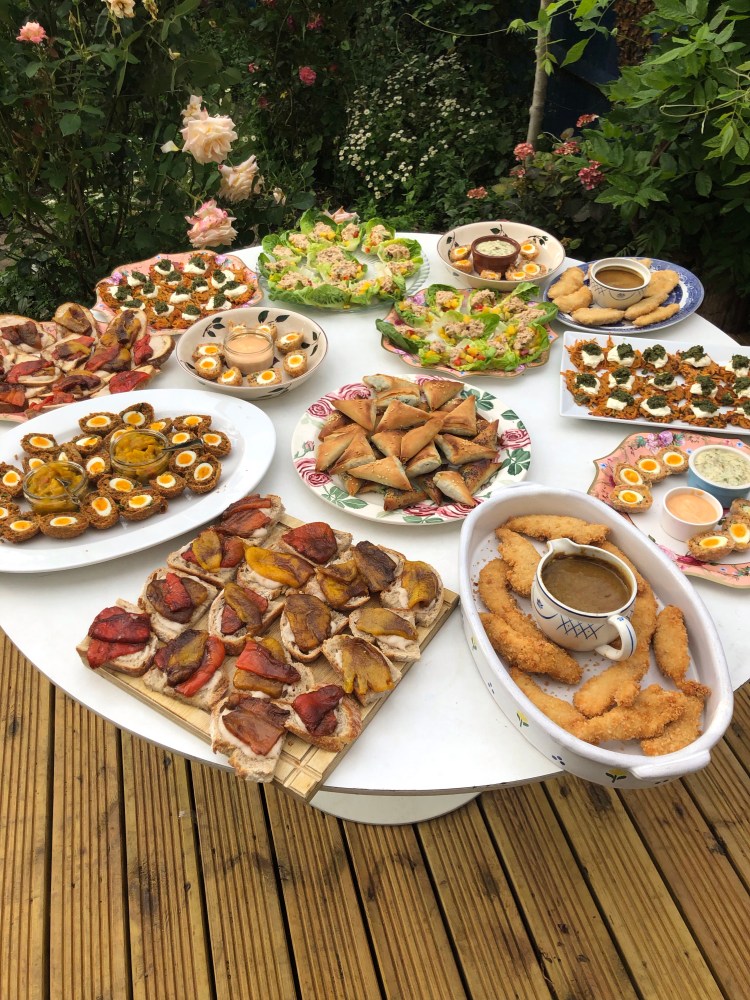
A Greek god of a pie, spanakopita (σπανακόπιτα) makes a stunning centrepiece to a big summer meal. It’s delicious hot or cold, vegetarian friendly and fairly cheap to put together. My recipe is based closely upon one in a book by Claudia Roden, who in turn credits it to an Athenian cookery writer, June Marinos. You can use the spinach & feta mixture to fill filo triangles, which make lovely canapés (pictured at the bottom).

Serves 8

Ingredients

800g spinach
1 onion, finely chopped
4 spring onions, finely chopped
2 tbsp olive oil + 6 more if using it to brush the pastry
4 tbsp dill or parsley (I use both), finely chopped
4 eggs
300g feta cheese
2 tbsp parmesan cheese, grated
Large pinch of nutmeg
Black pepper
250g filo pastry
125g melted butter (optional)

You will also need an oven-proof dish or baking tin in which to assembly the pie. I use the pyrex dish measuring 22 x 22 x 6 cm, but something larger and shallower is also fine.

Method

Wash the spinach in cold water, then transfer in handfuls to a large pan, shaking the water off as you go. Cook, covered, until all the spinach has wilted. Drain in a colander.

When the spinach has cooled a bit, squeeze out the excess water, then chop roughly. 

In a large saucepan gently fry the onion and spring onions in 2 tbsp of the oil. Add the spinach, herbs, pepper and nutmeg (no need for salt because feta is very salty) and stir until the spinach liquid has evaporated. Allow to cool.

Preheat the oven to 190C / 170 fan. 

Beat the eggs lightly in a bow. Add the feta cheese, mashed with a fork, the parmesan and the spinach mixture (drained of any juice). Brush your baking tin with oil or melted butter. Place half the sheets of filo at the bottom, one on top of another. Brush each sheet with oil or melted butter (I use a mixture) and let the edges come up the sides of the tin. Spread the filling evenly on top, fold over the edges of the filo dough and cover with the remaining filo, tucking the edges down the sides or folding over on top. Brush each sheet – and the top one generously – with oil or melted butter. Cut the pie into squares with a sharp knife, but do not cut through to the bottom or the filling will leak out. 

Bake for about 1 hour or until the pie is crisp, golden and puffed up. Cut the squares right through to the bottom and serve.

Spinach & feta filo triangles pictured in the middle

Tiramisu

Like our British trifle, the Italian tiramisu has many variations and no-one can agree on a definitive recipe. Claudia Roden’s version, which I learned to make as a teenager, uses eggs, rum, a single layer of sponge and chocolate sprinkled on the top only. This decadent espresso martini tiramisu recipe from Olive magazine (see their handy video here) contains no eggs, has sponge and chocolate layered throughout and gets its alcoholic punch from Kahlúa and vodka. (Those spirits are the classic ingredients for a White Russian cocktail, by the way – just shake up with milk or cream.) The quantities here are enormous: make sure you use a big enough dish.

Serves 10-12

Ingredients
400ml strong black coffee
2 tsp brown sugar
4 tbsp vodka
4 tbsp Kahlúa
500g mascarpone
600ml double cream
3 tbsp icing sugar
1 tbsp vanilla extract
2 tbsp instant espresso coffee powder
300g savoiardi sponge fingers
50g dark chocolate
cocoa powder for dusting

Method

1. Mix the black coffee, brown sugar, vodka and 3 tbsp of the Kahlúa in a shallow bowl. Mix the mascarpone in a separate bowl for 2 minutes to break it up, then beat in the double cream, icing sugar and vanilla with electric beaters until it forms soft peaks. Spoon out 1/3 of the cream into another bowl. Mix the coffee powder with the rest of the Kahlúa and stir in to make a coffee cream.

2. Dip the sponge fingers briefly into the vodka-coffee mixture, then put a single layer of the fingers in the base of a large serving dish.

3. Spoon over 1/2 of the plain cream, then finely grate over a generous layer of dark chocolate. Layer on more soaked sponge fingers, and spoon over the coffee cream then another layer of grated chocolate. Add another layer of fingers then finish with the rest of the plain cream. Chill until ready to serve, but for at least 4 hours. Dust with cocoa powder to finish.

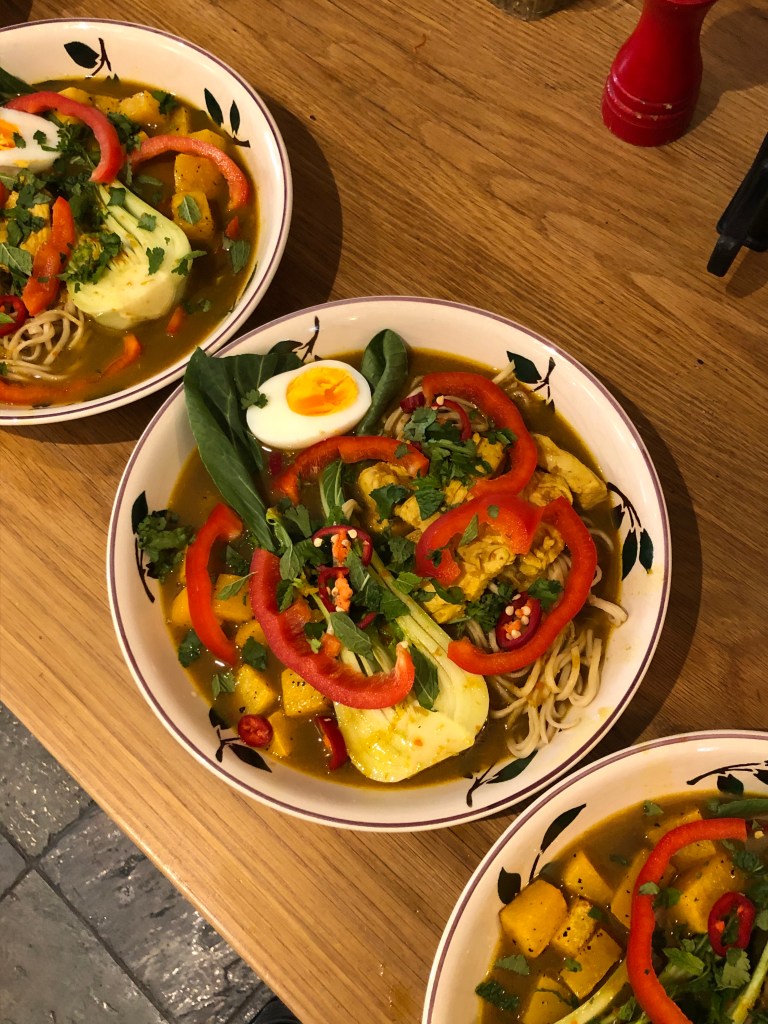
Chicken Laksa

About eight years ago, Oxford Brookes university enlisted our friend Allegra McEvedy (see her Treacle Tart recipe here) to upgrade their student catering. This was one of the delicious dishes she put on the menu – lucky students! It’s a great use for chicken stock if you fancy something other than the usual soup or risotto. The recipe below is reproduced from an article published in the Times in April 2015. To feed more people, just up the quantities of the ‘substantial’ ingredients (chicken, eggs, noodles). If you’re feeding vegetarians, use vegetable stock and firm tofu instead of chicken; replace the fish sauce with a bit more salt, or use soy sauce.

Serves 4

Ingredients for the broth
2 red chillies, roughly chopped
2 lemongrass stalks, roughly chopped
3 garlic cloves
Half a thumb ginger, trimmed, scrubbed and roughly chopped
Handful of coriander stalks (save the leaves for the end)
2 tbsp groundnut or veg oil
1 tsp turmeric
1 tbsp tamarind paste
1 tsp brown sugar (and a touch more to taste)
2 tsp fish sauce
1 litre chicken stock
1 tin coconut milk
Juice of a lime or two
Salt to taste, if necessary

To finish
Chicken — couple of breasts, sliced, or 4 drumsticks, whole
2 heads bok choy / pak choi, halved through the root
Half a butternut squash, diced and roasted
100g flat rice noodles, rehydrated
2 eggs, hard boiled
1 red pepper, de-seeded and cut into strips
2 limes
Handful of mint, chopped
Couple of red chillies, seeds in and thinly sliced

Method

1 Make the broth: in a food processor blitz up the chillies, lemongrass, garlic, ginger and coriander. If it’s not coming together to make a smoothish paste then dribble in just enough of the chicken stock so that it spins freely. Heat the oil in a wide pan and fry the paste for a few minutes, stirring regularly. Add the turmeric, stir well to coat, then add the tamarind paste, brown sugar and fish sauce.

2 Once all the ingredients are combined, pour in the chicken stock and bring to a simmer. Add the coconut milk, and let it all bubble and reduce down to a soupy, silky consistency (about a litre). Season with lime juice, a touch more sugar if necessary and salt to taste. This broth can all be prepared well ahead of time. When you’re ready to eat, lower the raw chicken into the broth and poach until just cooked.

3 Prepare your warmed bowls: a handful of noodles and half a bok choy in the bottom of each one, then when the chicken is cooked use a slotted spoon to share that between the bowls too, along with the strips of pepper.

4 Have a last taste of the broth — it may want lime juice now to keep it lively — then ladle it into the bowls. Finish each one with some roasted butternut squash, quarters of hard-boiled egg, wedges of lime and the chopped mint mixed with the chopped coriander leaves. Serve with extra sliced chillies on the side for those who like more heat.

Lotte à l’américaine

Traditionally made with lobster, this excellent fish recipe adapts very well to monkfish, which has a firm enough flesh to marry with the strong flavours of the sauce. I’ve been wedded to a particular version by Jane Grigson since my early 20s and have struggled to find anything to match it online. Granny has come to the rescue, with her copy of Grigson’s original book Fish Cookery, published in 1975.

Serves 6

Ingredients

1.2 kg monkfish tail, cleaned
seasoned flour (plain flour seasoned with salt, pepper and nutmeg)
100ml olive oil
2 shallots, chopped
3 onions, chopped
2 cloves garlic, chopped
90ml brandy
400ml dry white wine
350-400g large ripe tomatoes, peeled, cored and chopped
bouquet garni (use a sachet or tie your own bundle of herbs, including a bay leaf)
1 tbsp tomato puree
1 tsp sugar
salt, pepper, cayenne pepper
chopped parsley and tarragon to garnish

Method

Cut the fish into pieces (approx 2.5cm cubed) and turn in seasoned flour. Meanwhile fry the shallot, onion and garlic in the oil until they begin to colour. Add the fish; when its surfaces are all opaque, warm half of the brandy, set it alight and pour it into the pan, stirring the contents about in the flames. Once these die down, remove the fish to a warm plate (scraping off the excess onion mixture if you can).

Pour the wine into the pan, add tomatoes, bouquet garni, tomato puree, sugar and seasonings. Boil hard to reduce to a well-flavoured sauce – it must not be watery. Allow 20-30 minutes for this. Return the fish to the sauce and simmer gently until cooked, about 10 minutes, adding the rest of the brandy at the same time. Sprinkle generously with chopped parsley and tarragon before serving.

Double Dips

Two recipes in one post again this week because neither feels substantial enough to justify a post in itself. There are countless possible variations upon both of these dips and you should feel free to experiment. As a snack or appetizer they can be accompanied by raw vegetables, toast, pitta bread or tortilla chips. They can also be wheeled out, along with tsatsiki, as a sauce to accompany a Greek meal or as part of a mezze selection. Both recipes make the equivalent of two supermarket-sized pots.

Hummus
&
Aubergine Caviar

Hummus

The debate over the origin – not to mention the spelling – of hummus is probably as old as hummus itself. The Greeks like to claim it as their own, but the word is Arabic in origin and the dish is found as a staple throughout the middle east and north Africa. Simple, cheap and nutritious, this recipe makes the perfect vegetarian snack because the tahini and chickpeas form a complete protein combination. 

Ingredients

1 tin chickpeas
2 cloves garlic, crushed
1 tbsp tahini paste
50ml olive oil
Juice of 1 lemon
Salt, pepper & cayenne pepper

Method

Drain the chickpeas, reserving the liquid. Place chickpeas, garlic, tahini and half the chickpea liquid in the food processor. With the motor running, pour in the olive oil and lemon. If the texture is not loose enough, add more of the chickpea liquid or olive oil. Season to taste with salt, pepper, cayenne pepper and more lemon juice if you prefer it sharp. 


Aubergine Caviar

This is the family version that evolved over our long summers in Hungary. The Hungarians call it padlizsánkrém; in Transylvania it’s vinete; for the Romanians, with the addition of peppers and tomatoes it becomes zacusca; while the Lebanese add tahini to turn it into baba ganoush. 

Ingredients

2 medium-large aubergines
3 cloves garlic, crushed
3 spring onions, roughly chopped
Handful of parsley, roughly chopped
50ml olive oil
Lemon juice or vinegar to sharpen
Salt & pepper

Method

Preheat the oven to 200C / 180 (fan). Slash the aubergines a couple of times to allow air to escape, then roast for 45-60 minutes until really soft. Allow to cool slightly. Once you can handle them, slice into the slashes to expose the flesh, then tip, flesh down, into a colander to cool and drain for 15 minutes. Scoop out the flesh into the bowl of a food processor and add the garlic, spring onions, parsley, salt and pepper. With the motor running, pour in the olive oil and whizz to blend. Check seasoning and sharpen to taste with a squeeze of lemon or a dash of vinegar before giving it a final whizz.