Aubergine Parmigiana

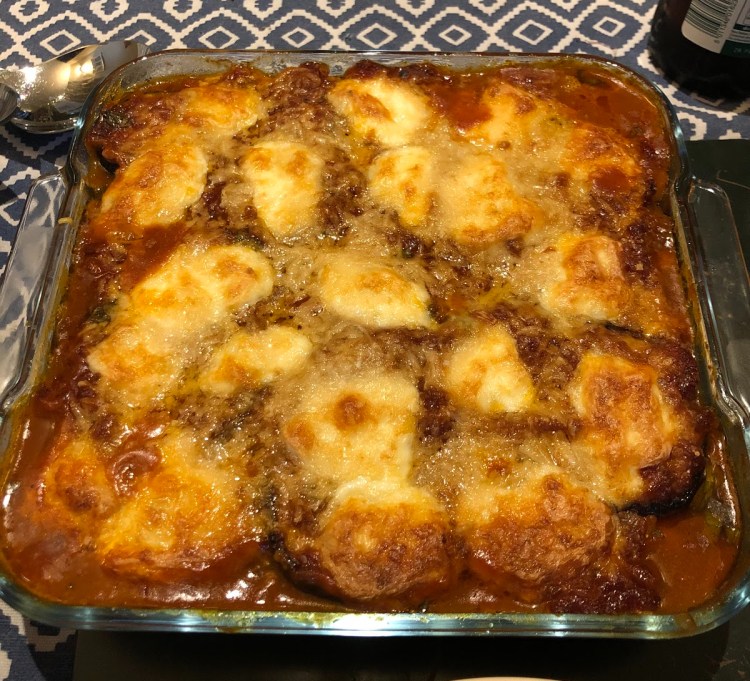
This dish makes a great vegetarian alternative to lasagne. It has umpteen variations, particularly in the pre-cooking of the aubergines, and there isn’t necessarily a ‘correct’ way of making it. My version has evolved from a recipe in Sophie Grigson’s book ‘Food for Friends’, which inspired many meals I cooked at university. Grigson recommends steaming the aubergines, and she adds porcini. Mine has no porcini and I prefer to grill the aubergines. Cousin Hannah’s tip for pre-cooking aubergines, picked up from Ottolenghi’s recipe for pasta alla Norma, is to coat the aubergine pieces in a few tbsp of oil and a little salt before roasting in the oven, on parchment paper at a high heat for 30 minutes.
Serves 6

Ingredients

Basic tomato sauce
2 tbsp olive oil
1 onion, finely chopped
2 cloves garlic, finely chopped
1 carrot, peeled and diced
1 stick celery, diced
2 tins chopped tomatoes
1 tsp tomato purée
1 tsp sugar
½ tsp salt
½ tsp each dried basil and dried oregano
1 bay leaf
Black pepper

2 medium-large aubergines
Salt
100ml olive oil
2 balls mozarella
150g grated parmesan cheese

You will also need an oven-proof dish in which to cook it.

Method

First, make your tomato sauce (this can be done well in advance). Heat the oil in a heavy-bottomed saucepan. Add all the chopped vegetables and cook, stirring regularly, for about 8 minutes on a low-ish heat until everything is softened. Raise the heat and add all the rest of the ingredients. Bring to a simmer, cover and cook over a low heat for at least 30 minutes. Longer, slower cooking (ideally in the oven – 160/140 fan – for an hour or more) will improve the flavour. 

Meanwhile, cut the aubergines into 5mm slices, sprinkle with salt and leave in a colander to drain for half an hour.

Set your grill to a high heat. Rinse the aubergines well, and dry thoroughly with kitchen paper. Arrange on a grill tray and brush each slice with olive oil. Grill for 5 minutes, or until the aubergine slices are looking lightly browned. Turn them over, brush the other side with oil and grill again.

Preheat the oven to 180/160 (fan) and lightly oil your baking dish. Cut each mozarella ball in half and slice across to create 14-16 pieces from each mozarella. Grate the parmesan and get everything together for assembling the dish: tomato sauce, mozarella, parmesan and aubergines.

Spread the bottom of the dish with a thin layer of tomato sauce, followed by a layer of aubergines (half of them), mozzarella (a third of what you have) and 3 tbsp parmesan. Add another layer of tomato sauce, the rest of the aubergines, another third of the mozarella and 3 tbsp parmesan. Finish with a final layer of sauce, mozarella and the rest of the parmesan.

Bake in the oven for 35-40 minutes until golden brown and bubbling. Allow to cool slightly before serving.

Treacle Tart

Allegra McEvedy is both a brilliant cook and a dear friend. Her wine bar Albertine supplied our lockdown wedding anniversary dinner back in May – it was amazing – and several of her recipes are firm family favourites. This one crossed our radar after we watched Allegra on Economy Gastronomy (BBC2, 2009) and, with a few tweaks, has become a regular pudding after a Sunday roast. Allow plenty of time to make this: with its high proportion of butter, 2 egg yolks and icing sugar, the sweet pastry is rich and soft, so it really benefits from the long resting time in the fridge. 

Serves 8

Ingredients

For the sweet pastry
250g plain flour, sifted, plus extra for dusting
175g butter, plus extra (melted) for greasing
75g icing sugar
2 egg yolks (save the whites for brushing the pastry case)
1 tbsp cold water

For the filling
150g day-old white bread, crusts removed
650g golden syrup
150g unsalted butter
1 egg
50ml double cream
2 lemons, zest only
Large pinch salt
Clotted or double cream, to serve

Method

Rub the flour and butter together until the mixture resembles breadcrumbs, or blitz in a food processor. Add the icing sugar, egg yolks and cold water and mix until the mixture comes together as a dough. Wrap the dough in cling film, then chill in the fridge for two hours, to rest.

Grease a 26cm loose-bottomed tart case with melted butter, then dust with flour, knocking out any excess. Once the pastry has rested, roll it out onto a lightly floured work surface to a 3-4mm thickness. Lift the rolled pastry by rolling it loosely around the rolling pin, then lower it into the tart case and press it in, moulding to the sides and bottom. Trim off any excess pastry, then chill the tart case in the fridge for a further 30 minutes.

Preheat the oven to 200C/180 fan. When the tart case has rested, remove it from the fridge and prick the base several times using a fork. Line the base and sides with greaseproof paper (crunch it up first, and open it out), then fill it with baking beans. Bake on a baking sheet for 15 minutes. Remove the baking beans, brush the surface of the pastry with egg white and return to the oven for another 5 minutes. 

For the filling, blend the bread in a food processor until it has formed breadcrumbs. Set aside. Heat the golden syrup and butter in a pan over a low to medium heat until the syrup and the butter have melted. Set aside to cool slightly.

In a separate bowl, whisk together the egg and cream until well combined. Pour in the syrup and butter mixture and stir to combine. Stir in the breadcrumbs, lemon zest and salt until well combined.

Pour the filling mixture into the cooked pastry case, then return the tart to the oven and cook for a further 40-45 minutes, or until the filling is dark golden-brown.

Remove from the oven and set aside to cool slightly for 15 minutes before serving warm, with clotted cream or whipped cream.

Lasagne

Like bolognese sauce, Lasagne is ‘a dish which, if not exactly lost in translation, has, in the grand British tradition, been considerably mangled’ (Felicity Cloake), so again I am making no claims about authenticity here. Some traditional meat lasagne recipes, for example, contain a ricotta and egg mixture rather than béchamel sauce. The version we enjoy has taken literally years of practice to finesse. For me, the key elements to a tall, non-sloppy lasagne that holds its shape are: four layers of pasta, a thick béchamel, restraint with the bolognese sauce and lashings of parmesan.

Serves 6

Ingredients

1 quantity of bolognese sauce (you should end up with some left over)
200g grated parmesan cheese
8 sheets dried lasagne (no pre-cooking required)

For the béchamel sauce
500ml milk
1 small onion
2 bay leaves
10 peppercorns
2 cloves
6 shards of blade mace
40g butter
40g flour
Salt, pepper, nutmeg

You will also need an oven-proof dish in which to cook the lasagne: I use a pyrex dish measuring 22 x 22 x 6 cm, which accommodates 2 sheets of lasagne per layer.

Method

Place the milk, onion, bay leaves, peppercorns, cloves and mace in a small saucepan. Bring just up to boiling point, then turn off the heat, cover and leave to infuse for an hour.

Preheat the oven to 160 (fan) and grease your lasagne dish.

Strain the milk, discard the infusion mix and wash out the saucepan. Melt the butter in the clean saucepan, raise the heat and add the flour. Cook for about a minute, then add the infused milk, whisking vigorously. Bring to the boil, whisking all the time, turn the heat down and simmer for 6-8 minutes. It will get quite thick.

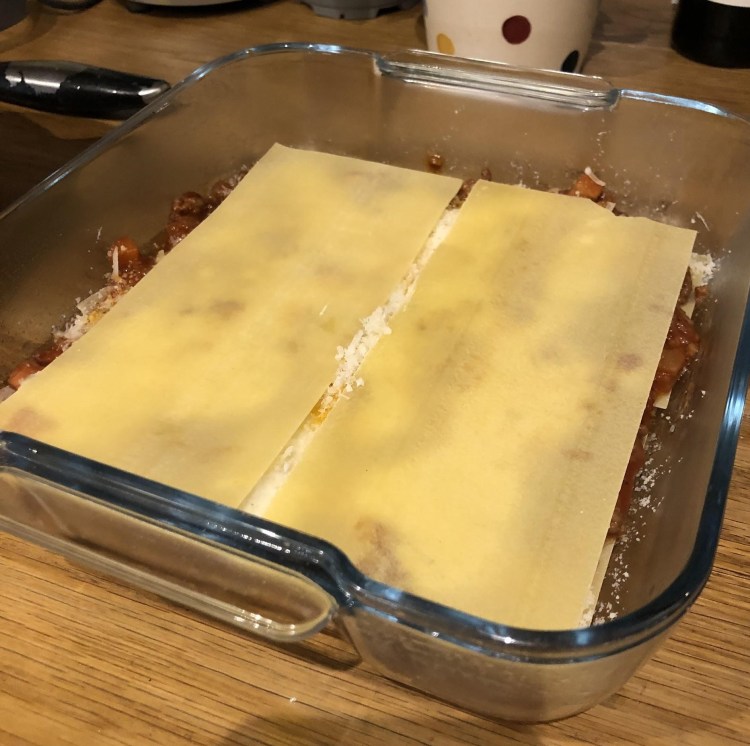
Set up your station for assembling the lasagne: bolognese sauce, béchamel sauce, parmesan, lasagne. My preferred order of assembly is: 3 tbsp bolognese, a drizzle of béchamel, 3 tbsp parmesan, 2 sheets lasagne. Do this four times, then finish with a thicker layer of bolognese, the rest of the béchamel and a really thick carpet of grated parmesan.

Bake in the oven for 45 minutes until golden brown and bubbling. If you can wait (and would like to avoid burning your mouth), let it rest for 10 minutes before serving. A simple green salad or peas would be the ideal accompaniment.

Bolognese sauce

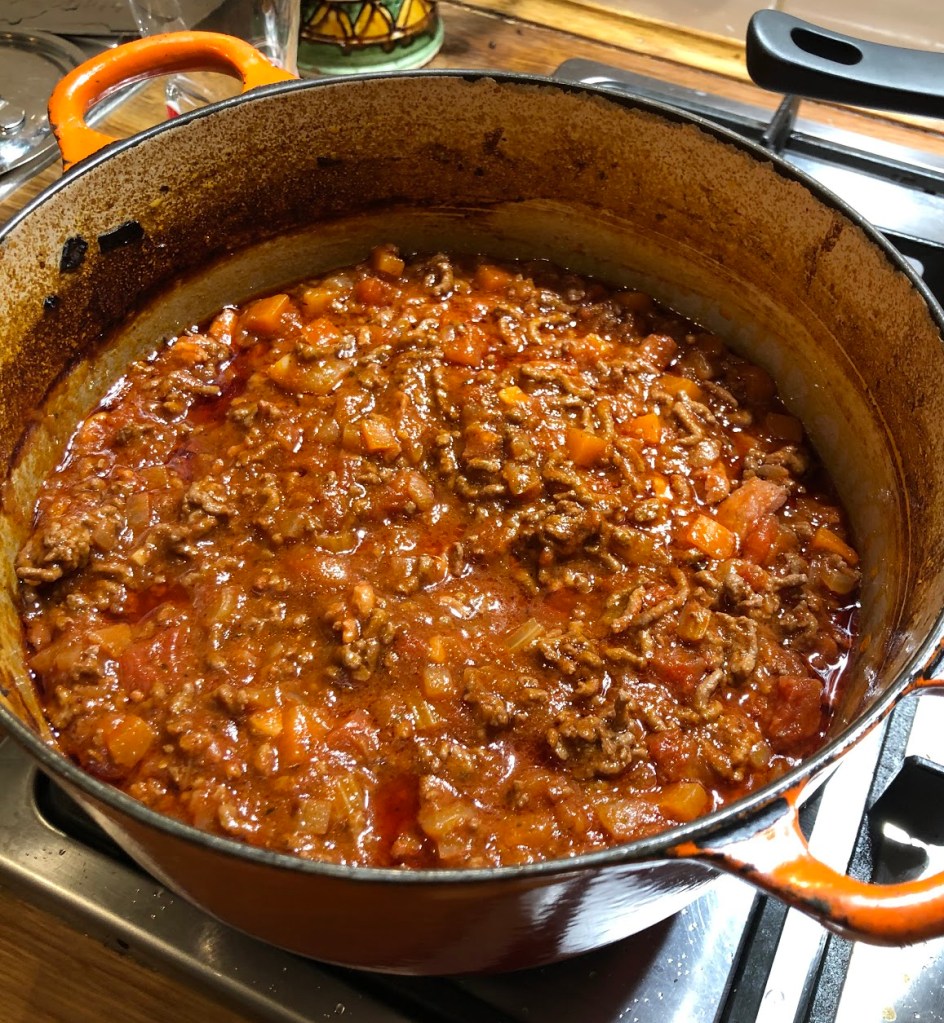
As Felicity Cloake has written (in her excellent series ‘How to make a perfect…’): “To write on spag bol is to wade into a mire of controversy thicker and darker than any ragu that ever came out of nonna’s kitchen.” There is no definitive recipe for bolognese sauce and many of the ‘authentic’ elements (pork, chicken liver, white wine, milk or cream, not too much tomato) do not feature in our family’s version. I am making absolutely no claims about authenticity here, just recording what we like to eat.  

Serves 6, with plenty to spare

Ingredients
Small carton diced pancetta
3 tbsp olive oil
1 large onion, finely chopped
3 fat cloves garlic, finely chopped
2 medium carrots, peeled and diced
2 sticks celery, diced
500g beef mince
Small bottle (187ml) red wine
1 carton passata
1 tin chopped tomatoes
1 tbsp tomato purée
1 tsp each of sugar and salt
1 heaped tsp each dried basil and dried oregano
2 bay leaves
Black pepper

Method

Pre-heat the oven to 160C / 140C (fan).

Heat the oil in a heavy-bottomed saucepan. Add the pancetta and fry for a minute or so until the fat is rendered. Add all the chopped vegetables and cook, stirring regularly, for about 8 minutes on a low-ish heat until everything is softened. Raise the heat and add the beef mince. Break this up as you stir it in and cook until all the mince has changed colour. 

Pour in the wine, boil briefly, then add all the rest of the ingredients. Bring to a simmer, cover and put in the oven for 1½ to 2 hours. It will cook fine over a very low heat on the stove too – just make sure you stir from time to time.

Chicken katsu curry

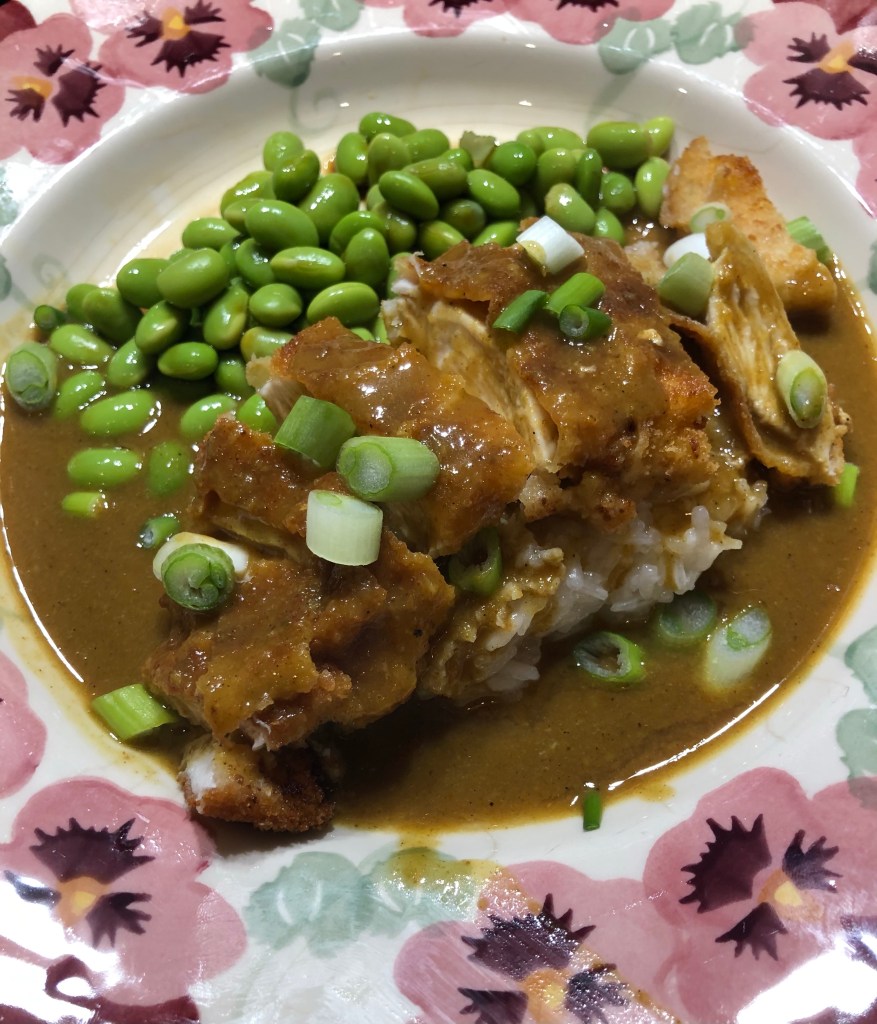
This recipe entered the family’s repertoire at Zita’s request: on holiday with a friend and her family in 2016, eating super-healthy food, she sent word home that she was craving a home-made chicken katsu curry. An online Tesco recipe was my starting point and, with some adjustments, produced a dish that closely resembled what they serve at Wagamama. You can adjust further to create a great canape dish: slice the chicken into goujons before breading (or use chicken breast strips), and make a thicker sauce, suitable for dipping, by halving the quantity of stock.

No panko breadcrumbs in the cupboard on this occasion

Serves 4 

Ingredients

For the sauce
2 tbsp vegetable oil
1 onion, thinly sliced
5 cm piece ginger, finely grated
2 garlic cloves, crushed
1 tbsp curry powder
2 tbsp plain flour
600ml warm chicken or vegetable stock
60ml soy sauce
2 tsp honey
2 tsp rice vinegar
1 tsp garam masala

For the chicken

4 skinless chicken breasts, sliced in half horizontally (to make two thin, wide pieces)
100g seasoned plain flour
2 eggs, lightly beaten
150g panko breadcrumbs
50ml vegetable oil, for frying
150g pack cooked edamame beans
3 spring onions, thinly sliced, to serve 

Method

1.   For the katsu sauce, heat the oil in a saucepan over a medium heat, add the onion, ginger and garlic and sauté for three to four minutes until tender. Add the curry powder and stir until fragrant. Then stir in flour and cook for 1-2 mins. Gradually whisk in the stock, add the soy sauce and honey and simmer, whisking occasionally, for about 10 mins. Stir in the rice vinegar and garam masala. Allow to cool a bit, then whizz it all up in the food processor. Return to the pan and warm through before serving.

2.      Meanwhile, preheat the oven to 200 (fan). 

3.     Dip the halved chicken breasts in flour, then egg, then breadcrumbs, making sure to shake off any excess in between. Heat the vegetable oil in a large frying pan and fry the chicken, turning occasionally, until golden (3-4 mins on each side). Transfer to a baking tray and cook in the oven until cooked through (5 mins).

4. Slice the chicken and serve with rice (Jasmine or Thai sticky rice, ideally), topped with katsu sauce and the edamame beans and garnished with spring onions

Caesar Salad

Delia Smith’s Summer Collection, published in 1993 and followed by a TV series in 2002, prompted a nationwide run on limes and crème fraîche. Her recipes aren’t the most adventurous, and they can be rather wordy, but they always work. I’ve adapted this one a little, and you can always increase the protein content by adding some strips of grilled chicken.

Serves 4 (or 6 as a starter)

Ingredients
2 Hearts of Romaine lettuce (traditionally this salad uses Cos lettuce)
1 x 50 g tin anchovy fillets, drained (keep the oil and two of the fillets for the dressing)
40 g Parmesan, finely grated
250g chicken breast strips (optional)

For the croutons:
50 g white bread, crusts removed, cut into 8 mm cubes
1 tablespoon extra virgin olive oil
1 tablespoon finely grated Parmesan
1 clove garlic, crushed

For the dressing:
1 large egg
1 clove garlic
juice 1 lime
1 heaped teaspoon mustard powder
½ teaspoon Worcestershire sauce
150 ml extra virgin olive oil

Method

Pre-heat the oven to 170 fan

First make the croutons: place the cubes of bread in a bowl together with 1 tbsp olive oil and 1 tbsp Parmesan plus the crushed clove of garlic. Stir and toss the bread round to get an even coating of cheese, oil and garlic, then spread the croutons out on the baking sheet and bake them on a high shelf in the oven for 10 minutes. Take care to time this!

When the buzzer goes, remove them from the oven and leave to cool. Meanwhile make the dressing by breaking the egg into the bowl of a food processor and adding the garlic (roughly chopped), the lime juice, and 2 of the anchovy fillets, the mustard powder and Worcestershire sauce.

Switch on and blend everything till smooth; then, keeping the motor running, pour the olive oil and anchovy oil (which can be combined in a jug first) through the feeder funnel in a slow, steady stream. When all the oil is in you should have a slightly thickened, emulsified sauce with the consistency of pouring cream. Taste the dressing and season with freshly ground black pepper and salt if it needs it.

Wash, spin and break up the salad leaves and arrange in a large salad bowl. Snip the remaining anchovies and mix to distribute them evenly among the leaves.

When you’re ready to serve, pour over the dressing and toss very thoroughly to coat all the leaves. Sprinkle in 40 g Parmesan, toss again and finally scatter the croutons over the salad.

If you’re adding chicken, season the chicken breast strips and grill for 5 minutes each side. Cut each strip in three and scatter the pieces over the salad before you add the dressing.

Apple crumble & custard

Here’s another one adapted over the years from Hugh Fearnley-Whittingstall’s Cuisine Bon Marché (see Red Cabbage ). There are countless possible variations with the fruit and/or topping: you should feel free to experiment, and don’t worry about being precise with your quantities. Home-made custard is lush but shop-bought has its own particular ‘charm’ – or you could just use cream or ice cream.

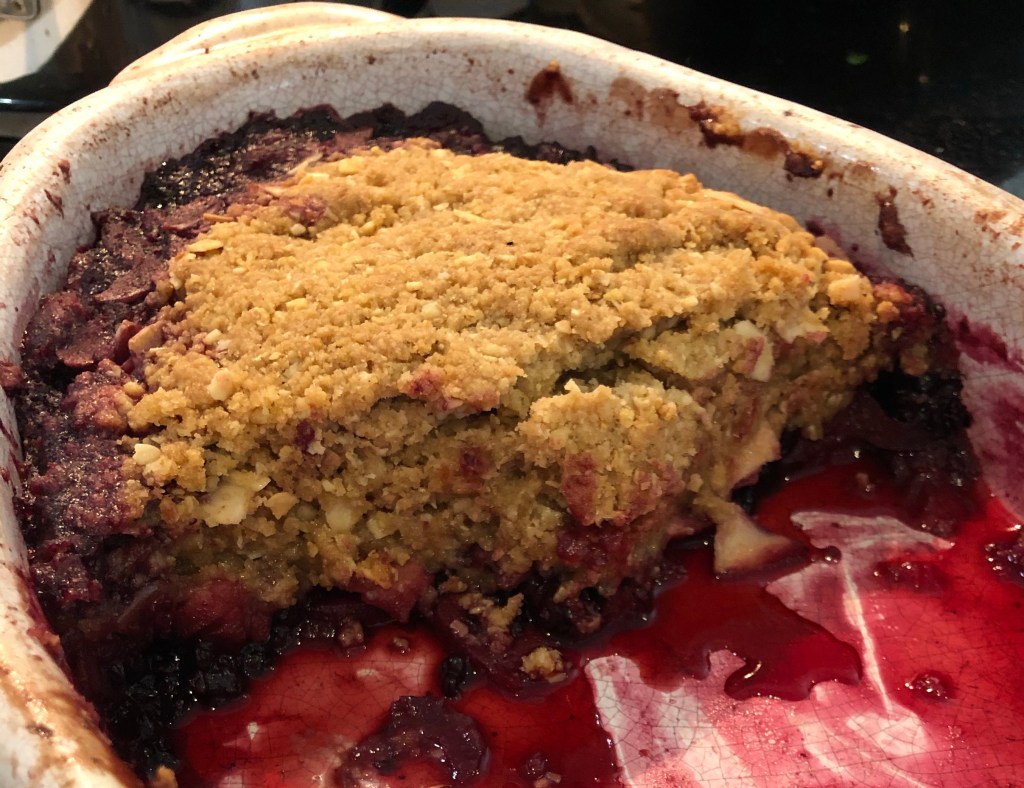
This topping had flaked almonds in it instead of ground

Serves 6

Ingredients

4 bramley apples or 650g fruit of your choice (see recipe)
1 lemon (if using apples)
Optional extras: sultanas, lemon zest, foraged blackberries
120g sugar

For the crumble topping

100g plain flour
a pinch of salt
120g cool unsalted butter, diced
100g ground almonds
100g light brown sugar
50g caster sugar
½ tsp ground cinnamon
50g breadcrumbs (fresh or dried) or oats

Method

First make the crumble topping. You can do this by hand but it’s much quicker with a food processor. Whizz the flour, salt, ground almonds and butter together, then add the remaining ingredients, pulsing a few times to mix well. Grease a medium-sided pie dish.

If you’re using apples, squeeze lemon juice onto a shallow plate. Peel, quarter and core the apples one at a time, turning in the lemon juice to stop them discolouring. Slice each quarter thinly and arrange in the pie dish, sprinkling a generous layer of sugar over each apple. You can layer in your optional extras as you go. 

If you’re using fruit that requires pre-cooking (gooseberry, plum, rhubarb), stew it gently with the sugar on a low heat until the juices run. This means you can pile the crumble on top, without it falling between the cracks in the fruit. A scant tbsp of water (or orange juice, with rhubarb) will be enough to stop the fruit burning, but if you’re very careful you may not need any. If you have a cinnamon stick to hand sling that in too. When the fruit is lightly stewed (3-4 minutes with rhubarb, 7-8 for gooseberries, perhaps 10 for plums), pile it into your dish with a slotted spoon.

Sprinkle the crumble evenly over the fruit and bake in a pre-heated moderate oven (170 fan) for 50-60 minutes (apple crumble) or a bit less for stewed soft fruits.

Dorset apples and Wormwood Scrubs blackberries

Custard

600ml full-fat milk or cream
Vanilla pod, split, with seeds scraped out
6 egg yolks (save the whites for making meringues or a white chocolate mousse)
50g sugar

Bring the milk or cream almost to the boil with the vanilla pods and seeds. Turn off the heat and leave to cool briefly. Beat the egg yolks with the sugar until thick and light. Whisk in half the hot milk/cream (removing the vanilla pod first) and then whisk the mixture back into the remaining milk/cream. Cook over a very low heat, whisking constantly, until the custard thickens slightly. Your finger should leave a clear trail when drawn across the back of a wooden spoon. Remove from the heat and strain before serving. If you chill the custard for later use (it can be kept for up to 2 days in the fridge) be careful to reheat slowly: it’s liable to scramble if you zap it in the microwave.

Bográcsgulyás

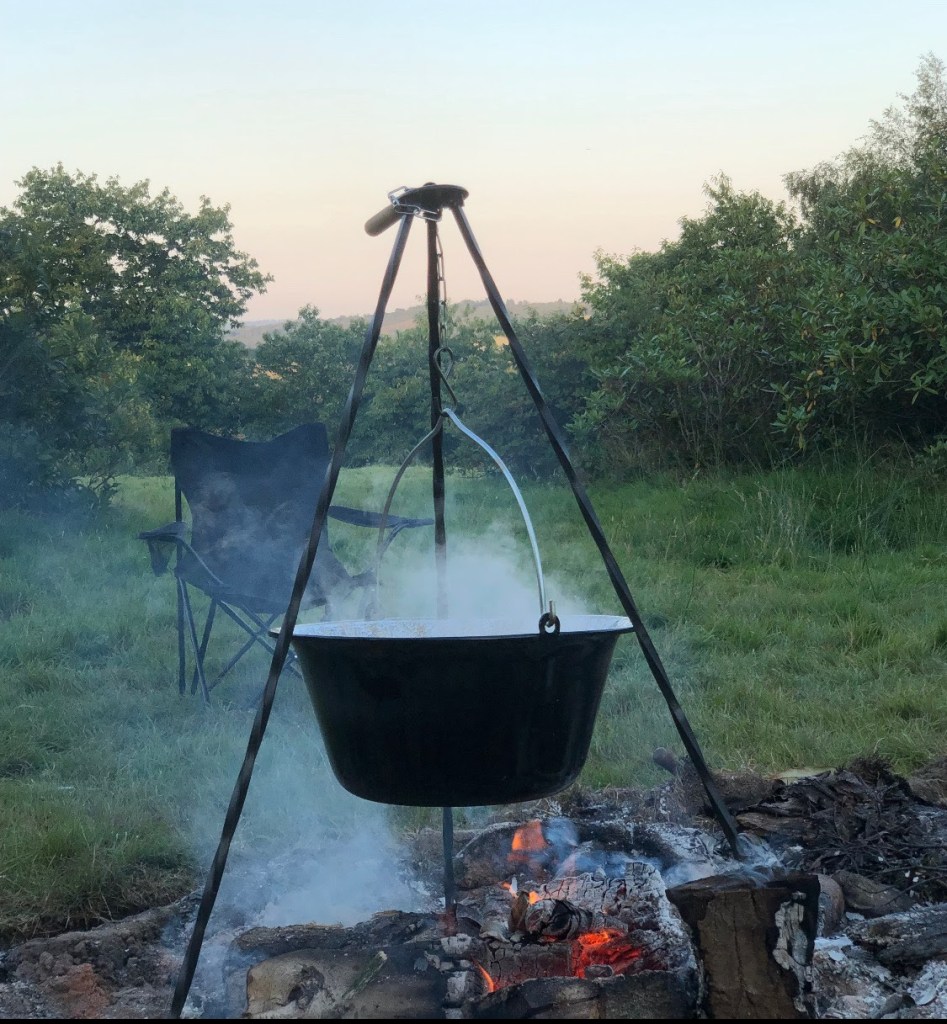
As we limp into our second month of Lockdown, communal outdoor cooking has become the stuff of nostalgia, but you can re-create this (albeit without the smoky flavour) over your kitchen stove and in the oven. Goulash is really a soup: what non-Hungarians call a goulash is actually a braise, comprising just beef and potatoes. My version, containing peppers and tomatoes too, is definitely not authentic. It evolved over many summer holidays in Zebegény, where we would make it in a cauldron over a fire beside the Danube, having pre-cooked the beef on the stove in the house – a tip from our neighbour That B*****d the Colonel.

For eight people, generously; serve with cucumber salad (recipe below) and bread.

Ingredients

1.5- 2 kg braising steak, cut into 2.5 – 3cm cubes
Cooking oil or (traditionally) lard
4 large onions, very finely chopped (the finer, the better the sauce will be)
8 cloves garlic, finely chopped or crushed
1 tablespoon sweet paprika
1 tablespoon flour
1 bottle red wine
½ tube piros arany* (csemege is mild/sweet; csipős is hot) – or add another tbsp paprika
1 tin chopped tomatoes
3 pointed peppers, sliced (any colour: it’s hard to replicate the Hungarian ones in England)
1kg Charlotte (or other waxy) potatoes, peeled if necessary and chopped into similar-sized cubes as the meat
Salt & pepper (though note that the piros arany contains salt)
200ml soured cream

Method

1. Heat the oil or lard and fry the meat in batches to sear
2. In the oil/fat left in the pan, gently fry the onions for about 10 minutes until they are softening and becoming translucent
3. Add the garlic, return the meat and its juices to the pan, sprinkle over the paprika and flour, and stir well. Make sure the pan is not too fiercely hot, or the paprika will burn.
4. Add chopped tomatoes, piros arany, salt, pepper and enough red wine just to cover
5. Cook in oven (160 fan) for about an hour, topping up wine (or water) as required
6. Remove from oven, add potatoes and cook (back in oven or on hob) for a further hour and a half, or until meat is tender and the potatoes are cooked.
7. Add the peppers about an hour after the potatoes.
8. Stir in soured cream, check seasoning and serve with pride

If you have a cauldron/ bogrács (!) the way to avoid standing over a fire for two hours is to pre-cook the meat in the wine after step 1. Take all the rest of the ingredients down to the fire, hunt around for stools or tables and arm your helpers (‘firemen’) with goggles and yourself with beer. Complete the rest of the recipe stages in the cauldron, adding the beef and its cooking liquid at the same time as the potatoes. If your fire is very fierce you might need to top up the stew with water to prevent burning.

* piros arany literally means ‘red gold’: it’s a densely-flavoured paprika / pepper paste which Babú brings back in vast quantities from Hungary. If you don’t have any, just increase the quantity of dried paprika and add some chilli or cayenne for extra spice.


Cucumber salad

Ingredients

2 large cucumbers
1-2 tsp salt
50 ml white wine vinegar
100 ml water
1 tbsp sugar
1-2 tbsp dill, chopped
½ tsp paprika
Soured cream or crème fraiche

Method

Peel the cucumbers and slice thinly (a mandolin or the slicing attachment of a food processor will speed this up).  Place cucumber slices in a colander, add salt, stir and leave to disgorge juices for an hour (ideally, but 30 mins will do).

Dissolve the sugar in a little boiling water, then add vinegar and taste: add more sugar if necessary; top up with cold water; chill.

Rinse the cucumber slices and transfer to a shallow serving bowl. Pour over the dressing and plop a little soured cream / crème fraiche in the middle. Sprinkle over paprika and chopped dill.

Garde, 25 August 2019

Chocolate brownie pie

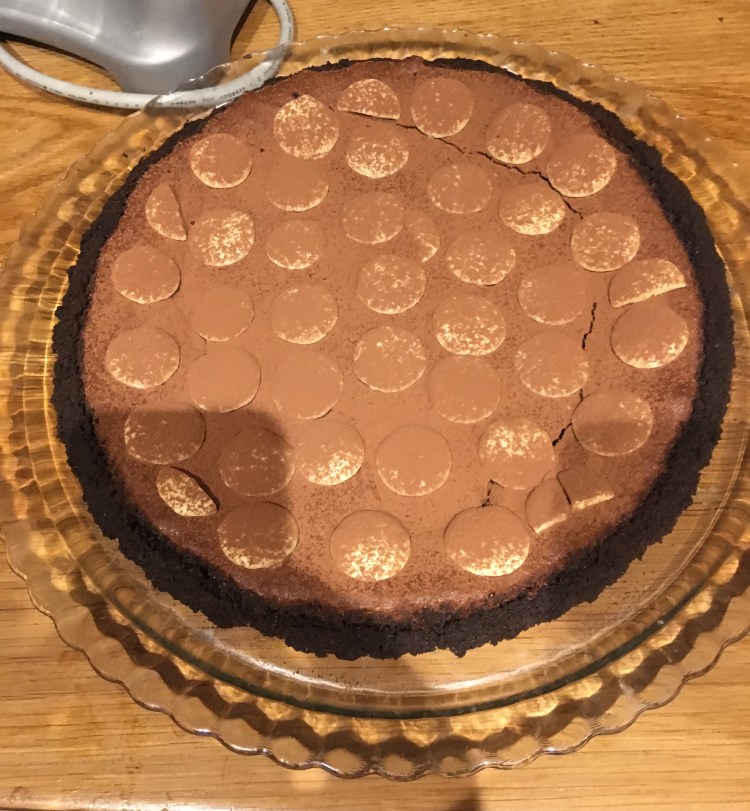
This recipe, by MasterChef finalist Hannah Miles, was published in the Times in 2015. Rich and moreish, it has a crust made from crushed Oreos and the filling gets a more ‘grown-up’ flavour from the shot of espresso coffee. Quite simply delicious – and perfect for Easter.

Serves 8

Ingredients

For the pie crust
250g Oreos
100g butter, melted

For the brownie filling
200g dark chocolate
125g butter
2 large eggs
100g caster sugar
100g muscovado sugar
1 small shot of espresso coffee
100g plain flour
1tsp vanilla extract
100g white chocolate buttons
1 tbsp cocoa powder, for dusting

23cm loose-bottomed tart tin, greased

Method

For the piecrust, break the Oreos up and then blitz them to fine crumbs in a food processor, or put in a plastic bag and bash with a rolling pin. Add the melted butter and mix well so that all the crumbs are coated in butter. Using the back of a spoon, press the mixture into the prepared tin so that the sides have a thick layer of crumbs to hold the filling and the base is completely covered. Put the tin on a tray to catch any butter released during baking.

Preheat the oven to 170 (fan).

For the brownie filling, place the chocolate and butter in a bowl over a pan of simmering water until both have melted, stirring occasionally. Leave to cool.

Whisk together the eggs, caster and muscovado sugars until thick and creamy and pale yellow in colour. Pour in the chocolate mixture and espresso and whisk in. Add the flour and vanilla and fold in gently using a spatula or a large metal spoon. Pour the mixture into the prepared pie crust.

Bake for 25 minustes, until a crust has formed on top of the brownie but it still feels soft underneath. 5 minutes before the end of cooking time, cover the top with the white chocolate buttons, which will melt during the final cooking. Allow to cool and set before serving dusted with cocoa powder.

Carluccio’s Carrots

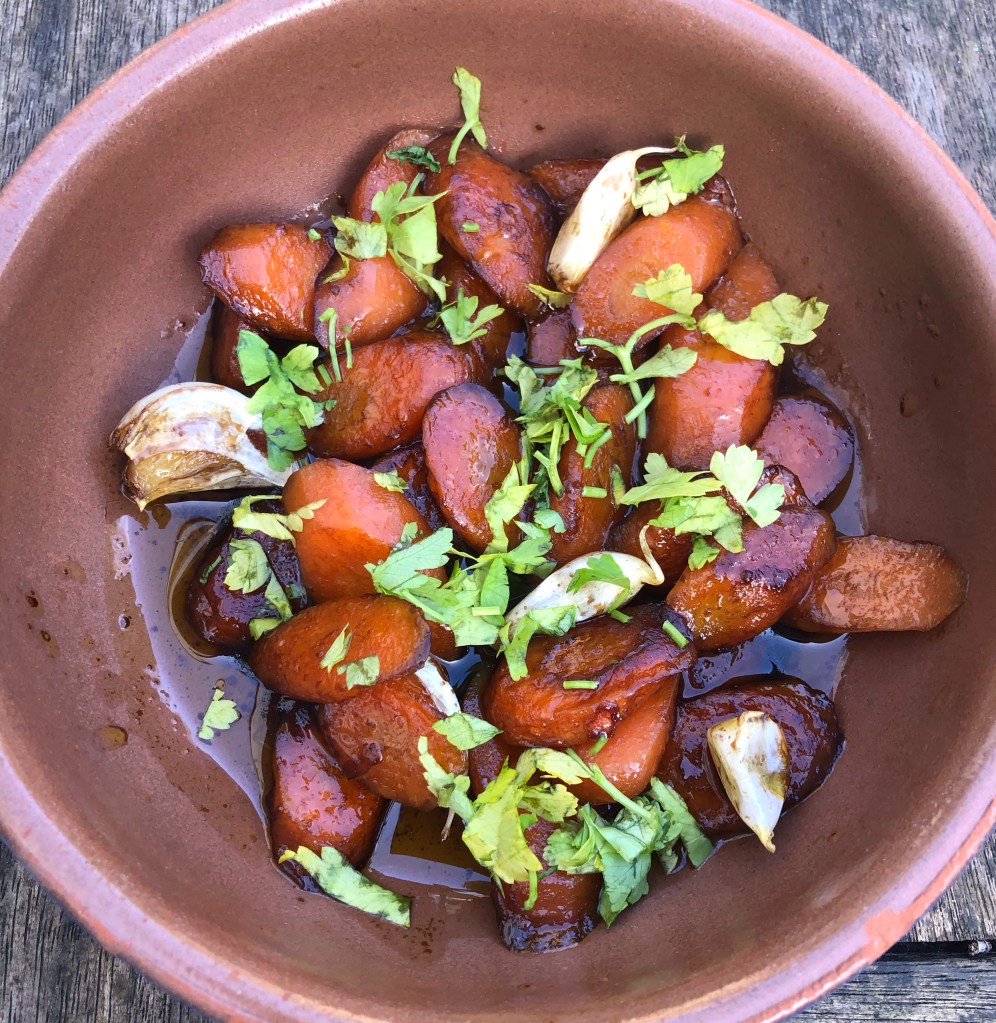
In 2001, just before I went on maternity leave, one of my Year 9 tutees gave me a signed copy of Antonio Carluccio’s newly-published book ‘Vegetables’. His simple recipe for carrots with garlic has accompanied almost every roast dinner we have eaten since, and is the reason I break out into a cold sweat when our supply of balsamic vinegar runs out.

Very sadly, at time of writing, in the thick of the coronavirus crisis, Carluccio’s restaurant chain has just collapsed into administration.

Carluccio’s carrots for two

Serves 4

Ingredients

600g carrots, peeled and cut into rounds about 5mm thick
4 tbsp good olive oil
6 whole fat garlic cloves, unpeeled
20g caster sugar
3 tbsp balsamic vinegar
2 tbsp finely chopped parsley
salt

Method

Put the carrots with the oil into a heavy pan with a lid, add a pinch of salt and cook for 10 minutes, stirring from time to time. Add the unpeeled cloves of garlic and cook for at least 25 minutes over the lowest possible heat – the oil must still bubble through. Then add the sugar and vinegar, and let evaporate a little before adding the parsley.