Beef stew & dumplings

Although it’s trending for all the wrong reasons this week, stew evokes comfortable childhood memories for me. I only started cooking it myself after happening upon an advert in a magazine, when we lived at South Croxted Road: ok, the ad was for Waitrose, but the ingredients are basic and cheap (even cheaper if you dispense with the red wine, my own embellishment). The dumplings come from Delia Smith’s Irish Stew recipe: if you want them crusty, cook them in the oven with the lid off; if you prefer soft and fluffy, leave the lid on. Alternatively, do without the dumplings altogether and carb-up with fluffy mashed potatoes. Cabbage or Brussels sprouts are ideal additional accompaniments. The cabbage recipe below comes from the Ballymaloe cookbook.
Serves 6

Ingredients for the stew

2 x 450g diced beef stewing steak
2 onions, cut into large dice
300g carrots, peeled, sliced lengthwise and cut into thick chunks
300g parsnips, peeled, sliced lengthwise and cut into thick chunks
2 sticks celery, sliced
4 tbsp plain flour, seasoned with salt, pepper and nutmeg
4 tbsp vegetable oil
400ml beef stock
200ml red wine
A bunch of thyme (10-15 sprigs)
2 bay leaves

For the dumplings

180g self-raising flour
3 tbsp chopped parsley
90g shredded suet
Salt and ground black pepper

Method

Preheat the oven to 140 (fan). Place the seasoned flour on a plate. Then, in batches, lightly dust the beef in the flour, shaking off any excess. Heat 3 tbsp of the oil in a large ovenproof casserole dish with a lid. Fry the beef in 2-3 batches, cooking for 1-2 minutes on each side, until browned all over. Transfer all the meat to a plate and set aside. Repeat with the remaining meat, adding more oil as needed.

Heat the remaining oil and add the onions to the pan with the carrots, parsnips and celery. Sauté over a low heat for 5-6 minutes or until they are beginning to colour. Pour in the wine and stock, using a wooden spoon to deglaze the pan. Return the beef to the casserole, and bring to the boil. Add thyme and bay leaves. Cover and cook in the oven for 2 hours, or until the meat is very tender. Add more liquid if it’s looking too dry.

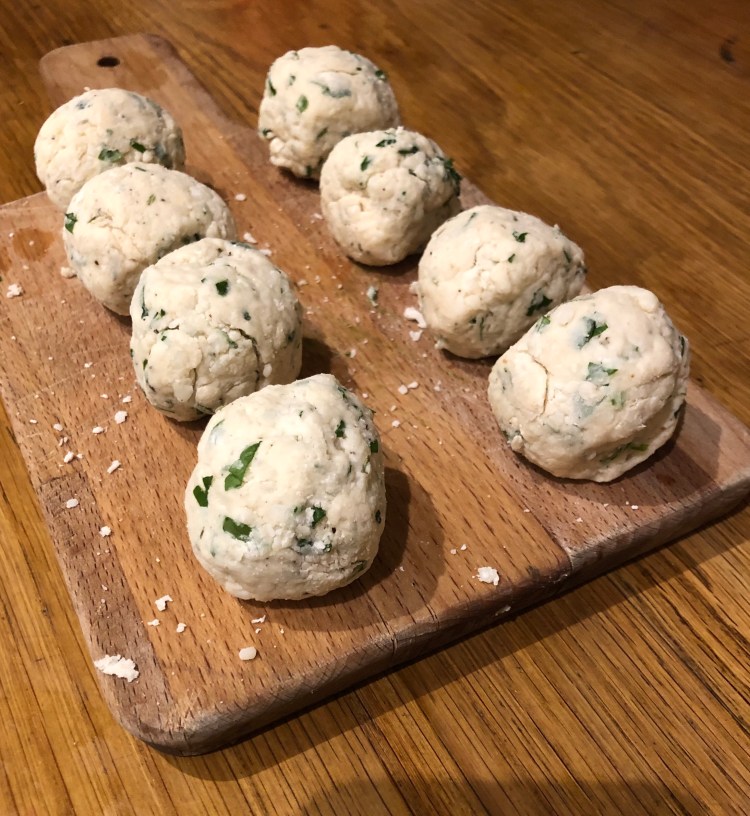
If you are making dumplings: 40 minutes before the end of the cooking time, mix the flour, parsley, seasoning and suet in a bowl. Add just enough cold water to make a fairly stiff but elastic dough that leaves the bowl cleanly. Knead it lightly, then shape into 12 dumplings. Place these all over the surface of the stew, then return the casserole to the oven – lid on or off (see above) for 30 minutes. It’s worth turning the oven up to 160 (fan) for this final stage.


Lovely cabbage

450g fresh Savoy cabbage
40g butter + another knob
Salt & freshly ground pepper

Remove the tough outer leaves from the cabbage. Cut into quarters, remove the core, then slice into fine shreds across the grain. Put 2-3 tbsp water into a wide saucepan with the butter and a pinch of salt. Bring to the boil, add the cabbage and toss constantly over a high heat, then cover for a few minutes. Take care it doesn’t boil dry. Toss again and add some more salt, pepper and a knob of butter.

Pumpkin Pie

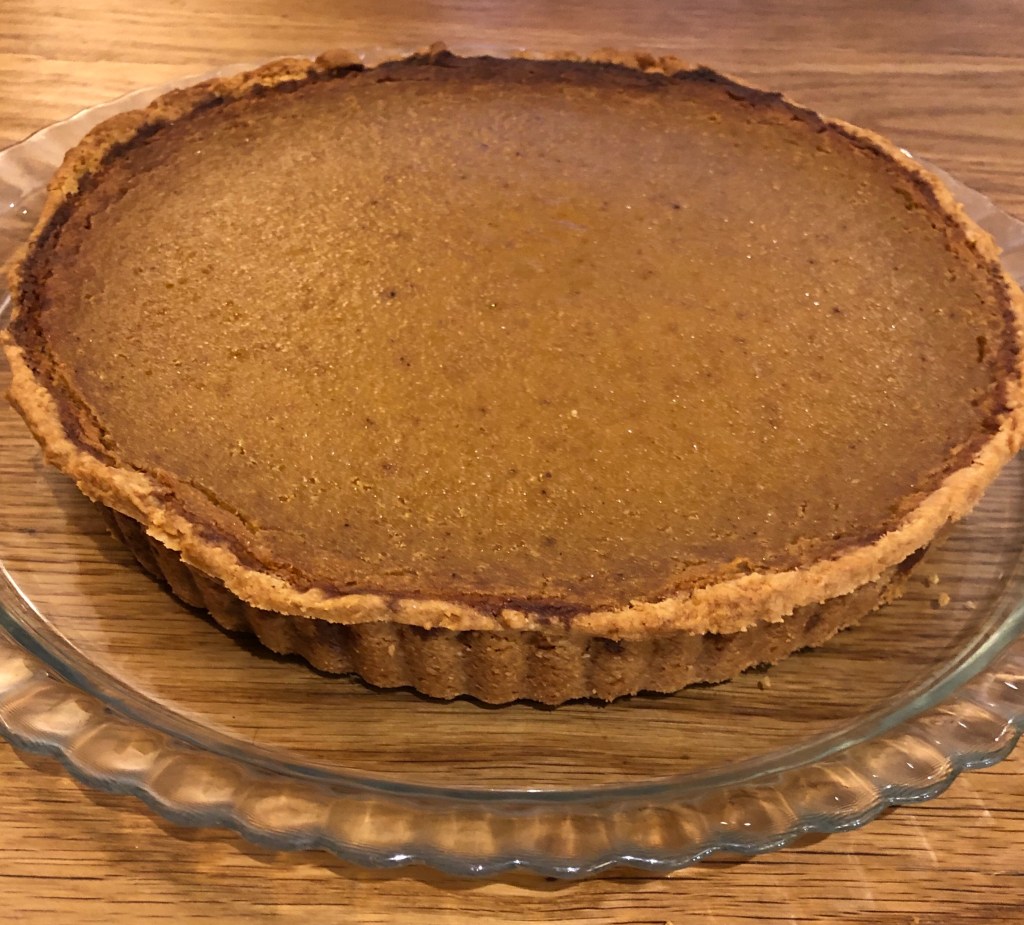
Patricia Lousada’s American Sampler (1985) was another book in the Sainsbury’s cookbook series that inspired family meals at Gale (see Greek Walnut Cake). It contains the definitive pumpkin pie recipe, from which I have not deviated at all over the years. The proportions of flour and butter look strange, being greater than the usual 2:1 ratio for shortcrust pastry, but the recipe works because the double cream enriches the pastry mix. Pumpkin pulp can be bought in cans in America – and in specialist shops here now – but it is simple to make your own: cut a small pumpkin into wedges, scraping out the seedy, fibrous centre, and wrap each wedge in foil. Bake in a hot oven (180 fan) for 50 minutes or until really soft, then scoop out the cooked pulp and allow to cool before making the tart filling.

Serves 8, using a 24cm tart tin

Ingredients

Pastry
175g flour
½ tsp salt
1 tbsp sugar
1 tsp baking powder
75g unsalted butter, diced
1 egg yolk (save the white – see below)
3-4 tbsp double cream

Filling
450g pumpkin pulp
2 large eggs or 3 smaller
75g soft brown sugar
4 tbsp golden syrup
225 ml whipping or double cream
1½ tsp ground cinnamon
1 tsp ground ginger
¼ tsp ground cloves
½ tsp salt

Method

Sift the flour, salt and baking powder together and rub in the butter, by hand or in a food processor. Stir in the sugar and then the egg yolk and cream until the pastry binds together. Form into a pat on a floured surface (try to avoid handling the pastry too much), cover with cling film and leave to rest in the fridge for at least half an hour, ideally longer.

Grease the tart tin, then roll out the pastry and line the tin. Leave to rest in the fridge again if you have time. Preheat the oven to 160C (fan). Scrunch up some baking parchment, open it out, lay it over the pastry and fill with baking beans. Bake blind for 15 minutes, then remove the parchment and beans and bake for a further 5 minutes, uncovered. (To ensure a crisp, sealed base, brush the pastry with egg white – saved from the egg yolk – before the second blind bake.) Remove and allow to cool.

Whizz all the filling ingredients in a food processor until thoroughly combined. Pour into the pie case and bake in a preheated oven (170C fan) for 40 minutes, until the filling has just set and darkened to a nutty brown. Allow to cool and firm up before serving at room temperature.

Italian toasted sandwiches

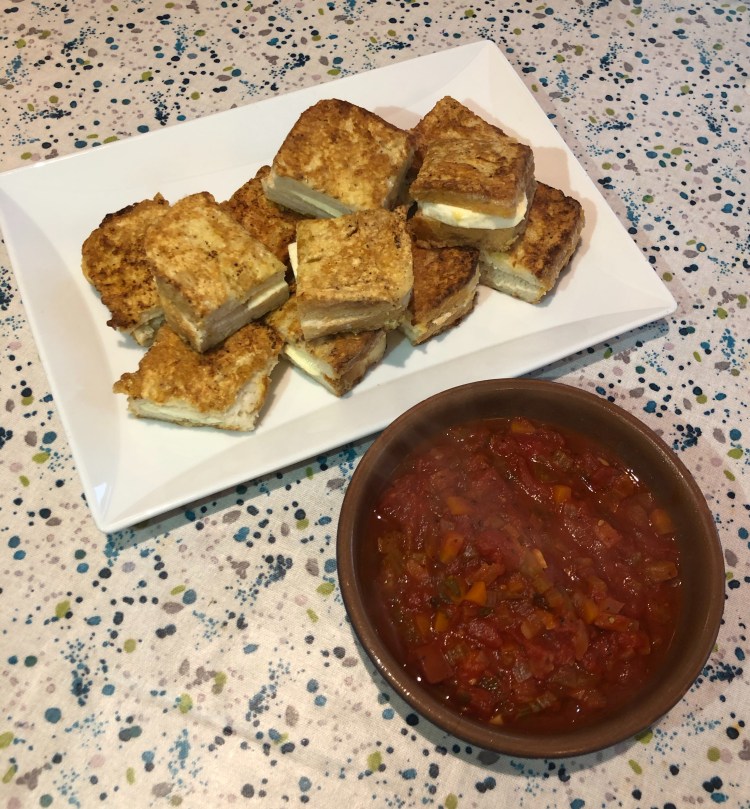
Time spent in Sussex en famille is always a treat. It’s not just the Bridge, tennis and long walks that enliven our visits but also the delicious food we eat there. This recipe entered the repertoire after Granny found it (in a weekend newspaper? 15 years ago?) and rustled it up one evening for the grandchildren’s supper. It’s cheap, filling, well balanced and a great vehicle for tomato sauce, which you can make in a big batch and use for other meals.

Serves 4

Ingredients

1 large white farmhouse loaf, ideally a day old
2 balls mozzarella
200ml milk
80g seasoned flour (ie mixed with salt, pepper and nutmeg)
2 eggs, beaten
Olive oil for frying – about 100ml

Basic tomato sauce – for ingredients and method, see aubergine parmigiana.

Method

Cut eight slices of bread. (Use whatever is left over to make breadcrumbs: trim the crust, then cut the bread into large cubes and blitz in a food processor; you can dry these in the oven on a low temperature or store them fresh in the freezer for later use.)

Cut each ball of mozzarella into eight slices, then sandwich four slices between two pieces of bread to make four chunky sandwiches.

Arrange your assembly line: milk in a wide, shallow bowl; flour on a flat plate; eggs in another shallow bowl. Heat olive oil in two large frying pans and switch on the extractor fan.

Dip each sandwich in milk, then coat, in turn, in flour and egg. Fry slowly on both sides – the aim, which I don’t always achieve, is to avoid browning the outside too quickly, before the mozzarella melts. Drain on kitchen towel, then cut each sandwich into four squares. Serve with warm tomato sauce. 

Lamb Dhansak

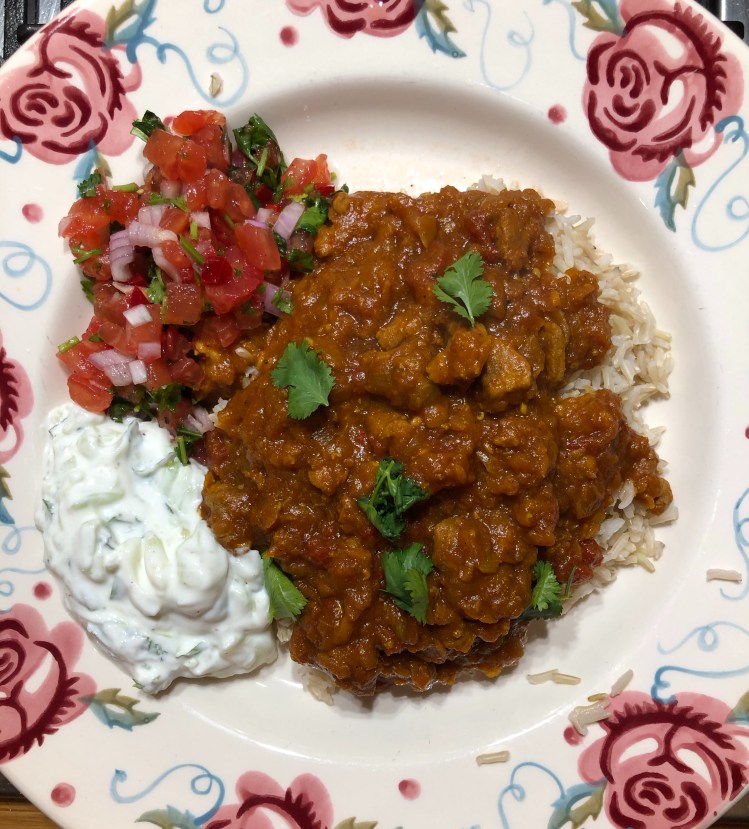
This is Mary Berry’s recipe, demonstrated on television in 2014 and widely available online. Lentils are an affordable ingredient that add substance and a ‘healthy’ veneer to the dish. Although I haven’t yet experimented with a vegetarian adaptation, you could presumably do this by replacing the beef stock with vegetable stock and using a firm tofu or quorn instead of the lamb. The tomato relish is a delicious accompaniment, alongside raitha which features whenever we have an Indian meal.

Serves 6

Ingredients

3 tablespoons sunflower oil
1kg diced lamb (shoulder or leg, or a mixture)
2 onions, diced
25g fresh ginger root, peeled but left whole
4 garlic cloves, peeled but left whole
1 red chilli, deseeded and chopped
10 green cardamom pods
1½ tablespoons ground cumin
1½ tablespoons ground coriander
½ tablespoon ground turmeric
1 x 400g can chopped tomatoes
200ml beef stock – from a cube is fine
75g dried red lentils
3 tablespoons clear honey
salt and freshly ground black pepper

Method

  1. Preheat the oven to 150°C/130°C fan.
  2. Heat 2 tablespoons of the oil in a large frying pan. Add half the lamb and fry until browned. Remove from the pan with a slotted spoon and set aside, then brown the other half of the lamb and set aside.
  3. Add the remaining oil to the pan. Add the onions and fry for 4-5 minutes until beginning to soften.
  4. Meanwhile, place the ginger, garlic and chilli in a small food processor and whiz until finely chopped.
  5. Bash the cardamom pods with the end of a rolling pin to split the husks, then remove the seeds and grind them to a fine powder using a pestle and mortar. Add to the pan along with the remaining spices and the garlic and ginger mixture.
  6. Add the remaining ingredients to the pan, along with the lamb. Bring to the boil, then cover and place in the oven to simmer for 1-2 hours until tender. Check the seasoning and serve.

Fresh tomato relish

1 red onion, finely chopped
6 ripe tomatoes, skinned, deseeded and chopped
2 tablespoons chopped coriander leaves
juice of ½ lemon
½ red chilli, chopped

To skin the tomatoes place in a bowl, cover with boiling water and wait for 1 minute. Cut a slit in each tomato (the skin should loosen immediately), then drain the water and peel the tomatoes. Halve them and  remove the small white/green core, followed by the seeds. Chop. Mix all the ingredients together and chill before serving.

Clockwise from top left: fresh tomato relish, lamb dhansak and raitha

Fish cakes

This is a useful recipe to have up your sleeve. Fish cakes are a versatile dish: they can be made with leftovers but also from scratch, and can be seasoned with whatever herbs you have. They can also be padded out with spring onions or vegetables (peas or leeks, for example). Salmon looks pretty but any flaky white fish will work too. With appropriate substitutions for the butter, flour and breadcrumbs, the recipe can easily be turned into something gluten- and/or dairy-free. Serve with tartare sauce and green vegetables or a salad to make a complete, balanced meal.

Makes 6 large fish cakes

Ingredients

500g salmon
Splash of white wine or 1 tbsp lemon juice
30g butter
2 large baking potatoes
1-2 tbsp chopped parsley + some whole sprigs
1-2 tbsp chopped dill + some whole sprigs
1 tsp lemon zest
Salt, pepper, nutmeg
50g seasoned flour
2 eggs, beaten.
150g breadcrumbs
100ml vegetable / sunflower / groundnut oil

Method

Preheat the oven to 200 / 180 fan. Lay the salmon on a sheet of foil large enough to enclose it. Sprinkle on some white wine or lemon juice, dot with half the butter, lay some sprigs of parsley and dill on top, and season with salt and pepper. Wrap the foil around the fish, then bake in the oven for 20 minutes. Remove and leave to cool for 5 minutes.

Meanwhile, peel the potatoes and cut into small chunks – no larger than 2cm square. Put in a saucepan, cover with cold water and add 1 tsp salt. Bring to the boil and, once boiling, cook for 15-18 minutes, until the potatoes are soft when pierced with a fork. Drain, return to the pan and then put back over the heat for 30 seconds, so as much water as possible evaporates – you want quite a dry mash for this. Add the rest of the butter, season with salt, pepper and nutmeg and mash. (I follow Delia’s method here, using a hand whisk; it seems like a travesty but does actually work very well.) Leave to cool.

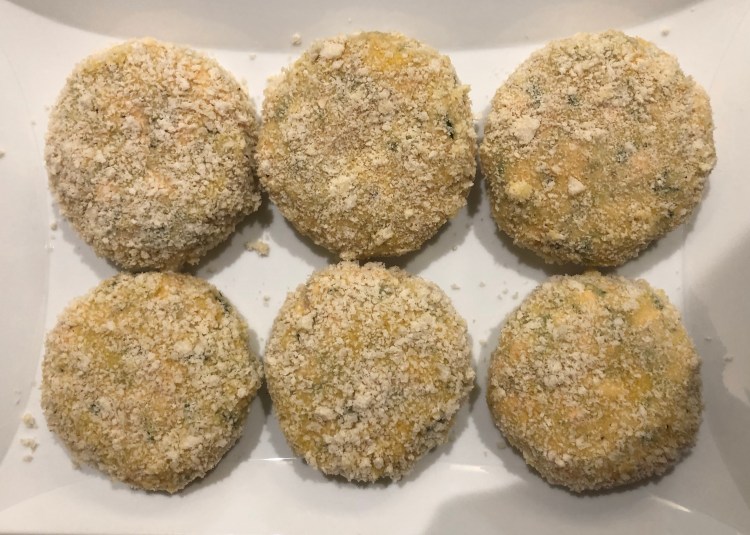
In a large bowl, mix together the mashed potatoes, the flaked salmon (try to keep some decent-sized chunks), lemon zest, herbs and seasoning. Get your breadcrumbing station ready: flour, beaten egg, breadcrumbs in a line with a platter at the end to receive the breaded fishcakes. Once the mixture is not too hot to handle (you may need to chill it for a bit first), shape it, a handful at a time, into large fishcakes and coat in flour, egg and breadcrumbs in turn. You might run out of breadcrumbs – the quantities specified here are a guess. Chill the fishcakes until you’re ready to cook them. (You can also freeze them at this stage.)

Heat the oven again to 180/160 fan. To cook the fishcakes, heat the oil in a large frying pan, add the fishcakes, then lower the heat and cook for 3 minutes on each side. Once golden brown on both sides, transfer to kitchen paper and then to an oven tray. Bake in the oven for a further 10 minutes until piping hot all the way through. 

Lemon Chicken

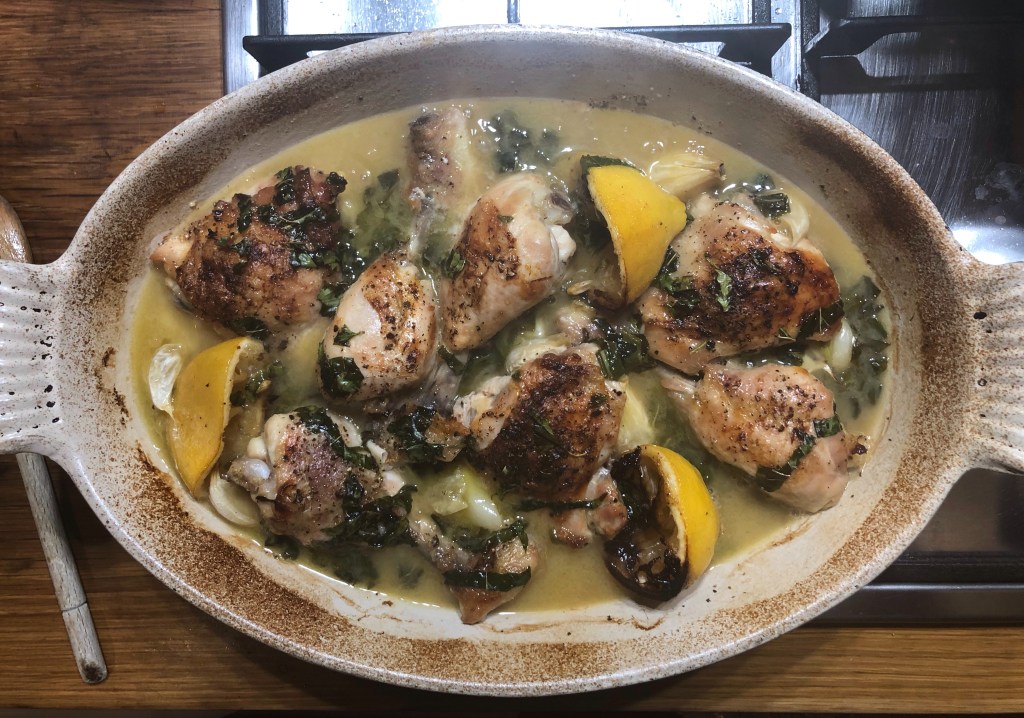
A cornerstone of the weekly menu, this dish is based on a recipe in Nigel Slater’s book Real Food, published in 1998. It has undergone a number of modifications over the years – we use only the leg pieces, for example, rather than a whole chicken cut into portions. Allow at least two pieces of chicken per person, more if you’re hungry, and don’t hold back on the garlic, which makes a lovely soft mush when roasted in this way. 

Serves 4-6

Ingredients

12 chicken leg pieces – thighs and drumsticks
Olive oil
1 head of garlic, separated into approx 12 fat cloves, slightly squashed
2 lemons
A large handful of basil – 20g or most of a supermarket pack
Small bottle (187ml) white wine
Salt and pepper

Method

Preheat the oven to 180 (fan) / 200C

Trim the excess skin off the chicken thighs. Cover the bottom of a roasting tin with olive oil, salt and pepper. Lay the chicken pieces on top and tuck the squashed garlic cloves in around them. Squeeze the lemons over the chicken and drop the empty shells in too. Slosh on some more olive oil and season again with salt and pepper. Roast in the oven for 40 minutes, then tear / roughly slice the basil leaves and toss them about a bit with the chicken, spooning the juices over the meat. (Leave the chicken skin-side up, though.) Return to the oven for another 15 minutes. Remove from the oven, pour the wine over the chicken, then put the roasting tin over a hot flame and let the wine bubble for a couple of minutes. Serve with rice (50g per person) to soak up the juices, and steamed broccoli.

Blackberry & apple crumble ice cream

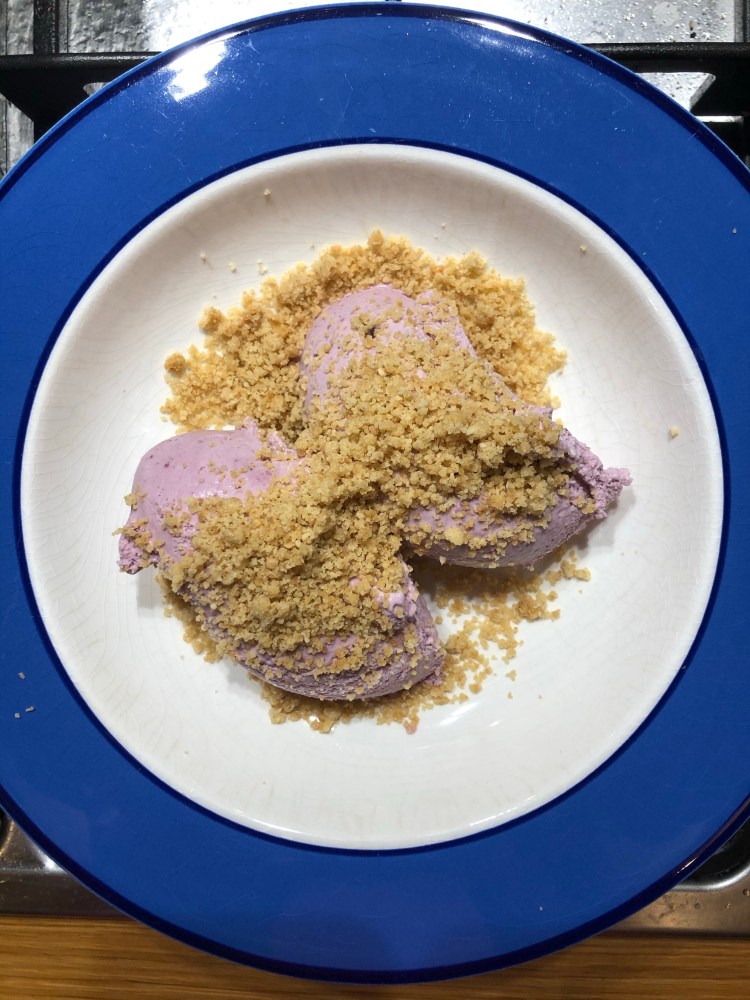
Even without an ice cream maker, you can (quite literally) whip up an ice cream in a few hours. All it takes is a freezer, some elbow grease and the patience to cool your custard base. This is beautiful to look at and tastes of early autumn. The recipe comes originally from an old issue of Waitrose magazine but I’ve adapted the crumble topping a little, in homage to the combination we like in ‘real’ crumble. It makes a great finale to a Sunday lunch.

Blackberry & Apple ice cream with crumble topping

Serves 6

Ingredients

600ml single cream
200g caster sugar
1 vanilla pod
4 eggs, yolks only, at room temperature
1 bramley apple, peeled, cored and sliced finely
150g blackberries – ideally foraged

For the crumble
100g plain flour
50g ground almonds
75g unsalted butter, cubed and chilled
40g light brown soft sugar
a pinch of salt
½ tsp ground cinnamon

Method

1. Put the cream, 100g sugar and the vanilla pod in a saucepan and heat, whisking gently until the sugar dissolves. Bring to the boil, then slowly pour over the egg yolks, still whisking, until combined. Set aside to cool.

2. Put the apple in a saucepan with the blackberries, remaining sugar, and 1 tbsp water. Cover and cook over a medium heat for 10-12 minutes until the apple is soft. Place in a blender and blitz until smooth, then pass through a sieve. Leave this mixture to cool a bit too. Removing the vanilla pod first, mix the custard with the fruit pulp. Cover with clingfilm and refrigerate until well chilled.

3. Churn the mixture in an ice-cream machine following the manufacturer’s instructions, then freeze. Alternatively, freeze in a lidded freezer-proof container. After 2 hours, transfer to a food processor or blender and blitz until smooth, or you can whisk it vigorously by hand, then return to the freezer. Repeat after 2 hours, then freeze until set.

4. For the crumble topping, preheat the oven to 200°C, gas mark 6. Place the flour and almonds in a bowl with a pinch of salt and rub in the butter with your fingers – or whizz in a food processor – until it resembles breadcrumbs.  Stir in the sugar and cinnamon, tip onto a baking tray and bake for 15-20 minutes until crisp and golden. Leave to cool. Serve the ice cream with a generous sprinkling of crumble. Store your leftover ice cream in the freezer (obvs) and keep the crumble in an airtight container: it will be fine for up to a week.

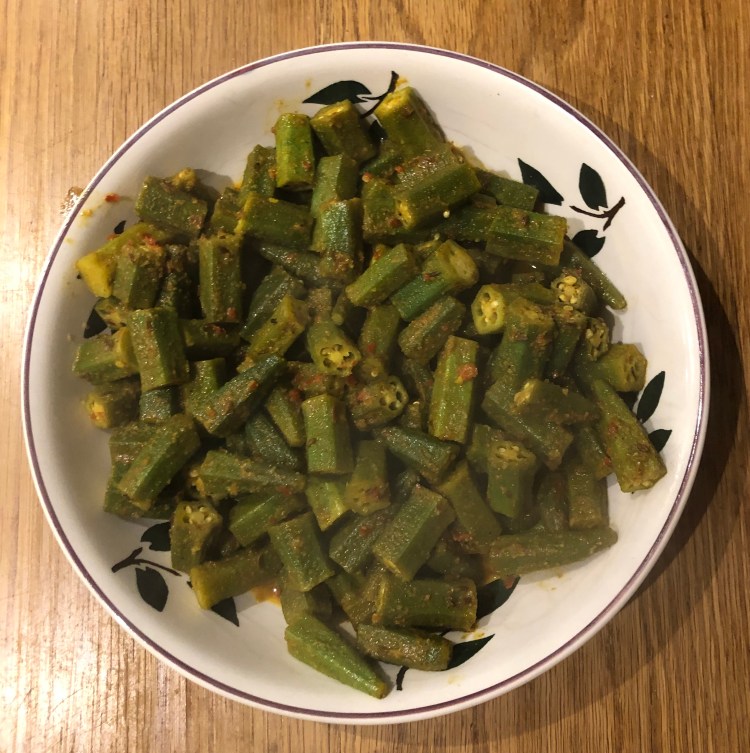
Sweet & Sour Okra

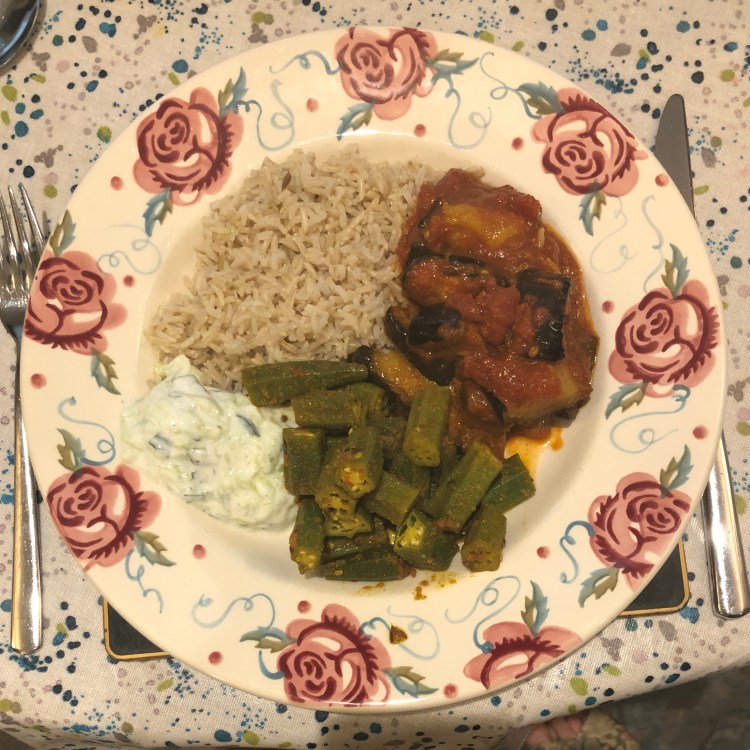
Here is another one from Madhur Jaffrey, doyenne of Indian cookery . Okra (also called bhindi or ladies’ fingers) is in plentiful, cheap supply in local greengrocers during the summer months and this is a wonderful way to cook it. In colour and texture it complements Lake Palace Aubergines very well. Serve with raitha and rice (ideally wholegrain) for a balanced vegetarian meal.

Serves 4-6

Ingredients

400g okra
7 medium-sized cloves garlic, peeled
1 dried, hot red chilli
7 tbsp water
2 tbsp vegetable oil
2 tsp ground cumin
1 tsp ground coriander
½ tsp ground turmeric
1 tsp cumin seeds
c. 1 tsp salt
1 tsp sugar
c. 4 tsp lemon juice

Method

Rinse off the okra and pat dry. Trim the pods by cutting off the two ends (you’ll find that a glutinous liquid oozes from the base) and cut each pod into 2cm lengths.

Put the garlic and chilli into the container of an electric blender with 3 tbsp water. Blend to a smooth paste. Empty this paste into a small bowl. Add the ground cumin, coriander and turmeric. Mix.

Put the oil in a large frying pan or wok and set over a medium heat. When hot, put in the cumin seeds. As soon as they begin to sizzle – it will take just a few seconds – turn the heat down a bit and pour in the spice mixture. Stir and fry for about a minute. Now add the okra, salt, sugar, lemon juice and 4 tbsp water. Stir to mix and bring to a gentle simmer. Cover tightly and cook on a low heat for about 10 minutes or until the okra is tender. If it takes longer to cook, you might need to add a little more water.

Crab linguine

Crab linguine may be Italian in origin but it will always evoke for me the memory of the British seaside. Two great cooks inspired me to learn to make it: Charlie Taylor whipped it up in Dorset in 2010, and Granny has served it up more than once at Garde. (On one painful occasion your father cracked a tooth in half on a piece of crab shell.) The first time I cooked it myself was in 2013, in Cornwall, where we found crab meat surprisingly difficult to source but tracked some down in a warehouse outside Helston. Since then, the meal has featured three or four times a year on the weekly menu at home, alongside a mixed green salad to make a quick and easy supper.  

Serves 4

Ingredients

400g linguine
50ml extra virgin olive oil
1 red chilli, deseeded and chopped
a few scrapings of lemon zest
2 garlic cloves, sliced
100g brown crab meat
100g white crab meat (more if you can afford it)
60ml white wine
small squeeze of lemon
large handful flat leaf parsley, chopped
Salt and pepper

Method

Bring a large pan of salted water to the boil and add the linguine. Give it a good stir and boil until the pasta is al dente – the lower end of the cooking time recommended on the pack. Stir well occasionally so it doesn’t stick.

While the pasta cooks, gently heat the olive oil with the chilli, garlic and lemon zest in a saucepan. Cook very gently until the mixture starts to sizzle, then turn up the heat and add the white wine. Simmer everything until the wine and olive oil come together, then take off the heat and add the brown crabmeat, mashing it into the olive oil to make a thick sauce. 

When the pasta is ready, remove a cupful of the cooking water and drain the rest out through a colander. Return the pasta to the pan and add the oil, garlic & chilli crab mixture, along with the white crabmeat, parsley, salt and pepper. Stir everything together really well, adding a drop of the reserved pasta water if it’s starting to get claggy. Taste for seasoning: it will almost certainly benefit from a squeeze of lemon to give it a lift.

Mayonnaise & more

There’s nothing wrong with a good ready-made mayonnaise from a jar but there’s also something special and satisfying about making your own: any self-respecting domestic cook should know how to whip one up. Mayonnaise is also the base for countless flavoured sauces, three of which are included here as a riff on the ‘mother sauce’. 

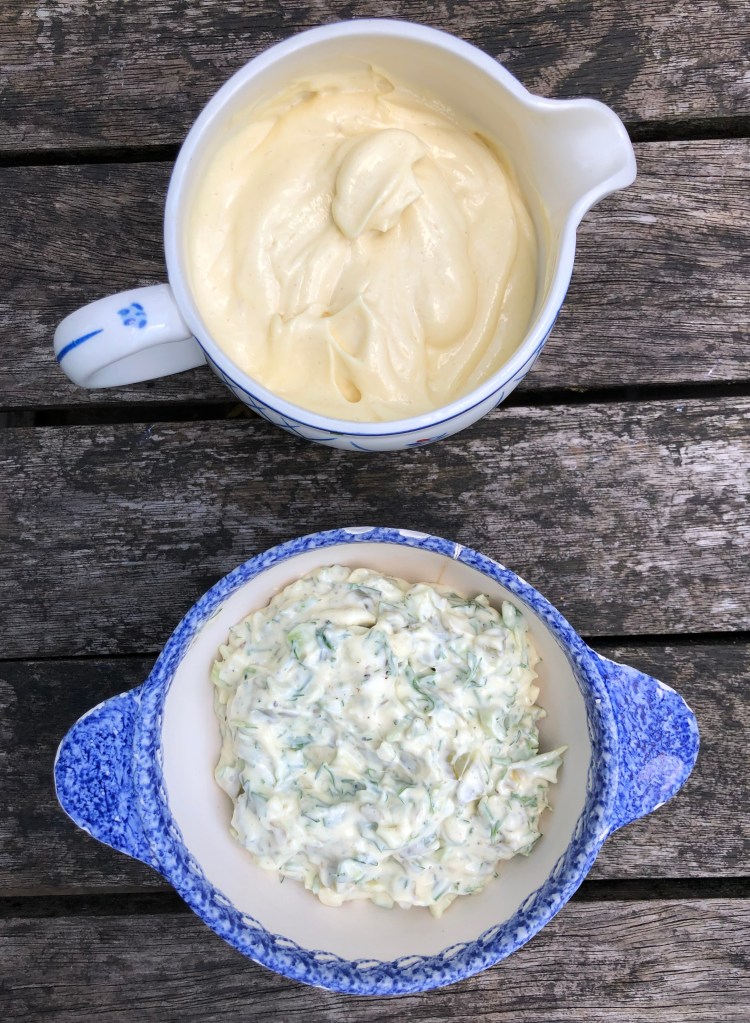
Mayonnaise (top) and Tartare Sauce

Basic mayonnaise recipe

You can make this with just a bowl, a whisk and a lot of patience but an electric hand whisk makes the process much easier and quicker. The recipe below, borrowed from Sophie Grigson’s Fish, makes about 300ml.

Ingredients

2 egg yolks
1 tbsp lemon juice or white wine vinegar
1 tsp Dijon mustard
300 ml oil (avoid anything too strongly flavoured: a mixture of sunflower / groundnut with normal (‘deflowered’) olive oil in a 2:1 proportion is ideal)
Salt

Method

Before you begin, make sure that all the ingredients are at room temperature. Whisk the egg yolks with the lemon juice or vinegar, mustard and a little salt. Pour the oil(s) into a jug. Whisking continuously, add the oils drip by drip, at a slow, even pace. If your bowl starts jiggling about, put a damp cloth under it to hold it steady. When about ⅓ of the oil is incorporated, you can increase the flow of oil to a slow, steady trickle, still whisking all the time. Once it is all incorporated, taste and adjust the seasonings, adding a splash more lemon or vinegar if it needs it.

Help! If the worst comes to the worst and your sauce splits and curdles, all is not lost. Get a new egg yolk, put it in a clean bowl and start adding the curdled mayonnaise, again drop by drop, whisking constantly. Carry on as if making uncurdled mayonnaise. A magic fix.


Variations

Aïoli (French) / Alioli (Spanish)

To make a garlicky version, add 4 large crushed garlic cloves to the egg yolks, salt and lemon juice at the start, and omit the mustard. Ground pepper can join the mix too.

Sauce Marie Rose / Thousand Island sauce

The prawn cocktail sauce! Mix 300 ml mayonnaise with 2 tbsp tomato ketchup, a few drops of Tabasco, 1-2 tsp Worcestershire sauce and a dash more lemon juice. Taste and adjust seasoning.


Tartare Sauce

When made freshly, with good mayonnaise (shop-bought is absolutely fine) this is a fabulous sauce. Mix all the ingredients below together, taste and adjust seasoning. It’s pretty much identical to what we stir into boiled, cooled new potatoes to make a classic potato salad

Serves 4

200 ml mayonnaise
1 shallot, very finely chopped
½ tbsp chopped fresh chives
½ tbsp chopped fresh parsley
1½ tbsp capers, rinsed and roughly chopped
1½ tbsp chopped pickled gherkins or cornichons
Salt and pepper